





 Portuguese
  English
  Spanish
  4 min of reading
  0 comments


Embrapa Research Transforms the Agave Plant, Known for Tequila, into an Alternative for Ethanol and Bioenergy in Brazil’s Semi-Arid Region.
Embrapa, in partnership with Santa Anna Bioenergia, has initiated an innovative study to transform the agave plant into a source of ethanol and renewable energy in Brazil.
The research, taking place in the northeastern Semi-Arid region, is expected to last five years and aims to adapt Agave tequilana, the species used for tequila production in Mexico, to Brazilian conditions.
The goal is to diversify the national energy matrix, strengthen the bioeconomy, and create sustainable alternatives for farmers in the region.
-
They were brilliant! Scientists discover that our ancestors in China were already making super advanced tools 160,000 years ago, changing everything we knew.

-
Scientists unveil 3 million years of climate secrets hidden in the ice of Antarctica.

-
Ancient farmers created “aggressive plants” that changed nature forever.
-
Astronomers find a “backward” solar system that ignores all the rules of space and leaves scientists scratching their heads!


Why the Agave Plant Could Revolutionize Ethanol Production in Brazil?
The agave, known worldwide for tequila, has gained prominence due to its unique characteristics.
Unlike sugarcane, its cycle is longer, but the plant easily adapts to dry climates, storing water in its leaves and resisting prolonged drought periods.
Another highlight is its photosynthesis process: agave opens its pores at night, when water loss is lower. This ensures greater water efficiency, a valuable differentiator for the Semi-Arid region.
For these reasons, Embrapa bets on the potential of the plant to increase ethanol production without competing with traditional agricultural crops.
Agave in Brazil: From Feed to Biofuel
Although the agave plant is famous for tequila, in Brazil it already plays other roles.
In addition to producing ethanol, it can contribute to carbon sequestration and serve as a food source for ruminant animals.
Researchers from Embrapa Algodão state that the residues from the ethanol production process can be used as fodder. This is especially useful during dry periods when there is a shortage of pasture in the Semi-Arid region.
Thus, the research integrates economic, environmental, and social sustainability, expanding the ways in which the plant can be used.
Importance of Embrapa’s Research in the Economy of the Northeast
Brazil is a world leader in the production of Agave sisalana, a species used to manufacture ropes, mats, and other products.
In 2023, the country produced 95,000 tons of fiber, according to IBGE, with 95% concentrated in Bahia.
In the so-called Sisal Territory, this crop is one of the main sources of income for the population. Paraíba ranks second in the national ranking, with five thousand hectares dedicated to production.
However, only 4% of the leaf biomass is utilized in the industrial process.
Embrapa’s expectation is to increase this usage, enhancing the profitability of the activity and diversifying the plant’s applications.
The Social Impact of Embrapa’s Research with Agave
According to Tarcísio Gondim, a researcher at Embrapa Algodão, the technological innovation associated with agave can reduce regional inequalities and improve living conditions in the Northeast.
This is because sisal cultivation faces precarization and declining income for many families.
With the development of techniques to transform the agave plant into ethanol and other products, it is expected to generate new economic opportunities, as well as enhance family agriculture in the Semi-Arid region.
How is the Research Being Conducted?
The Embrapa project includes the implementation of Technological Reference Units (URTs) in different locations.
The first is already being installed in Jacobina, Bahia. Two more URTs will be established in Alagoinha and Monteiro, Paraíba.
In total, 1,800 seedlings of Agave tequilana Weber var. Azul, imported from Mexico, are being evaluated. They underwent quarantine before being planted, ensuring the safety of the genetic material.
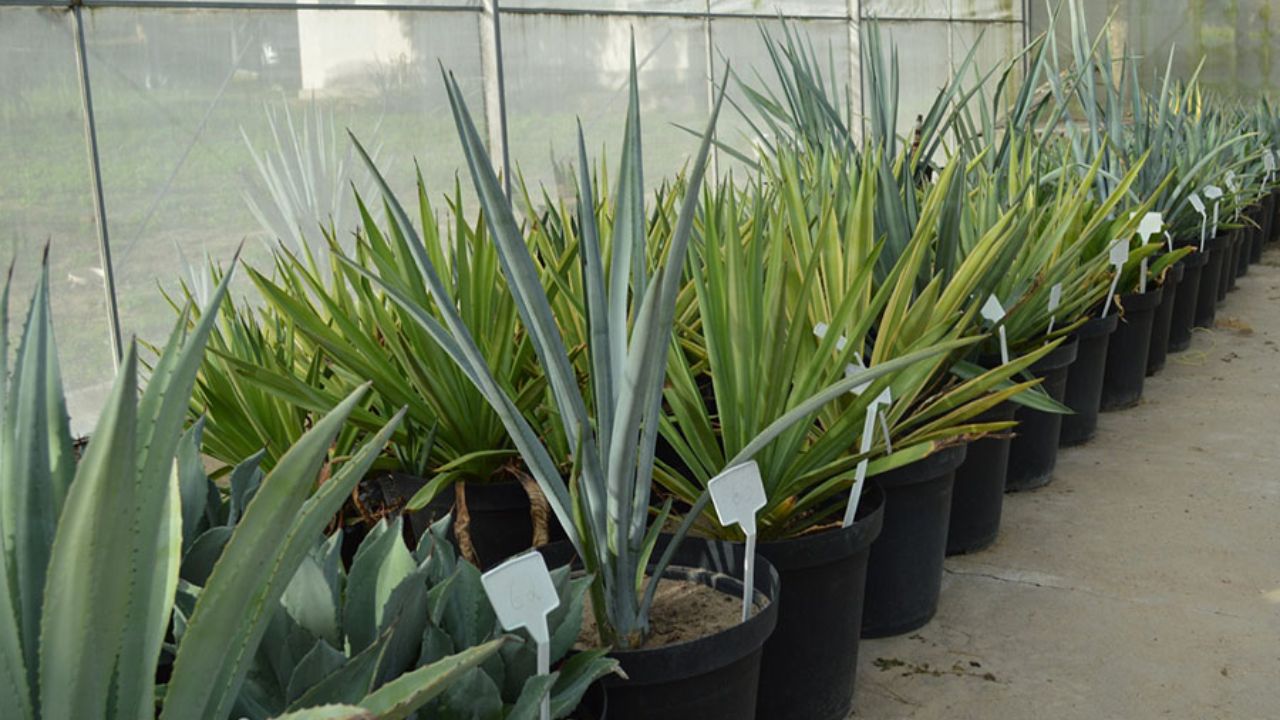
In addition to the experimental planting, researchers are conducting studies on management, soil fertility, mechanization, and complete utilization of biomass.
Despite the great potential, there are still challenges to consolidate ethanol production from the agave plant in Brazil.
Among them are the standardization of cultivars, the development of cultivation techniques adapted to the Semi-Arid region, and the mechanization of harvesting.
The agave cycle can take up to five years, but according to researchers, the staggered planting ensures a continuous supply of biomass.
This will make it economically viable to produce and compete in the bioenergy market.
International Partnership with Mexico
In the first half of 2025, a technical mission from Embrapa visited Mexico to strengthen partnerships around the use of agave.
The goal is to learn from the Mexican experience in cultivating the plant used for tequila and apply this knowledge to projects focused on ethanol, carbon sequestration, and animal feed.
This international collaboration could accelerate scientific and technological advances in Brazil, making the Semi-Arid region a strategic bioenergy hub.
Embrapa’s initiative demonstrates how the agave plant can go far beyond tequila and become a pillar of the energy transition in Brazil.








Seja o primeiro a reagir!