





 Portuguese
  English
  Spanish
  5 min of reading
  0 comments


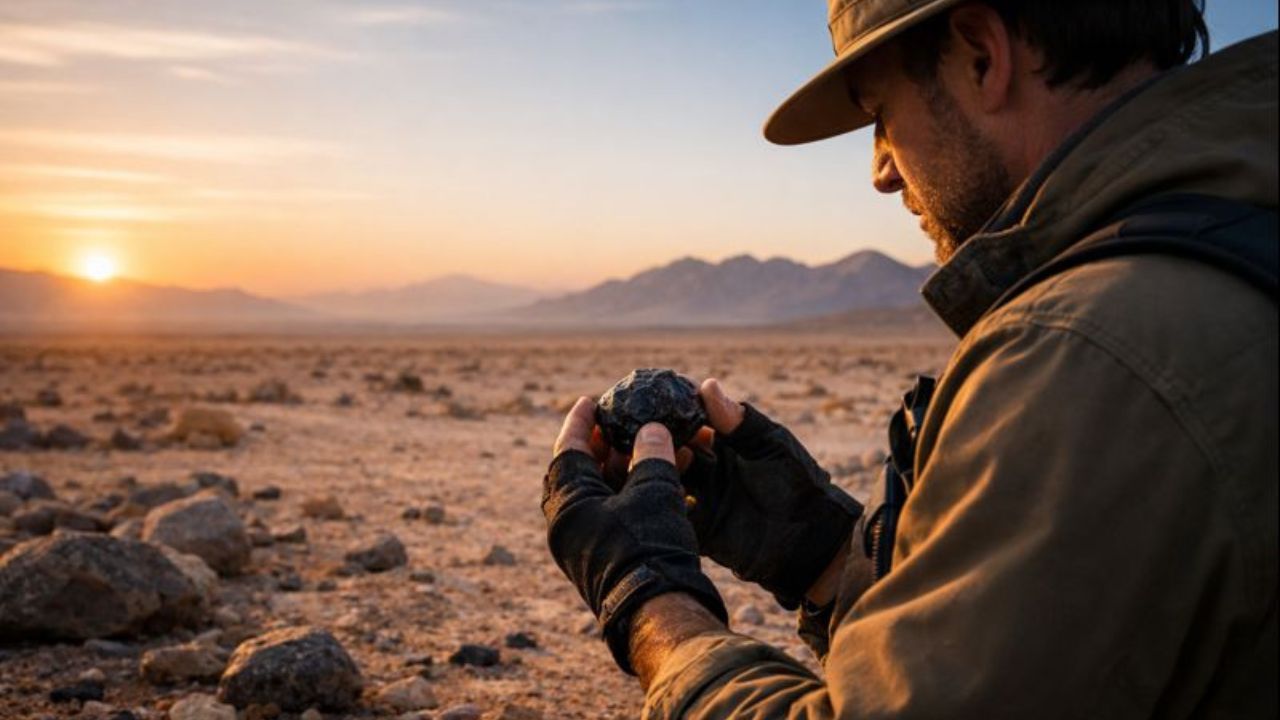
Unusual Job Grows With The Search For Meteorites, Rare Rocks And The Interest Of Collectors Around The World.
Traversing deserts, forests, and remote areas of the planet in search of meteorites has ceased to be just a scientific curiosity and has come to represent employment and income for an increasingly larger group of people.
This is the case for meteorite hunters, professionals who identify, collect, and trade rocks from space, fueling a growing global market driven by the interest of scientists and the appetite of private collectors.
In recent years, the appreciation for these extraterrestrial rocks has transformed a niche activity into a highly profitable business.
-
With around 6,000 residents on a single 9 km street, a village in Poland maintains a strong sense of community, cultivates strawberries and potatoes, and becomes the target of a false image created by artificial intelligence.

-
Sleeping at different times each day can be a bomb for your heart and even double your risk of having a heart attack.

-
Without help and without heavy machinery, a woman builds a house from scratch with stone, wood, and cement, erects a chimney, creates a complete leisure area, and transforms an empty lot into her dream home.
-
Couple transforms abandoned house after years of being closed; residence was overgrown with weeds, had a green pool, and a deteriorated structure in the interior of Rio de Janeiro.


In some cases, a single find can yield hundreds of thousands or even millions of dollars, attracting international attention and sparking debates about ownership, legislation, and scientific preservation.
From Therapist To Full-Time Meteorite Hunter
The story of Roberto Vargas illustrates how this market has changed the lives of those who decided to bet on it. The son of Puerto Ricans and an American citizen, he left a stable job in mental health to become a professional meteorite hunter.
“As soon as something falls, it’s time to hit the field,” Vargas told The Documentary Podcast from the BBC World Service.
The curiosity arose unexpectedly. “For some reason, I thought an ordinary person couldn’t own meteorites. So, when I held one in my hands, I was extremely excited,” he shared. From that moment on, he began to collect and later travel in search of these space rocks.
Trips, Sales, And An Unexpected Financial Turn
In 2019, upon learning of a meteorite fall in Costa Rica, Vargas decided to try his luck. Although he did not find the main fragment, he managed to acquire several pieces and decided to resell them to fund the trip.
The result was surprising. “On my first trip to Costa Rica, I returned on a Friday and by Monday, I had already sold meteorites and earned more than US$ 40,000,” he stated.
Shortly after, he permanently left his traditional job, which earned him between US$ 50,000 and US$ 60,000 a year, to live exclusively from searching for meteorites.
The Role Of Dealers And The Interest Of Collectors
The success of this market does not depend only on those who find the rocks but also on those who connect them to buyers.
Darryl Pitt, a music photographer who became a meteorite dealer, played a central role in this transformation.
“I wanted to share my fascination with the world, but I also wanted to make money,” he explained. According to Pitt, bringing these rocks into the auction universe was crucial for expanding the industry’s reach.
In the 1990s, he organized the first specialized auction, and since then, prices have continued to rise, driven by the growing collector audience.
What Defines A Meteorite And Why Is It Worth So Much
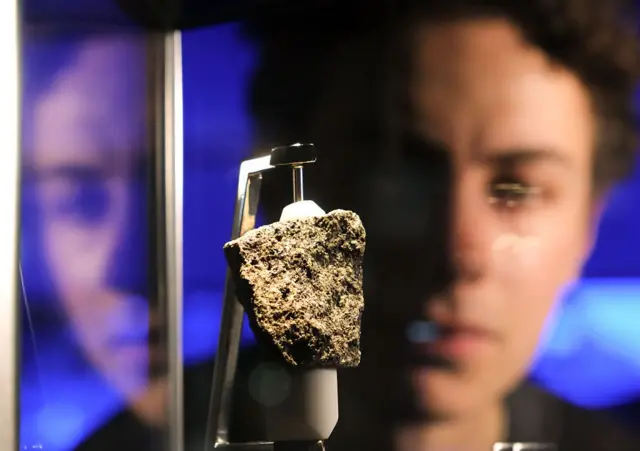
First of all, it’s essential to understand what is being sold. “A meteorite is a rock that has reached the Earth’s surface,” explained Professor Sarah Russell from the Natural History Museum in London to BBC News Mundo.
According to the expert, these rocks can originate from asteroids, the Moon, Mars, or even unknown regions of the solar system.
The value varies based on factors such as size, rarity, condition, composition, and provenance.
“You can buy a meteorite for just 20 or 30 cents per gram,” Pitt noted, warning about common counterfeits on online platforms.
On the other hand, rare pieces can reach impressive sums, such as a 24-kilogram Martian meteorite sold for US$ 4.3 million at a Sotheby’s auction.
How To Identify Meteorites Among Common Rocks
Distinguishing a meteorite from a terrestrial rock is not simple. Russell explains that, as they pass through the atmosphere, these rocks form an outer crust called fusion crust, resulting from surface melting.
Additionally, they tend to be denser and heavier. Still, only chemical analyses confirm their origin. There are three main types: stony meteorites, metallic (rich in iron), or mixed.
Trade Debates And Legal Disputes
The million-dollar sale of the meteorite found in Niger reignited discussions about the legality of the trade. Local authorities questioned how the rock left the country and whether there was official authorization.
“We need to wait for the guidelines provided to the different ministries to clarify this issue,” said Professor Idi Umuru Amadou from Abdu Mouni University. According to him, without authorization, the removal may constitute theft or looting.
Rules vary by country. While Australia prohibits the export of meteorites, the United Kingdom has no specific legislation, creating an unequal international landscape.
The Female Meteorite Hunters And The Defense Of Science
Not all meteorite hunters are motivated solely by profit. In Latin America, a group of Brazilian scientists known as Meteoríticas is dedicated to locating these rocks for scientific purposes.
“We drop what we’re doing and set out in search of this new meteorite. Because being the first makes a difference,” said meteorologist Amanda Tosi. For her, trade can coexist with science, as long as there is regulation.
Between Profit, Science, And The Future Of Space Exploration
The growth of private interest has increased prices and made it harder for museums and scientific institutions to access the rarest pieces.
Still, researchers warn that these space rocks can reveal crucial information about the origins of the solar system and support future space missions.
Vargas, for his part, counters the criticisms. “Yes, we have economic motivation, but also scientific. We want these rocks to be in the hands of scientists,” he stated. Thus, the debate remains open between employment, market, science, and the preservation of extraterrestrial heritage.







-

-

3 pessoas reagiram a isso.