





 Portuguese
  English
  Spanish
  3 min of reading
  0 comments


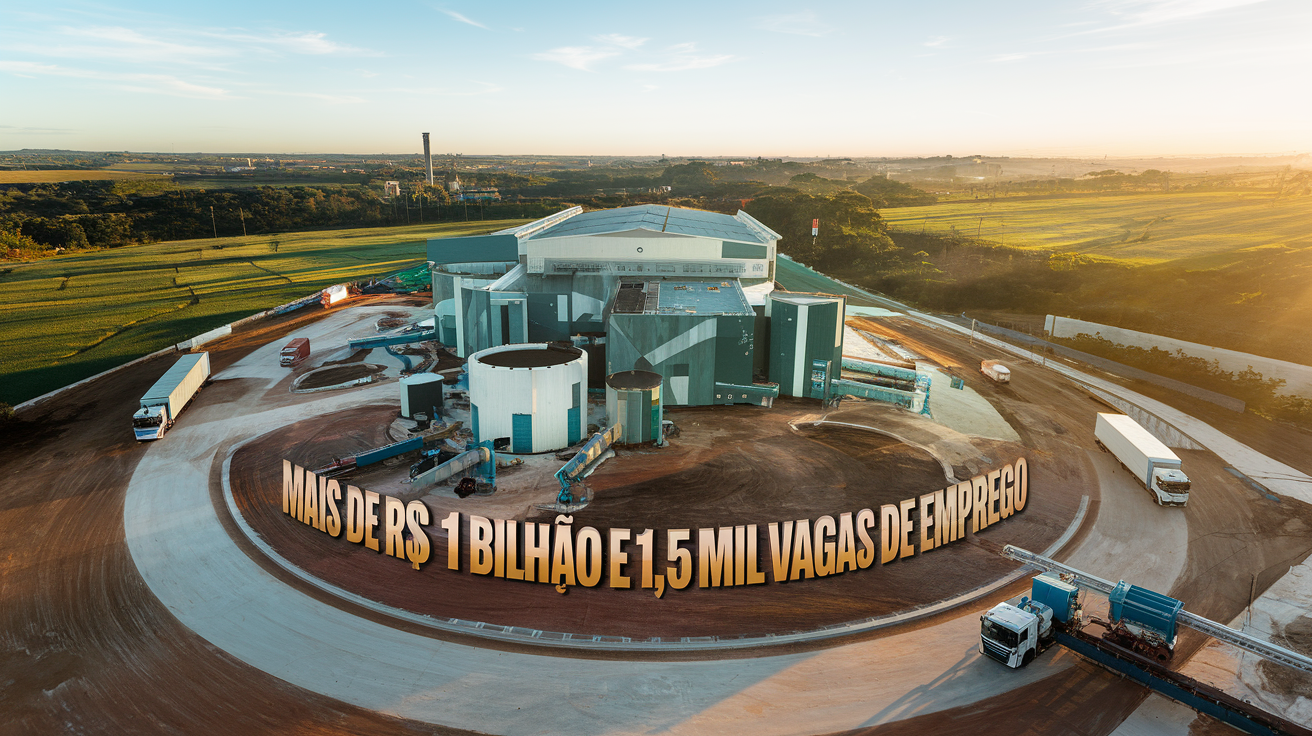
Cocamar Initiated a Billion-Dollar Project in Maringá, with the Capacity to Process Up to 7.5 Thousand Tons Daily of Soy. The New Plant Will Bring Technological Innovation, Environmental Efficiency, and Significant Economic Impact, Consolidating the Paraná Agribusiness in the Global Market.
In the interior of Paraná, a billion-dollar investment promises to change the course of national agriculture.
With a project that combines cutting-edge technology and sustainable vision, one of the largest soybean crushers in Brazil is about to come to fruition.
Cocamar Agroindustrial Cooperative announced an investment of R$ 1.5 billion to build, in Maringá (PR), one of the largest soybean crushing plants in the country.
-
“No one will make us change the Pix,” says Lula after the US report.

-
Lula responds directly to Trump and says that Pix is from Brazil and will not change under pressure from anyone, after a report from the United States pointed out the Brazilian payment system as an American trade barrier.

-
Amazon has just announced a new fee on all deliveries, and your online purchases will become more expensive starting April 17, including for those buying from the United States here in Brazil.

-
He sold his share for R$ 4 thousand, saw the company become a giant worth R$ 19 trillion, and missed the opportunity of a lifetime.


As announced, the plant will start with the capacity to process 5 thousand tons of soy daily, potentially reaching 7.5 thousand tons in a future phase.
The completion of the construction is expected by 2027, and the project includes technological innovations that promise to place Brazil at the forefront of the agro-industrial sector.
The mayor of Maringá, Ulisses Maia, highlighted the importance of the initiative, stating that the investment will have a direct impact on the local and regional economy.
“Transforming local soy into high value-added products strengthens exports, increases revenue, and elevates tax revenue, which benefits essential areas such as health and education,” he commented.
Expansion, Sustainability, and Innovation
In addition to increasing crushing capacity, the new plant will allow the cooperative’s oil refinery to jump from 200 thousand to 350 thousand tons annually.
The company also plans to expand biodiesel production in the future, reinforcing its commitment to sustainability.
Another noteworthy aspect is the reduced environmental impact of the new facility.
According to Cocamar, the factory will utilize advanced automation and energy efficiency systems, including technologies that will save approximately 230 million liters of water per year and 125 thousand tons annually of steam.
Additionally, there will be a reduction in solvent and biomass consumption, and the plant will be designed to not generate effluents.
Divanir Higino, CEO of Cocamar, emphasized that the new plant will be a milestone for the sector.
“This factory incorporates the most modern and technological advancements in the sector. It is fully aligned with the best environmental practices, with less impact and more efficiency,” he stated.
Job Creation and Social Impact
During construction, it is estimated that more than 1,500 jobs will be created, boosting the local and regional economy.
The project will involve local companies, promoting a virtuous cycle of development.
With nearly 20 thousand cooperatives, the company has a strong representation among small farmers, who account for 70% of its members.
The new plant promises to strengthen the production chain, adding value to these farmers’ production and increasing their incomes.
Luiz Lourenço, chairman of the cooperative’s Board of Directors, emphasized that the expansion enhances the company’s competitiveness in the soybean sector.
“Our goal is to make Cocamar more competitive within the soybean chain and directly benefit our cooperatives,” he declared.
Future Perspectives and Challenges of Cocamar
For the 2024/25 harvest, Cocamar expects to receive 2.75 million tons of soy, with projections to exceed 3 million tons by 2027.
The goal is to process at least half of this volume at the new facilities, generating higher value-added products for both domestic and foreign markets.
Despite the climate challenges faced in the 2023/24 harvest, the cooperative has remained committed to its members.
The recent distribution of R$ 169.1 million in profits reflects its efficient management and ongoing support for cooperatives.
The project received funding from the Funding Authority for Studies and Projects (FINEP), which recognized the innovative nature of the initiative.
“This special funding is recognition of the relevance of our project for the Brazilian industry,” Lourenço highlighted.
A New Horizon for Brazilian Soy
The construction of this soybean crusher marks a new chapter for Cocamar and for national agribusiness.
With a focus on innovation, sustainability, and competitiveness, the project strengthens Brazil’s position in the global soybean market.
Will this revolution in the sector consolidate Paraná as a global reference in soy production?





-

Uma pessoa reagiu a isso.