






 Portuguese
  Spanish


Ecological Innovation In Germany: Company Develops Prototype Of 100% Wood Wind Turbine Blade, Promising To Transform Sustainable Energy
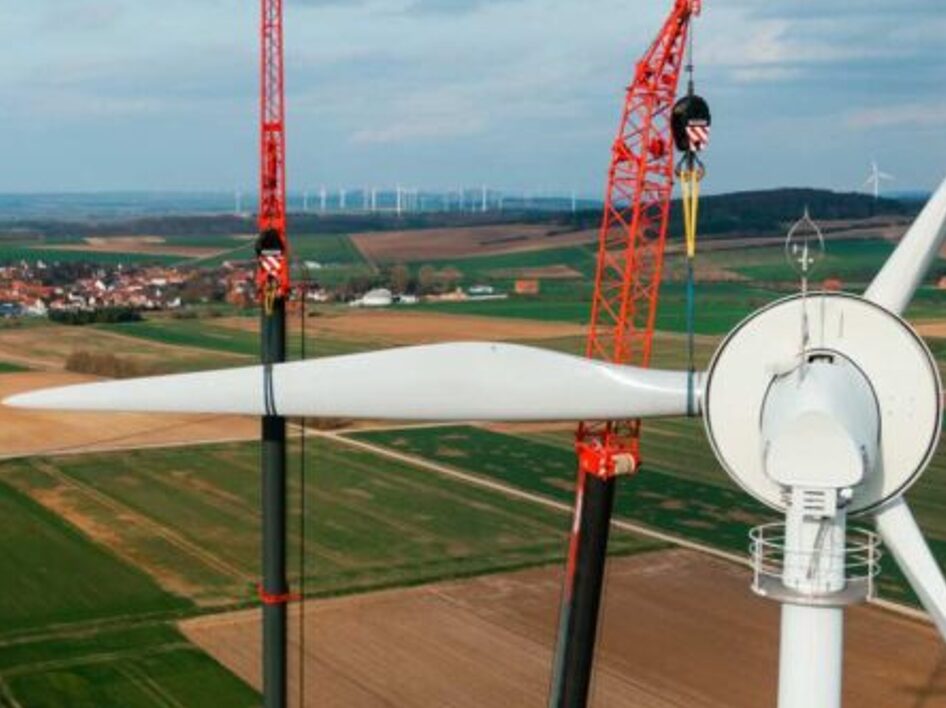
Innovation in the renewable energy industry continues to surprise the world. This time, Voodin Blade Technology, a German company specialized in manufacturing blades for wind turbines, took a bold step by installing the first prototype of a wind turbine blade made of laminated wood (LVL).
This blade, measuring an impressive 19.3 meters in length, was recently installed on an existing wind turbine in the town of Breuna, in Germany.
Benefits Of Wood Blade In Wind Energy
The choice of laminated wood for manufacturing wind turbine blades marks a significant shift towards sustainability. Traditionally, wind turbine blades are made of composite materials, such as fiberglass and carbon fiber, which, while strong and lightweight, present significant recycling challenges and environmental impact. In contrast, the use of LVL offers a more sustainable alternative, with the added benefit of facilitating recycling at the end of the blade’s lifespan.
-
Giant Batteries Take Center Stage in Chile Auction as Company Offers 960 GWh of Solar Energy for Nighttime Use, Aiming to Stabilize Solar Power Supply

-
After a Year of Success in Switzerland, Solar Railway Attracts Italy’s Interest for Clean Energy Transformation
-
Robots Clean Solar Panels in Desert Power Plants Without Water, Preventing Energy Losses
-
Brazil’s Offshore Wind Energy Potential Worth $1 Trillion Stalled by Long-Delayed Agreement



Voodin Blade Technology emphasizes that the durability of wood blades is remarkable. Jorge Castillo, co-founder of the company, highlights that extensive testing conducted over the past two years has proven that LVL blades are even more durable than traditional fiberglass ones.
“We conducted hundreds of lab tests to refine the blade material. Our results show that LVL blades exhibit fewer fatigue characteristics and can withstand a wide range of weather conditions, making them ideal for onshore wind energy production“, explains Castillo.
Sustainability And Efficiency Of Wood Wind Turbine Blades
Besides durability, Voodin also focuses on the sustainability of its wood blades. Currently, wind turbine blades have a lifespan of approximately 25 years, but only 90% of turbines are recyclable. The blades, made from composite materials, are one of the main components that cannot be recycled. This scenario generates a significant amount of waste, as decommissioned blades generally end up in landfills or are incinerated.
The use of LVL in the production of blades promises to change this reality. The material not only reduces emissions associated with production by up to 78%, but also decreases manufacturing costs by about 20%. Furthermore, blades made from LVL are 100% biodegradable, representing a much more eco-friendly solution for the wind energy industry.
Tom Siekmann, CEO of Voodin Blade Technology, emphasizes the importance of this innovation for the future of green energy. “If we continue at the current pace, by 2050 we could accumulate about 50 million tons of waste from wind turbine blades. Our solution aims to minimize this impact, making wind energy truly sustainable“, says Siekmann.
The Future Of Wood Blades In The Wind Energy Industry
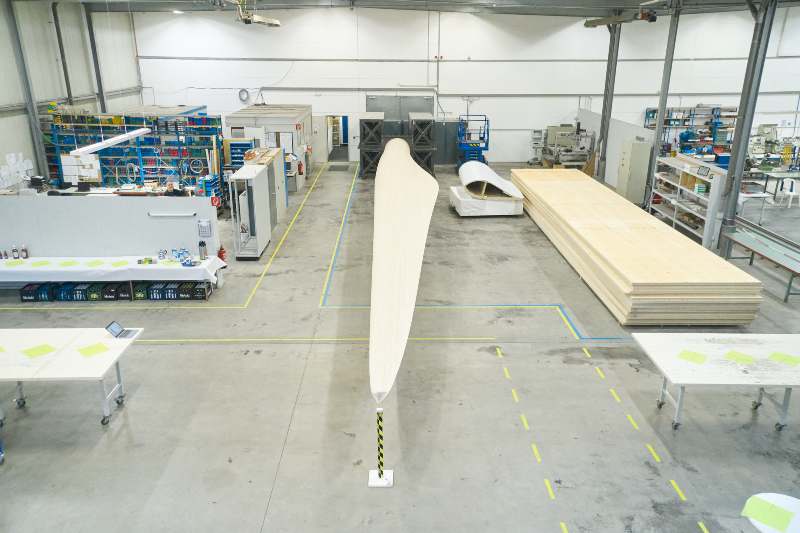
Another important aspect in the manufacturing of LVL blades is the use of CNC milling machines, which allow for the creation of complex 3D shapes. This technology not only increases the level of automation in production but also eliminates the need for molds, making the process more flexible and efficient. Voodin is already working on new prototypes of blades, with lengths of 60 and 80 meters, which could further expand the use of wood in the wind industry.
The installation of this prototype in Germany is a significant milestone for Voodin Blade Technology and the wind energy sector as a whole. If laminated wood proves to be a viable solution on a large scale, it could transform the way wind turbines are built, fostering a more sustainable and environmentally responsible future.


