





 Portuguese
  English
  Spanish
  5 min of reading
  0 comments


This New Microsoft Technology Could End The Use Of Keyboards And Mice? Discover How The Company Is Considering Revolutionizing How You Interact With Your Computer!
Microsoft understands that the way you interact with your computer is about to undergo a profound transformation. Something that could completely change how we use technology in our daily lives.
Microsoft is heavily betting on a technology that could change this scenario forever. But for this, it needs not only to innovate but also to succeed, facing major rivals.
Imagine being face to face with your PC and instead of typing or clicking, you simply talk to it. Something that seemed distant is now much closer to becoming a reality, thanks to advancements emerging on the horizon.
-
They seemed like common bones, but scientists were surprised to find a relic over 12,000 years old that dates back to before the Bronze Age.

-
With an almost perfect ring of 70 km visible from space, known as the “Eye of Quebec” and over 100 km in length, the Manicouagan Crater in Canada reveals the colossal mark left by a giant asteroid and has become one of the most impressive formations ever identified on the Earth’s surface.

-
Scientists have found in China dinosaur embryos dating back 190 million years in various stages of development, and the discovery still preserves traces of extremely rare proteins in the bones, something that could change what is known about life before hatching.

-
The CEO of Honor in Spain says that smartphones will change with AI, foldables, and even robot phones; the component crisis is making cheap models more expensive in 2026 and shifting the focus to premium.

This is where Copilot Voice comes into play, part of the latest update to Microsoft’s AI platform. The company wants you to converse with your computer naturally, almost as if you were talking to another person.
How Copilot Voice Works On Your Computer
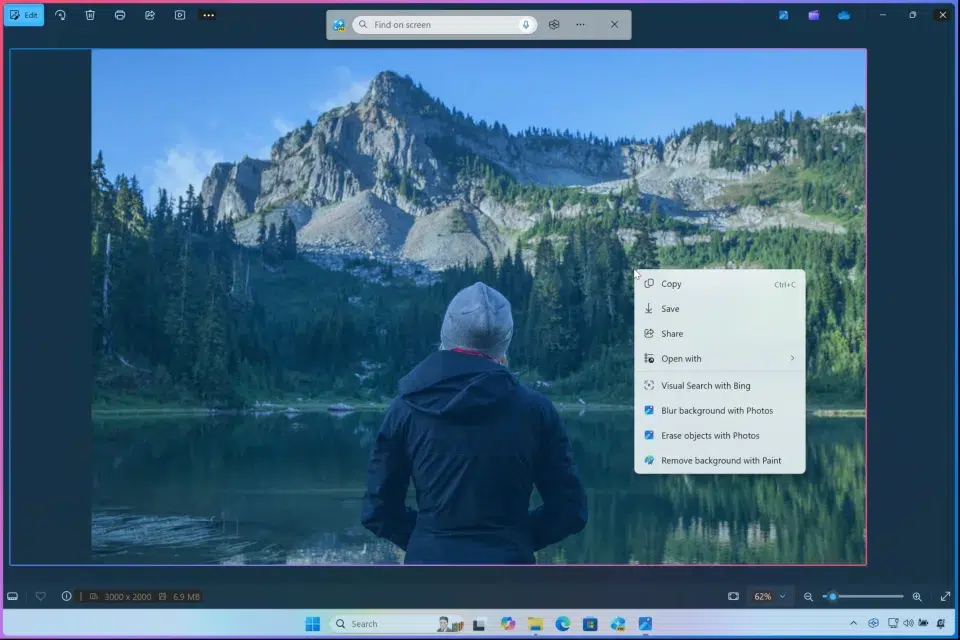
· ( Microsoft )
Copilot Voice promises to revolutionize how we handle our daily use of PCs. It is not just a simple enhancement of voice commands, like the old “Hey Siri” or “Hello Alexa”, but rather a deeper and more intuitive interaction that brings advanced voice recognition and quick responses. Yusuf Mehdi, Microsoft’s Executive Vice President, explains that this feature could be a significant step toward unlocking a new way to interact with technology.
But Microsoft hasn’t stopped there. It is also developing Copilot Vision, a tool that will allow Copilot to see what you are doing on the screen and make suggestions or respond based on the content you are viewing.
Imagine watching a movie or browsing a review site and having your computer suggest new programs or movies based on your preferences. This is already possible for some selected users, but the plan is to expand this feature to everyone in the future.
With these innovations, Microsoft not only plans to transform the experience of PC users but also boost computer sales.
Big Competition In The Market
In a market where giants like Apple and Google already dominate with their virtual assistants, Microsoft is pressured to stand out with its new AI features. And the success of Copilot could be crucial for the company’s future in the AI landscape.
One of the most intriguing aspects of Copilot Vision is its ability to not only listen but also “see” what the user is doing on the screen and then interact with that content.
This is something neither Apple, nor Google, nor Amazon currently offers. In a recent demonstration, Microsoft showcased how Copilot can converse with a user about movies on Rotten Tomatoes, providing suggestions based on the user’s preferences.
The naturalness of the interaction was impressive, even though the actual functioning of the tool in everyday life needs further testing.
Imagine, for example, that you are dealing with a complex spreadsheet. Instead of clicking and dragging numbers, you simply tell Copilot to create a chart, and voilà: the chart appears before you.
Or, if you are gaming on Xbox, you can ask Copilot for tips on how to get past a tough boss. Microsoft is clearly focused on making these interactions more intuitive and efficient, without abandoning traditional methods, like the keyboard and mouse, which will remain an important part of the user experience.
Microsoft CEO Brings More News
In addition to voice and vision, Microsoft has even bigger ambitions for its Copilot. According to Mustafa Suleyman, CEO of Microsoft AI, the company wants to give AI the power to take proactive actions on your behalf. Imagine being reminded of important appointments or even being surprised with words of encouragement on decisive days.
The AI could also automatically purchase items or schedule appointments if requested. This is the big paradigm shift that Microsoft wants to achieve: making interaction with technology even more proactive and personalized.
However, for this revolution to really happen, Microsoft needs to overcome a significant obstacle: competition with Apple and Google. Both companies are developing their own AI platforms to compete directly with Copilot.
Google, for example, is launching its Astra Project, which offers vision capabilities for smartphones. And Apple, although still in the early stages with its AI, promises features that are expected to hit the market in 2025.
Additionally, there is another factor that plays against Microsoft: its focus on PCs. Although Copilot is also available in applications for smartphones, the fact is that Apple and Google already dominate the landscape of virtual assistants on mobile devices.
And considering that consumers spend more time on their smartphones than on computers, it is a massive challenge to convince people to switch their native assistants, like Siri and Google Assistant, for Copilot.
Still, Microsoft has a card up its sleeve: its partnership with OpenAI, the developer of ChatGPT. This could be an important differentiator in the race to solidify its AI offerings in both the corporate and consumer markets.
However, the clock is ticking, and the company needs its technology to gain users’ trust before Google and Apple steal the spotlight.
If Microsoft fails, Copilot could become yet another promising technology story that never took off, like the famous but discontinued Office assistant Clippy.
The fate of Copilot lies in the hands of users, who will decide whether conversing with their computers will be a part of their routine or just another frustrated attempt by the software giant to change how we use technology.






Seja o primeiro a reagir!