





 Portuguese
  English
  Spanish
  3 min of reading


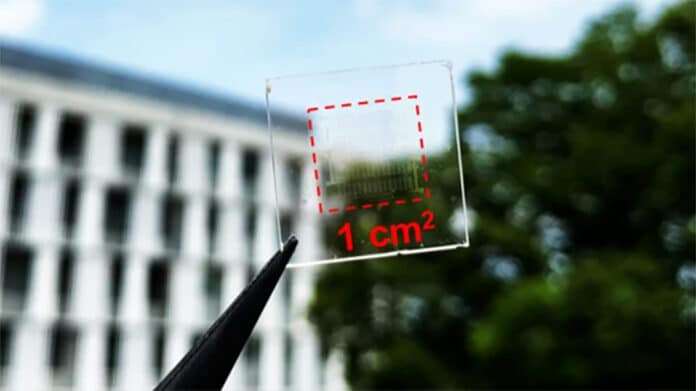
Scientists Claim That, Besides Producing Solar Energy, The Plate Can Be Augmented On Human Skin, In Automobiles And In Windows.
Scientists from Tohoku University announced through a paper this week that they developed a highly transparent solar panel (80% transparency, exceeding existing organic ones on the market), which will be used both in automobiles and on human skin, to produce solar energy as soon as it is exposed to UV rays. Another location where they may be exposed in the future is in apartment windows. It is extremely thin, with an atomic thickness made with indium tin oxide (ITO), a transparent semiconductor widely used in mobile phone and tablet screens.
Until now, according to the researchers, universities could not find any material that would provide transparency above 70%, like those already available on the market.
How Can It Be Used On Human Skin? Scientists Explain!
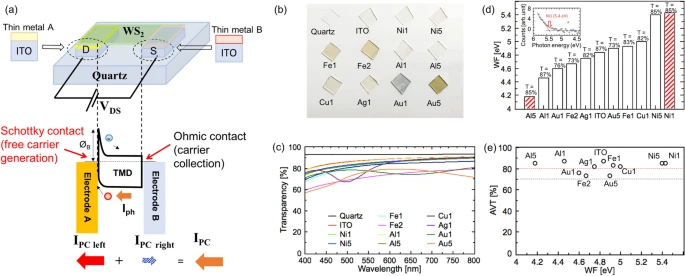
This was one of the hypotheses raised by the researchers who developed the solar panel since, by adding tungsten oxide over the semiconductors, it is possible to create an atomic thickness product that generates energy through UV ray exposure. Due to its extremely thin and flexible nature, it could even be used on the human body.
-
Expedition 501: Scientists drill into the ocean floor and discover a giant reserve of fresh water hidden beneath the sea, extracting nearly 50,000 liters and revealing an invisible system that could reshape the map of water scarcity.

-
Archaeologists find an intact tomb over 2,500 years old, with more than 100 preserved objects, weapons, jewelry, and human remains never touched.

-
Volcanic lava transforms into threads as fine as human hair that travel over 30 kilometers by wind and fall like cutting rain on roofs and backyards in Hawaii and Iceland.

-
NASA issues a warning for the feared Godzilla El Niño that could change the planet’s climate in 2026 with extreme warming of the Pacific capable of causing devastating droughts in some regions and historic floods in others simultaneously.


Xing He argues that the components of this new solar energy panel prevent energy voltage drop or variation, which increases its durability.
Efficiency Of Cells Is A Thousand Times Greater Than A Traditional ITO Device
The research shows that the way the cells were organized allows the solar panel’s efficiency to be a thousand times greater than the organization of other developments containing ITO in their composition. In other words, a more effective and efficient utilization of solar ray exposure is achieved.
Another positive aspect is that the current cells are more transparent than the technologies already created, not to mention their atomic thickness.
Discovery Proves Essential After Eighth Consecutive Increase In Materials Used For Traditional Solar Panel Production
Polysilicon, the main material used for the production of solar panels, has been facing the eighth consecutive rise due to the lack of market stocks and the high demand from companies to migrate to cleaner energy. In light of this, the discovery has proven positive to meet the demand for the primary raw material and thus make the transition more viable. Polysilicon is experiencing its highest price increase in the last eleven years.
Transparent solar panels have been studied by researchers in the United States to make it possible to use them in windows without blocking light entry, which could be an alternative to mitigate the lack of space in apartments for traditional photovoltaic polysilicon panels. However, this technology is still far from reaching Brazil.
An alternative for solar energy production without the use of polysilicon is the use of seaweed. In another article published by Click Petróleo e Gás, we announced that Green Fluidics developed a solar panel with seaweed capable of producing energy when exposed to UV rays while capturing carbon dioxide from the environment.


In addition to solar panels, scientists from numerous countries, such as Finland, are studying ways to replace lithium batteries amid a market shortage. One of the most interesting projects is the sand battery, capable of producing energy for months.
Research Reference
“Article: Fabrication of Near-Invisible Solar Cell with Monolayer WS2. Authors: Xing He, Yuta Iwamoto, Toshiro Kaneko, Toshiaki Kato. Journal: Nature Scientific Reports. Vol.: 12, Article Number: 11315. DOI: 10.1038/s41598-022-15352-x.”








Seja o primeiro a reagir!