






 Portuguese
  Spanish
  2 min of reading
  0 comments


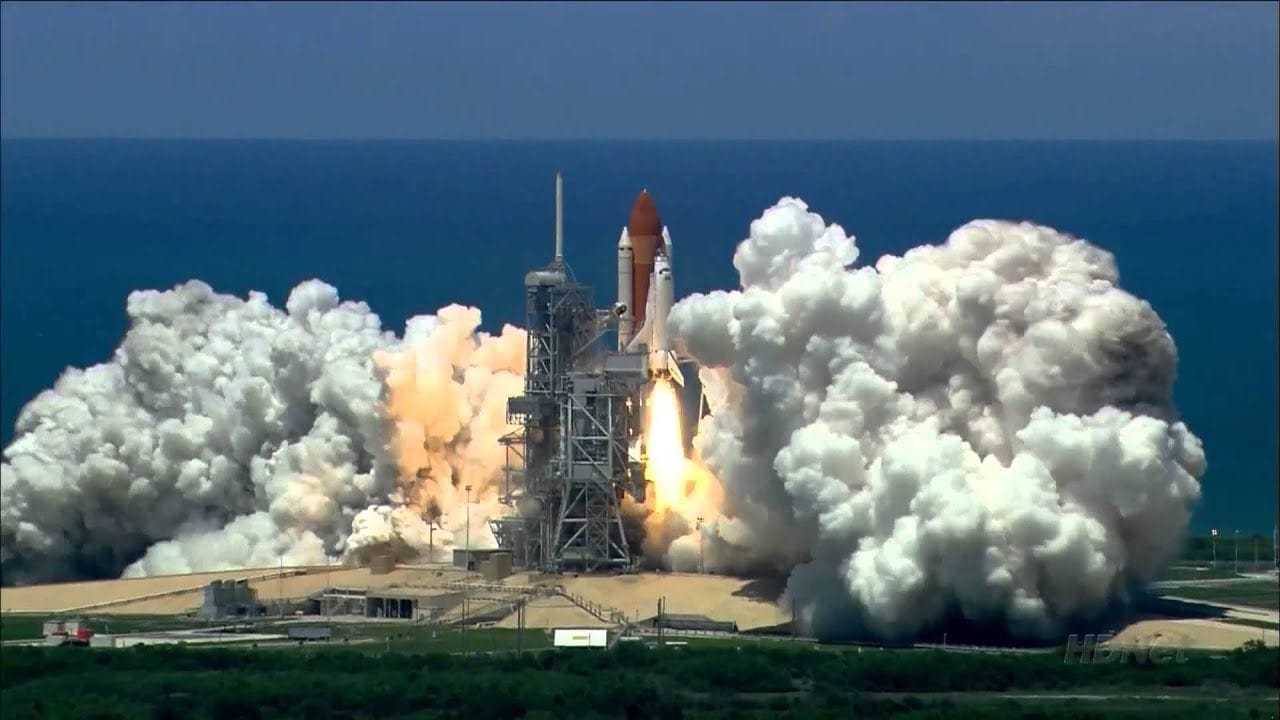
In the Memorable Spring Night of 1992, the World Witnessed the Power and Precision of Engineering in the Launch of the Space Shuttle Endeavour at Cape Canaveral, Florida. An Unprecedented Space Rescue Mission, Marked by Technical Challenges and Innovations in Space Shuttle Engineering, Highlighted the Extraordinary Capabilities of This Spacecraft.
The team led by Bruce Melnick faced an unprecedented challenge: to rescue a satellite intended for geostationary orbit, but trapped 800 miles above Earth due to a launch failure. The mission required not only courage but also technical mastery of the complex engineering involved, primarily of the space shuttle.
The engineering behind the space shuttle revealed itself in multiple facets, starting with the ignition phase. The three liquid fuel engines, powered by turbopumps, roared to life with a devastating force, balanced only by eight explosive bolts. The entire structure was kept stable by the largest solid rocket boosters ever manufactured at that time, which, upon receiving the signal, triggered an internal combustion process, lifting the space shuttle toward space.
This Complex Process Showcased the Innovative Design and Functionality of the Space Shuttle
The precise engineering was crucial not only for the launch but also for the safe separation of the solid rocket boosters. The ignition system of the boosters, designed for a quick and efficient combustion, and the safety mechanisms incorporated, such as frangible bolts and separation motors, ensured an effective and safe decoupling.
-
OpenAI wants to transform ChatGPT into a powerful super app with AI agents, enhanced Codex, and tools for businesses before a potential billion-dollar IPO.

-
Alibaba launches artificial intelligence for robots in China and reveals why big techs now want machines that do much more than just talk
-
150 scientists from 40 countries warn of a silent reversal in rivers: data from 550 watercourses show that agricultural and urban pollution accelerate the decomposition of aquatic organic matter, transforming ecosystems that should absorb carbon into emitters of CO2 and methane into the atmosphere.
-
Google releases Android 17 with a Pixel Drop packed with AI, Gemini Omni for videos, Lyria 3 for music, and Wear OS 7 to make phones and watches more connected than ever.





During the flight, attention turned to the control and maneuvering systems of the shuttle. The thrust vector control and the roll program, initiated after liftoff, were fundamental in guiding the spacecraft on the correct trajectory. These systems demonstrated the engineers’ ability to adapt and optimize the shuttle’s design for specific flight and maneuvering challenges.
The second phase of the mission, driven by the main engines and sustained by the external tank, highlighted another layer of engineering. This tank, although not reusable, was vital for supplying fuel and liquid oxygen. The process of disconnecting the tank, followed by closing the compartment doors, was a critical operation that required precision and reliability.
The success of this mission not only marked a milestone in the history of space exploration but also reaffirmed the engineering of the space shuttle as an example of innovation, precision, and performance. A journey that began with the launch at Cape Canaveral and culminated in the successful rescue of the satellite, proving humanity’s ability to overcome technical challenges with ingenuity and determination.





Be the first to react!