





 Portuguese
  English
  Spanish
  6 min of reading
  0 comments


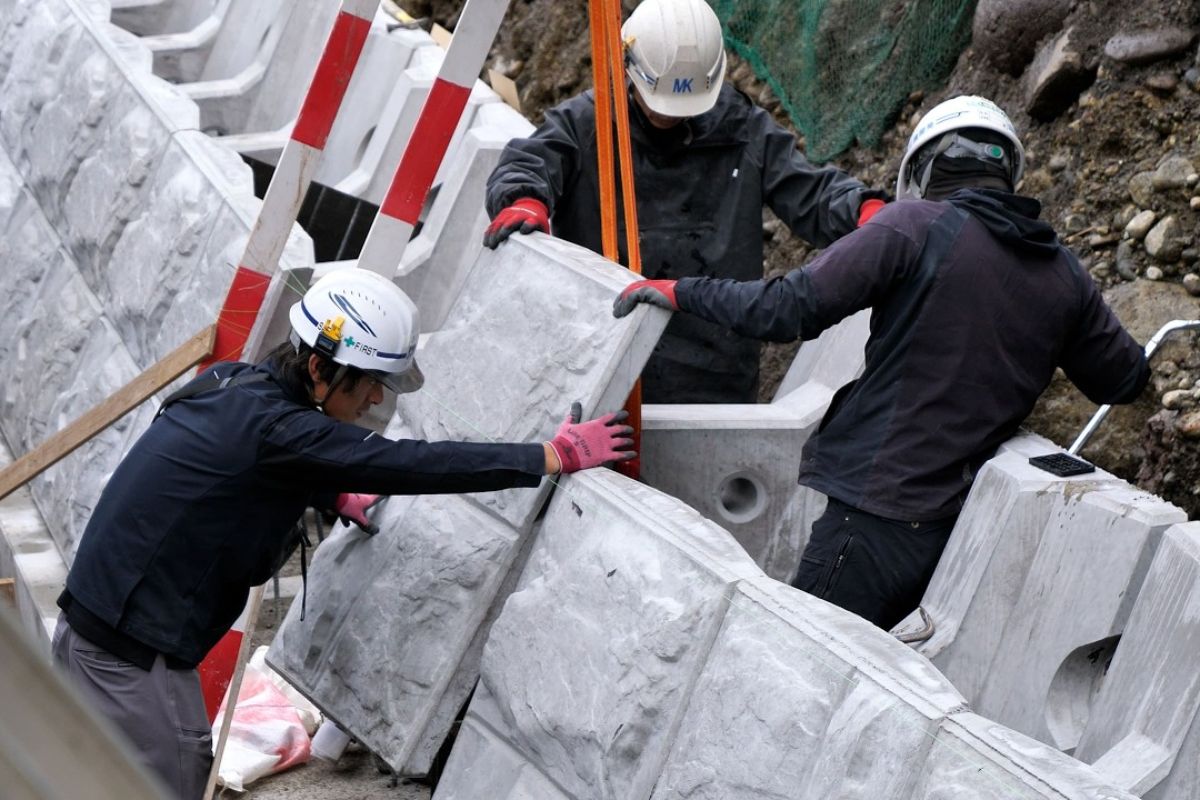
In An Essential Recovery Project After Typhoons, Extreme Engineering Stacks Giant Blocks With Millimeter Adjustments, Uses Reinforced Concrete, Restores Pipes, And Creates A Wall In Six Steps To Contain Erosion And Prevent New Collapse.
When typhoons devastate a stretch of coastline, it’s not just the landscape that collapses. The structure that held the soil gives way, pipes become exposed, erosion advances, and the safety of the entire region is at risk. It is in this scenario that extreme engineering comes into play, called in to reconstruct a retaining wall with giant blocks, reinforced concrete, layers of draining gravel, and a rigorous plan divided into six steps.
After excavating the bed and installing foundation blocks in the previous phase, the most visible part of the reconstruction begins.
Now, the mission is to stack large concrete blocks with millimeter precision, reinforce the interior of this structure with steel and concrete, stabilize the soil with draining fill, and restore pipes that became exposed in the collapse.
-
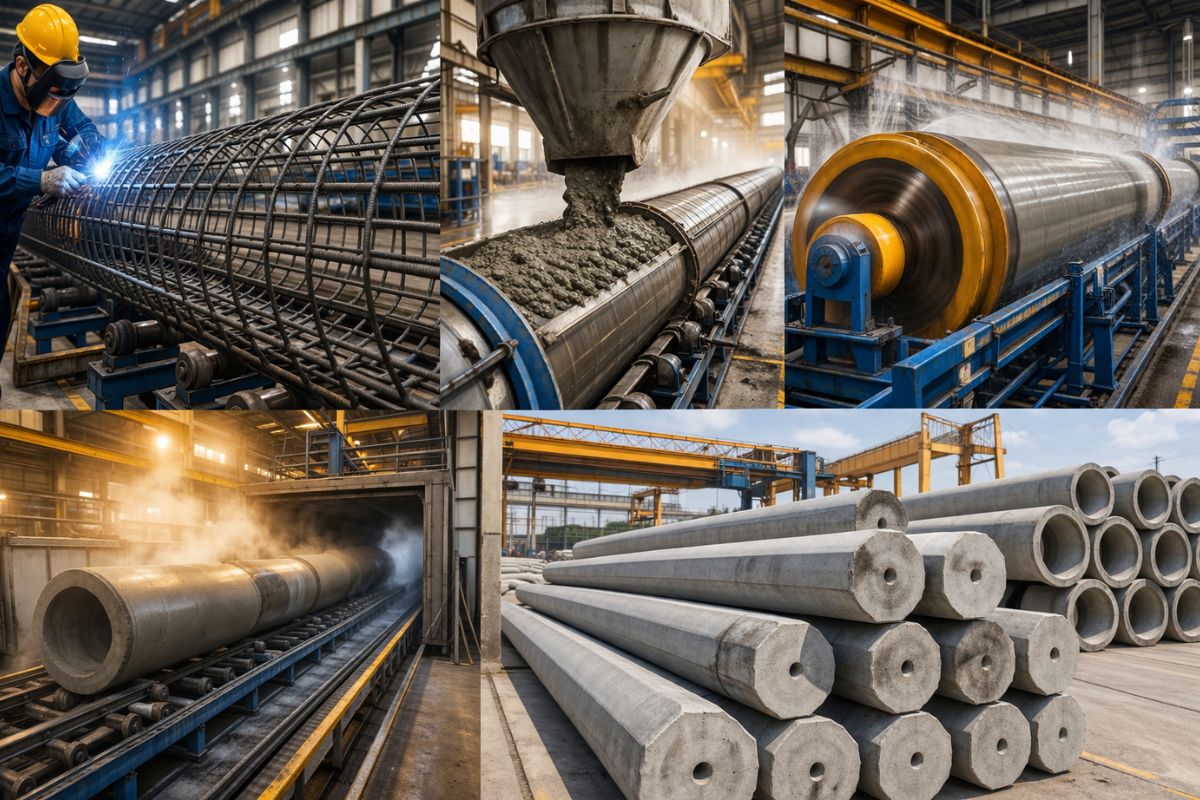
The factory shows how PHC piles and precast tubes are made; steel turns into a welded cage, high-strength concrete enters the mold, spins in centrifugation, cures in steam, and is ready in hours.
-
Small house with natural light becomes a trend in sustainable architecture and reveals how smart designs reduce energy consumption and enhance comfort in compact spaces.

-
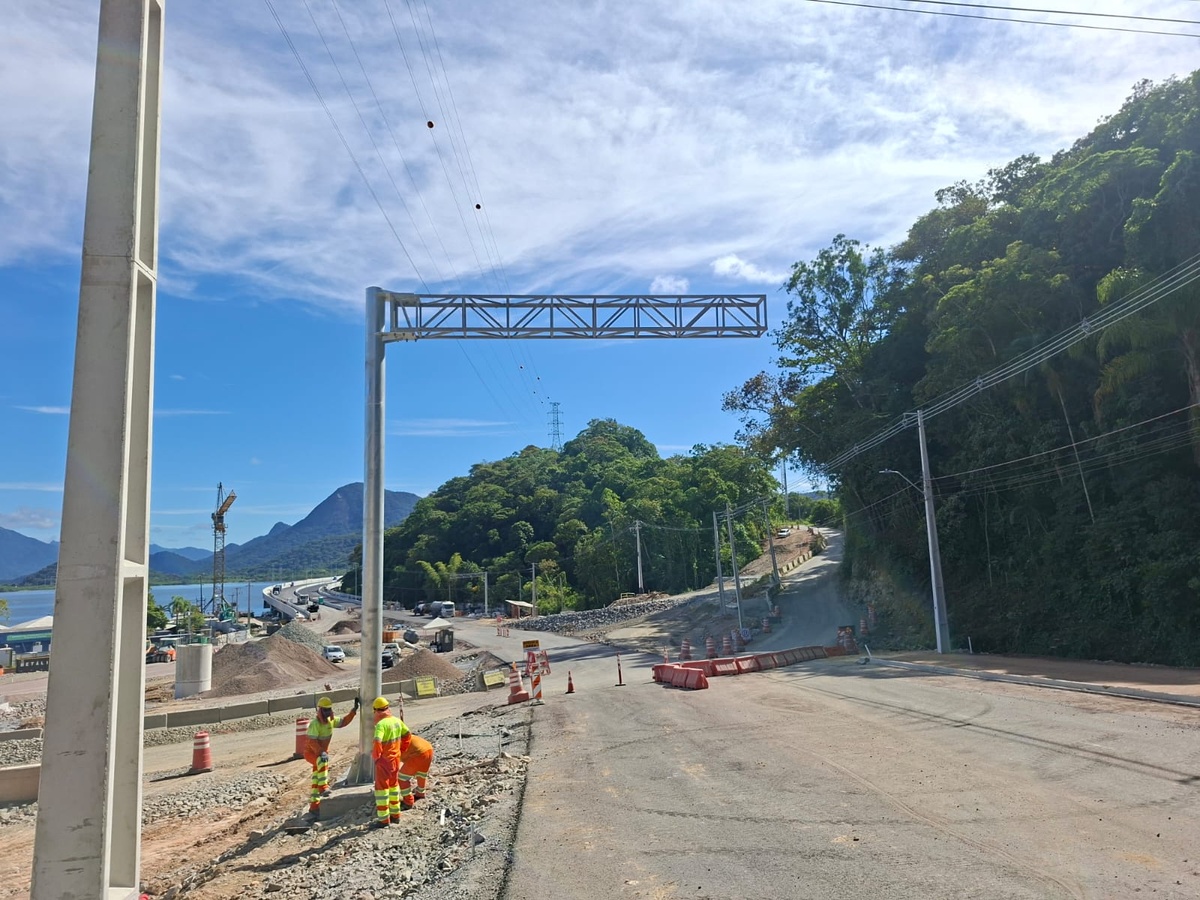
Guaratuba Bridge enters the final phase with high-standard road signage implemented by IASIN and inauguration scheduled for April 2026.
-
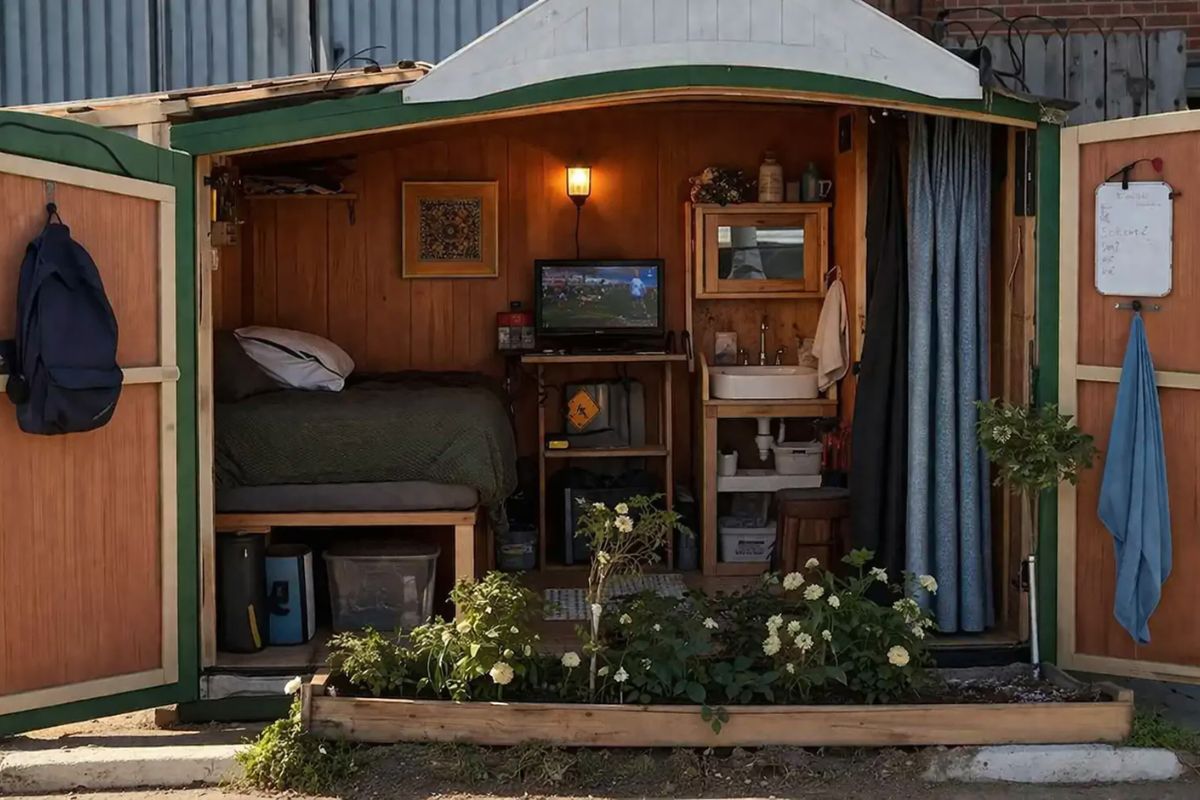
A homeless person in Los Angeles built their own wooden house with a garden at the entrance, a bed, a television, and a bathing area, and is now selling identical mini houses for $150 to other homeless individuals who prefer anything over returning to plastic tents.
Every decision, from the first layer to the last block, shows why this type of work is a living manual of extreme engineering applied to natural disasters.
When Extreme Engineering Enters Into Action After Typhoons
The reconstruction of the wall is part of a longer sequence of recovery from disasters caused by typhoons.
In the previous step, the team had already excavated the bed and installed foundation blocks to create a solid base. Now, extreme engineering moves into Part 3 of the process, where the wall begins to actually take shape.
The goal is to restore stability to a collapsed fill, contain erosion, and protect the coast from new collapses.
To achieve this, the technicians spend weeks installing large blocks, filling voids with draining gravel, pouring concrete into the structure, and preparing for integration with the future breakwater.
This is not just about replacing what fell, but about rebuilding more robustly than before, with solutions that withstand the next storm season.
First Layer: Millimeters That Decide The Future Of The Wall
In the logic of extreme engineering, the first layer of blocks is decisive. If it is misaligned, the error multiplies with each new level stacked. That is why the beginning of the work is almost surgical.
The technicians use a main bending point as a reference, aligning the blocks on both sides of the wall.
Adjustments are made in millimeters to ensure that each piece is in the exact position, avoiding shifts that could compromise future stability. It is at this stage that the wall “is born right” or “is born crooked,” and thus, the time invested in fine adjustments is not excessive; it is prevention.
As the layers progress, the blocks form a robust wall capable of withstanding the pressure of water, soil, and the impacts generated by extreme events that struck the region.
Giant Blocks, Custom Cuts, And The Heart Of Reinforced Concrete
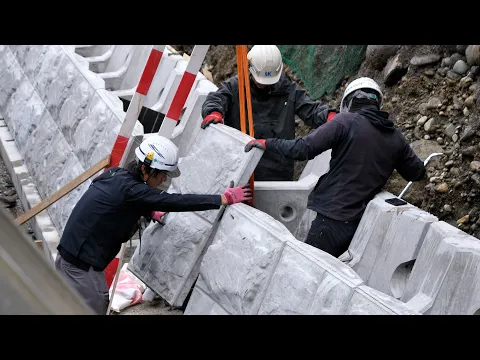

The bending points of the wall do not follow simple shapes. Curves, plane intersections, and changes in direction require that the blocks be customized for the location.
That is why extreme engineering turns to custom cutting of large concrete pieces, adjusting size and shape to fit exactly into the terrain’s geometry.
Behind the blocks, the team installs waterproof paper formwork to prevent concrete leaks and control the internal filling.
Then, the back is filled with crushed stone, and the interior of the blocks receives concrete, poured from the concrete truck that accesses the area via a temporary road created in the initial phase of the work.
This concrete bonds the blocks together and increases the resistance of the entire structure, transforming the wall into a single body.
Steel bars are inserted to prepare for integration with the second layer and the upper levels, ensuring that the whole works as a monolithic piece when pressed by water and soil.
Draining Gravel, Compaction, And Six Steps Of Filling
Behind the coating, extreme engineering is not limited to merely pushing dirt. Recovery is done with layers of draining crushed stone, which help reduce the pressure exerted by the fill on the wall and prevent water accumulation.
The gravel is laid in layers of about 30 centimeters and compacted with appropriate rollers.
Each strip is compressed before the next is laid, creating a fill that behaves more stable and predictably. This routine is repeated many times, linking the excavated area back to solid ground.
The completed fill is divided into six stages, from installing the first blocks to finishing the top layer.
This division into phases allows for better control of the soil behavior, monitoring settlements, correcting minor deviations, and ensuring that the final structure is within the parameters defined in the design.
Lateral Locking And Erosion Protection

At the ends, the concern is to prevent water from finding lateral paths to attack the structure. For this, stopping blocks are installed that act as a sort of lid on the sides of the coating.
These final blocks are joined by screws tightened with precision, forming a set that reduces water entry through the edges and helps prevent erosion and collapse.
This is a typical detail of extreme engineering: what seems small in the construction becomes decisive when the wall is tested again by the typhoons.
As the process advances, the same method is repeated along the entire length of the fill, until the reconstructed wall forms a continuous line of protection along the coast.
Hume Pipes Reinforced To Protect What Nobody Sees
The typhoons did not only hit the wall. With the collapse of the coating, Hume pipes became exposed, vulnerable, and subject to further damage.
Ignoring this point would be a serious mistake. Therefore, extreme engineering also addresses the restoration and reinforcement of the pipes.
First, a foundation is built to connect the existing Hume pipe to a new segment, ensuring continuity and adequate support.
Then, this piping is reinforced by encasing the set in concrete, forming a sort of protective shell.
Thus, the buried system gains a new structural protection that can withstand additional stresses and soil movements.
When the restoration of the Hume pipes is completed, the set begins to work in harmony with the new wall and the draining fill, reducing the risk of future collapses caused by failures in buried systems.
From The First Stone To The Ready Wall: The Signature Of Extreme Engineering
After several weeks of stacking blocks, pouring concrete, compacting gravel, and reinforcing pipes, the reconstructed wall begins to show its definitive volume.
What was once a destroyed stretch, marked by the force of the typhoons, becomes a solid structure, with blocks reaching up to four levels high and carefully rebuilt fill.
The work does not end when the last layer becomes visible. The same precision applied to the exposed parts is used on the hidden regions, those that the eye cannot reach, but that support the structure for decades.
This is perhaps the clearest mark of extreme engineering: building with an eye on what time, water, and the next storms will still test.
When the breakwater is finally completed in the next phase, the entire sequence of steps, from the foundation to the final layer, will show how engineering can transform a disaster scenario into a protection system stronger than the original.
And you, seeing how extreme engineering rebuilds a wall block by block, which part impresses you the most: the millimeter adjustments, the use of reinforced concrete, or the patience to divide everything into six steps to ensure the region’s safety?






-

-

-

-

-

24 pessoas reagiram a isso.