





 Portuguese
  English
  Spanish
  5 min of reading
  0 comments



In Interview, The AI Security Expert Claims That, Without The Need For Superintelligence, Automation Can Already Push Unemployment To 99% And Reduce The Market To “Just Five” Occupations By 2030. He Calls This The End Of Work And Accuses The Sector Of Ignoring Security In The Real World.
By 2030, AI security expert Roman Yampolskiy Puts An Extreme Prediction On The Table: Automation Could Drive The Need For Human Labor To A Level Close To Collapse, With 99% Unemployment And A Market Reduced To “Just Five” Jobs. In His Diagnosis, This Could Happen Even Without Superintelligence.
The Warning Comes With A Direct Critique Of How Systems Are Launched And Scaled: According To Yampolskiy, the Sector Accelerates Capabilities And Treats Security As A Patch, Which Would Widen The Gap Between What AI Can Do And What Society Can Control.
The Thesis Of The End Of Work And The Role Of Automation

In Discussing Automation, Yampolskiy Argues That The Replacement Of Cognitive Activities And Decision Routines Could Displace A Much Larger Slice Of Jobs Than The Public Discussion Typically Admits.
-
Astronomers have found signs of a planet hidden for decades in forgotten telescope data, and if it really exists, it will be the first new world in the solar system in over 170 years.

-
Scientists have caught a star 450 light-years from Earth, only 200 years old, spewing gas and energy in bursts, and no one knows for sure what is happening with it.

-
After being stalled for seven years in the desert, the 1 km skyscraper in Saudi Arabia has resumed construction, rising one floor every three days, and is now on track to surpass the Burj Khalifa by 2028.

-
Scientists create a “molecular sponge” that transforms dirty water and even water from the Dead Sea into potable water using only sunlight and without consuming any electrical energy.

In His View, It Is Not Just A Switch Of Tools, But A Reorganization Of The Labor Market Itself, With Some Functions Disappearing And Others Shrinking To The Point Of Losing Economic Sense.
The Focus Of The Warning Is Less On A “Technological Judgment Day” And More On An Accumulated Effect: Each New Layer Of Automation Reduces The Demand For Human Tasks And Increases The Pressure For Productivity, Which Tends To Push Companies Toward Models With Fewer People And More Systems.
When This Spreads Across Entire Sectors, The Consequence Is A Simultaneous Shock To Jobs, Salaries, And Entry Opportunities.
Why 2030 Becomes The Most Cited Benchmark
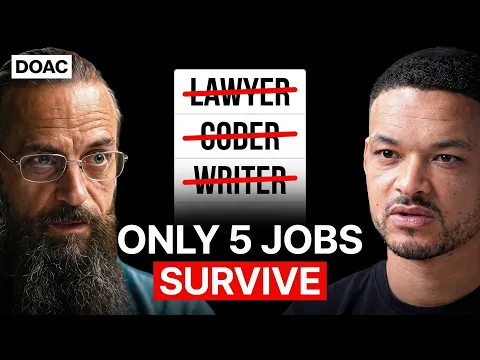

In The Projection For 2030, The AI Security Expert Links The Shift To The Advancement Of Humanoid Robots With Sufficient Dexterity To Compete With Humans In Different Domains, Connected To AI Systems And Capable Of Acting In The Physical World.
The Reading Is That When Automation Moves Off The Screen And Gains Substance, the Work Space Available For Humans Becomes Dramatically Smaller.
This Detail Changes The Scale Of The Debate Because It Moves Automation From The Office To The Street, The Workshop, And The Construction Site.
What Today Seems Concentrated In Digital Tasks Would Also Begin To Impact Routines That Depend On Movement, Manipulation, And Presence, Which Expands The Reach Over Jobs And Reduces The Ability To “Escape” To Manual Occupations.
The Number Of 99% And What It Means In Practice
When Yampolskiy Talks About 99% Unemployment, He Is Describing A Scenario Where Automation Reaches Most Professions And Eliminates The Economic Need To Keep People In Standardizable Tasks.
This Does Not Mean That Everyone Is Left With Nothing To Do, But That The Formal Market WIll No Longer Have Enough Job Openings To Absorb The Population, Creating Structural Pressure On Income.
Along The Same Lines, The Idea Of “Just Five” Jobs Works As An Image Of Compression.
The Warning Does Not Depend On Listing What Those Five Occupations Would Be, But On Affirming That The Core Of Human Work Would Become Too Small To Sustain The Current Model Of Employment As The Rule.
Security Behind And The Critique Of Improvisation
The AI Security Expert Says That We Do Not Know How To Make Systems Fully Secure And That The Gap Between Capability And Security Is Growing Over Time.
In Technical Terms, He Contrasts The Rapid Evolution Of Capabilities With A Much Slower Advancement Of Safeguards, Which Increases The Risk Of Systems Doing More Than We Can Predict, Control, And Explain.
In His View, This Asymmetry Encourages A Reactive Stance: First, The System Is Launched, Then We Try To “Fix” Its Behavior.
For A Technology He Describes As Increasingly Comprehensive, This Order Of Priority Turns Security Into A Passive Concern, Because The Risk Grows Along With The Adoption And Dependence Of Companies And Services.
Why The Phrase “Totally Unprepared” Is Not Rhetoric
The Expression That We Are Totally Unprepared, In The Context Of The Warning, Points To Insufficient Governance.
If Automation Advances Rapidly, The Central Question Becomes Not Only “What Does The Technology Do” But “Who Decides, With What Criteria, With What Auditing, And With What Responsibility.”
This Point Matters Because 2030, In The Presented Narrative, Is A Planning Deadline.
Without Security Mechanisms That Keep Pace, Automation Tends To Be Treated As Inevitable, And Jobs Become A Variable For Adjustment, With Concentrated Impacts On Those With Less Bargaining Power.
How To Read The Warning Without Falling Into Fatalism
The Most Useful Content Of Yampolskiy’s Warning Is Not The Number Itself, But The Chain Of Questions He Raises.
What Part Of Your Sector Is Already Being Replaced By Automation? Which Tasks Have Become Routine For The System?
Where Does Security Appear As A Requirement And Where Does It Become A Post-requirement? At What Point Does The Organization Assume That Jobs Are No Longer A Priority Because The Pressure For Efficiency Outweighs The Social Cost?
Even If 99% Is Interpreted As An Extreme Hypothesis, The Direction Of The Argument Is Clear: Automation First Reduces, Then Redefines, And Finally May Empty The Role Of Jobs As The Main Form Of Economic Participation.
The 2030 Prediction Made By The AI Security Expert Brings An Operational Message: Automation And Security Cannot Be Discussed As An Abstract Topic, Because The Speed Of Adoption Alters Jobs Before Society Adjusts Rules, Protections, And Oversight.
The Most Pragmatic Step Is To Monitor What Your Company Or Sector Is Automating, Demand Transparency About Security, And Record Impacts On Jobs And Routines Before They Become Irreversible.
In Practice, This Means Mapping Tasks Replaceable By Automation, Identifying Where Critical Decisions Are Delegated To Systems, And Demanding That Security Is Treated As A Condition For Scale, Not As A Patch Later.
In Your Area, Has Automation Already Reduced Jobs Or Does 2030 Still Seem Too Far Away To Change Plans Now?








-

-

-

-

-

-

22 pessoas reagiram a isso.