





 Portuguese
  English
  Spanish
  4 min of reading
  0 comments



Brazil Has Flights That Last Less Than Half an Hour and Others That Exceed Four Hours, Showing How Aviation Connects Distinct Realities in a Territory of Continental Dimensions.
Quick connections within the same state and extensive routes from the Northeast to the South show the differences in the Brazilian air network.
The shortest flight in operation in the country is the Salvador–Morro de São Paulo route, in Bahia, operated by Abaeté, covering 83 kilometers in about 24 minutes.
At the other end, the Recife–Porto Alegre itinerary, operated by Azul, covers 2,963 kilometers in 4 hours and 13 minutes.
-
A scientist proved with a thermal camera that the fan does not cool the environment but reduces the temperature of your skin by up to 6 degrees thanks to a natural mechanism of the human body that almost no one understands how it really works.

-
Scientists find a new explanation for the origin of Earth, which may have formed solely from material close to the Sun, changing an old theory and indicating that Jupiter may have been the cause of it all.

-
Brazilian beaches are among the most contaminated in the world by cigarette butts, with levels up to 40 times above the global average and areas where this waste already represents the majority of all the trash found.

-
2,000-Year-Old Machine Gun: Roman weapon found in Pompeii fires arrows at 109 m/s with an automatic gear mechanism, leaving perfect geometric patterns on the walls and proving its real use in the siege of 89 B.C.


The data comes from the National Civil Aviation Agency (Anac) and reveals how air transport connects regions with distinct realities, playing an essential role in a territory of large dimensions.
Air Network Reflects Territorial Extension and Diversity of Routes
Commercial aviation in Brazil combines short regional routes with long-distance inter-state connections.
According to industry experts, the variety of routes is linked to the geography of the country and the unequal concentration of airports and urban centers.
On short flights, airplanes significantly reduce travel time in regions where land transport is still slow.
The longer routes connect distant economic and tourist hubs, functioning as strategic corridors of the national network.
Generally speaking, regional routes use smaller aircraft and local airports, while extensive flights are operated at large hubs equipped to accommodate medium and long-haul jets.
The Shortest Routes in Operation in the Country
The route between Salvador and Morro de São Paulo leads the ranking of shortest duration in Brazil.
The plane departs from the Bahian capital and lands on Tinharé Island in approximately 24 minutes, according to operational information from Abaeté.
Other short connections are concentrated in the Northeast.
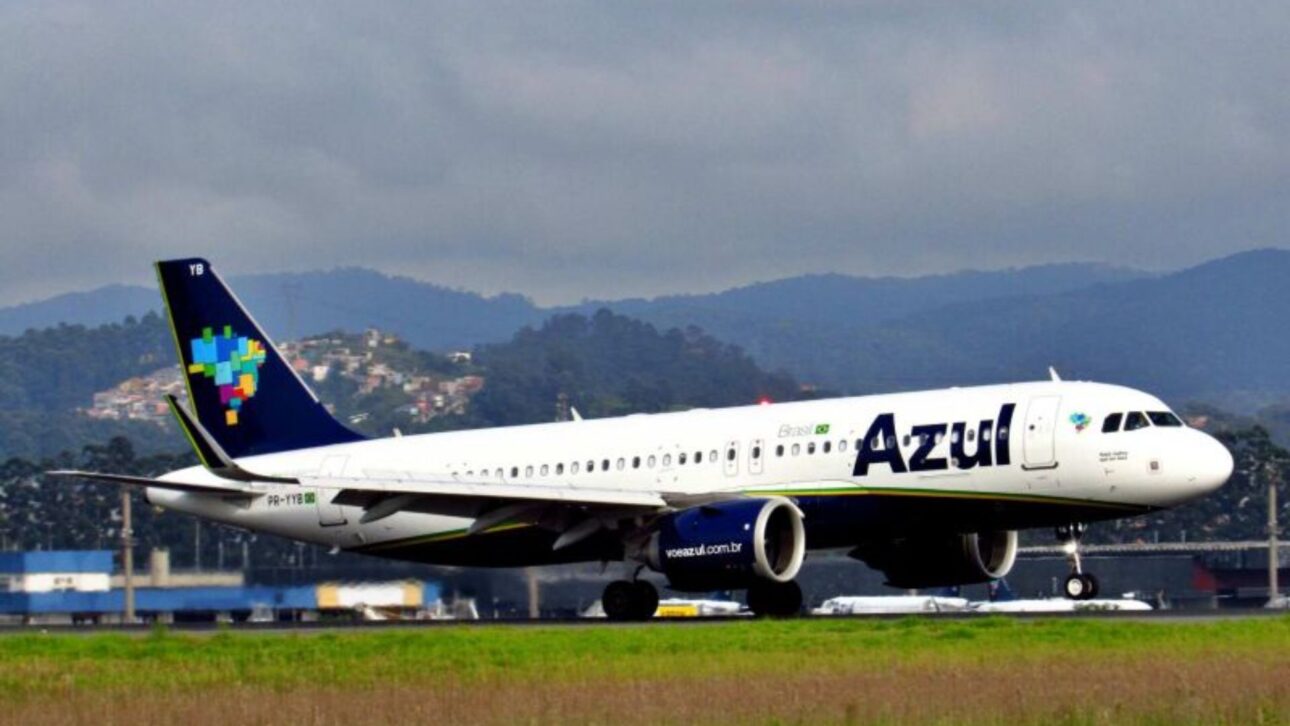
Between João Pessoa and Recife, Azul operates a route of 109 kilometers, with an average duration of 34 minutes.
Also in Pernambuco, the Caruaru–Recife route covers 121 kilometers in 36 minutes, while the Campina Grande–Recife flight covers 143 kilometers in 39 minutes.
In the Midwest, the Goiânia–Brasília route, maintained by Latam, spans 163 kilometers with an estimated duration of 41 minutes.
This route is considered a practical alternative for business travel and connections to other national destinations.
The Longest Connections in Brazil
At the other end of the list, the Recife–Porto Alegre flight ranks first among the longest in operation, lasting 4 hours and 13 minutes and covering 2,963 kilometers, according to Anac.
Following it are Rio de Janeiro–Manaus, operated by Gol and Latam, with 2,847 kilometers in 4 hours and 2 minutes, and Recife–Manaus, also by Azul, with 2,837 kilometers in 3 hours and 57 minutes.
The Belo Horizonte–Rio Branco connection, maintained by Azul, covers 2,788 kilometers in about 3 hours and 55 minutes, and the Manaus–São Paulo (Guarulhos) route, operated by Gol and Latam, totals 2,697 kilometers and 3 hours and 54 minutes.
According to industry data, these long-distance operations use larger capacity aircraft and require detailed logistical planning, as they involve different climatic zones and time zones.
Adjustments and Route Suspensions in 2025
Throughout 2025, several short connections disappeared from the official sales channels of airlines, changing Anac’s ranking.
Among them are the flights Monte Dourado–Almeirim (Pará), lasting about 30 minutes; Patos de Minas–Araxá (Minas Gerais), with 32 minutes; and Salvador–Barra Grande (Bahia), lasting 33 minutes.
Operations Araxá–Uberaba (Minas Gerais), lasting 32 minutes, and Jericoacoara–Parnaíba (CE–PI), with 39 minutes, were also suspended.
According to industry sources, the changes occurred due to operational and demand reasons, which is common in seasonal adjustments of the air network.
Factors That Explain the Differences Between Flights
Aviation transport experts point out that the variations between short and long routes are determined by geographic aspects, airport infrastructure, weather conditions, and economic viability.
In regions with limited land access, such as the Amazon areas, planes are the main option for quick travel.
In states with nearby cities and paved roads, air transport tends to be adopted only in tourism or business contexts.
The Anac reports that flight times and average distances may vary depending on the type of aircraft, wind conditions, and the route authorized by air traffic control.
A Portrait of the Country From the Skies
The latest data from Anac shows an overview of national aviation where flights of a few minutes coexist with crossings of thousands of kilometers.
According to analysts, this diversity reflects both the territorial dimension of Brazil and the strategic role of the air sector in regional integration.
The combination of short and long routes highlights that, regardless of distance, air transport remains a fundamental link between different parts of the country.









-

-

-

-

14 pessoas reagiram a isso.