





 Portuguese
  English
  Spanish
  6 min of reading
  6 comments


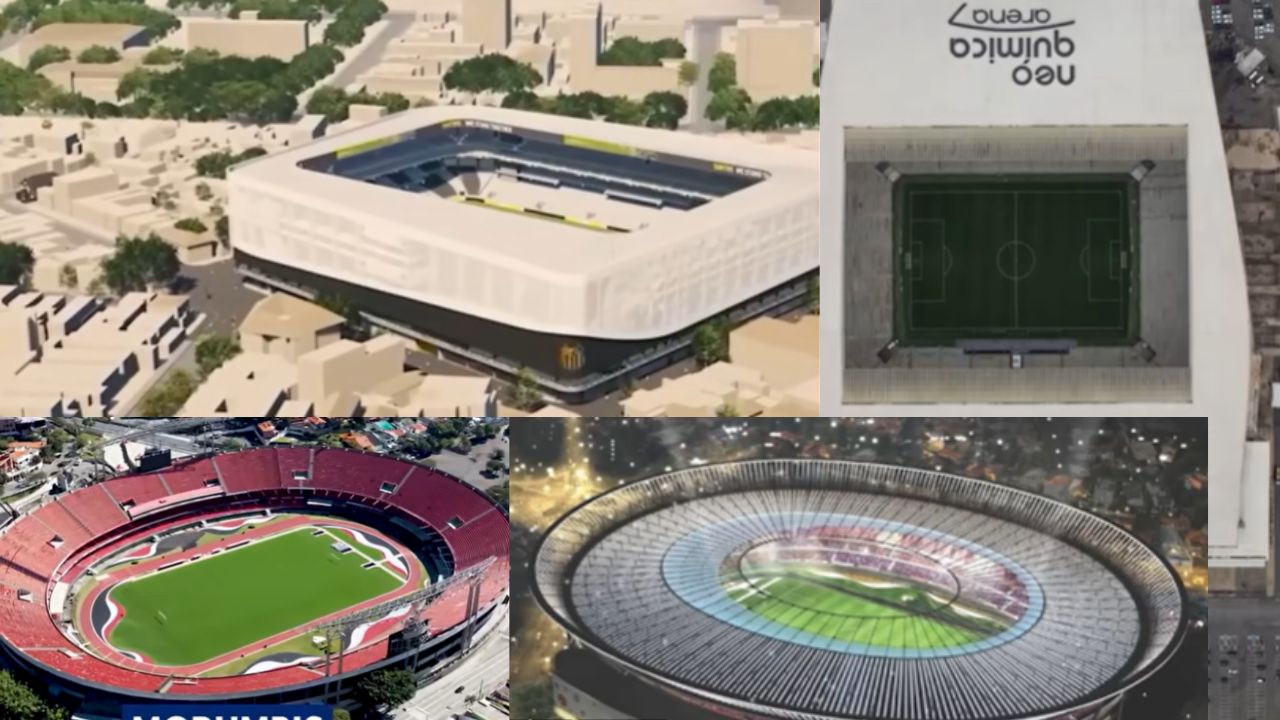


From Football Stadiums to Revenue Machines: How Stadiums in São Paulo Use Shows, Naming Rights, and Hospitality to Create a New Ecosystem.
The landscape of stadiums in São Paulo is undergoing a profound transformation, establishing the state as a laboratory for the future of entertainment in Latin America. Driven by the need to diversify revenues, clubs and operators are converting traditional football fields into complex multi-use arenas. As reported by Urbana, this elite group seeks high-performance pitches (synthetic or hybrid), segmented hospitality to increase average ticket prices, and a schedule of events that keeps the cash flow going, even without the ball rolling.
The beacon of this change is the Santiago Bernabéu in Madrid, which, after an investment exceeding 1 billion euros, has become the handbook for the “revenue machine arena”. With retractable roof and pitch, Real Madrid’s stadium has turned into a global event platform. It is this model, focused on operation 7 days a week, that São Paulo is mirroring in its major projects, pulling a lineup that includes Palmeiras, Corinthians, Santos, São Paulo, Portuguesa, and Pacaembu, redefining the operating standard on the continent.
The Bernabéu Standard and Urban Challenges
What defines the new Bernabéu, according to Urbana, is its ability to transform. The retractable pitch, stored in underground modules, frees up the floor for shows and conventions, while the retractable roof allows events to take place in any weather. Monetization occurs daily through tours, premium hospitality, and a 360º scoreboard. This changes the revenue scale, treating the stadium as a real estate and media asset, not just sports, creating predictable revenues that sustain the club.
-
Inflation in March reaches 0.88% according to IBGE and pressures the Brazilian economy, impacting family budgets and requiring more strategic decisions to maintain financial control.
-
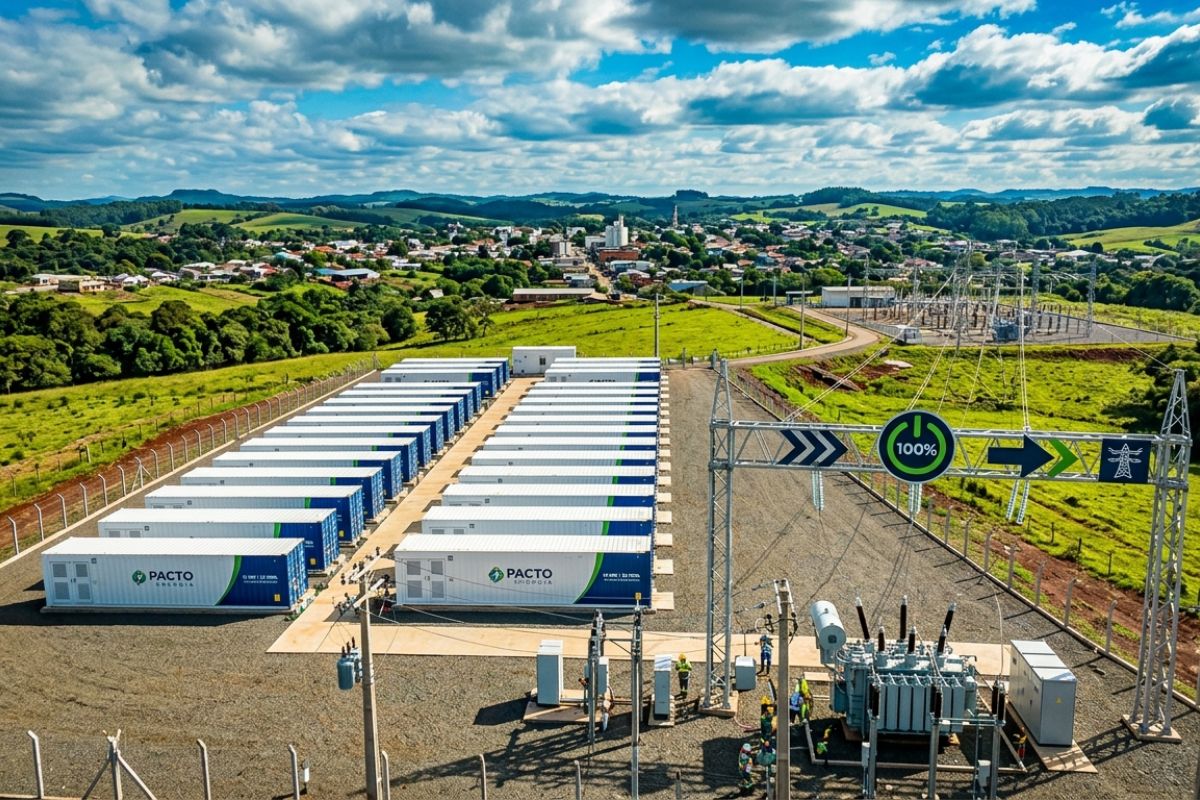
In Paraná, distributor Pacto connects 100% of the load in Coronel Vivida to batteries: a BES of 10 MW and 20 MWh costs just over R$ 30 million and lowers the local tariff now.
-
With a dependence of up to 80% on gas imported from the United States, Mexico is responding with a robust energy strategy, betting on shale gas, creating a scientific committee, and preparing to expand natural gas production to reduce vulnerability and strengthen its energy security in the coming years.
-
The United States proposes to Brazil a critical minerals agreement with a minimum price to combat Chinese dumping and priority for investment, but the Planalto is blocking the signing out of fear of upsetting China and due to electoral calculations in a year of competition.
However, this transformation brings important urban lessons. Urbana highlights that the insertion of the Bernabéu in a dense residential neighborhood generated strong resistance from neighbors due to the noise from sequential shows. This forced the club and the city to adjust the schedule, seek acoustic solutions, and even suspend operations for adjustments. It is clear that technology (metal facade, roof) solves part of the problem, but the curation of the calendar and coexistence with the surroundings are critical variables when the arena becomes a high-rotation urban stage.
Allianz Parque and Pacaembu: The Success Stories in Operation
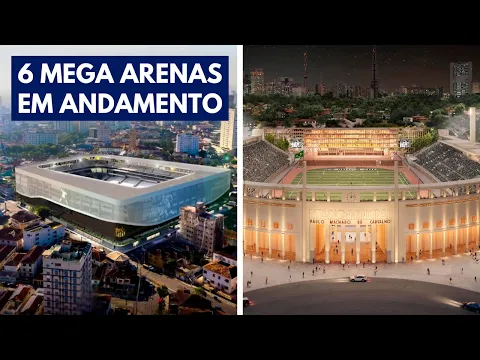

Allianz Parque, home of Palmeiras, is perhaps the most instructive case of a successful multi-use arena in Brazil. Urbana details that its design was conceived from the beginning for operational speed. The synthetic pitch (Greenfields MX Elite 50) tolerates heavy setups, reducing the turnaround time between games and shows. The structure supports complex loads, and the loading and unloading flows are segregated from the public.
The operation numbers are robust: the Naming Rights contract was closed for R$ 300 million for 20 years. In 2024, the operation recorded revenue of R$ 101 million from 77 events (30 games and 47 shows), welcoming 2.5 million people. The transfer to Palmeiras during this period was R$ 9.5 million, demonstrating the strength of a model that still includes spaces like Parque Mirante for additional revenue.
Pacaembu, on the other hand, was reborn under a 35-year concession, becoming the Mercado Livre Arena Pacaembu. The project replaced the old “slide” with a modern five-story building that houses a convention center for 9,000 people (the main cash hub), restaurants, and technical areas. The Naming Rights contract, according to Urbana, exceeds R$ 1 billion for up to 30 years, an amount that helps to amortize the heavy investment in redevelopment.
The great innovation of Pacaembu is the integration of new products that ensure continuous revenue. A hotel operated by Universal Music will have rooms with direct views of the pitch. This, in practice, transforms the football match into a “premium daily rate” product in a central location in the city, exemplifying the new revenue architecture that monetizes the space seven days a week.
The Paulista Giants in the Midst of Transformation
In the East Zone, the Neo Química Arena, of Corinthians, operates in a hybrid regime. Football is the foundation, but events are selected according to access logistics and dispersal capacity. In 2025, the capacity was audited to 48,905 seats, allowing for better sectorization and premium offerings. The Naming Rights of R$ 300 million for 20 years is under discussion for repositioning value, facilitated by the recent drop in the termination fee, as reported by Urbana, between R$ 8 and R$ 10 million.
While the stadium offers wide spans and cutting-edge media booths, its “Last Mile” requires fine coordination with metro and trains to sustain more ambitious calendars. Meanwhile, in the metropolitan area, the Arena Crefisa Barueri has established itself as a modern second home, receiving R$ 70 million in investments to renovate boxes, change seats, and install synthetic turf, LED lighting, and high-performance sound, becoming a viable alternative when the central schedule is saturated.
The Future: Projects That Will Change the Landscape of Stadiums in São Paulo
The future of stadiums in São Paulo and its immediate surroundings is even more ambitious. The New Vila Belmiro, on the coast, is a symbolic piece. The approved project envisions a compact, verticalized arena for 30,000 people on the same site, with an estimated cost of R$ 400 million and a construction timeline of 36 to 40 months. The bottleneck, reports Urbana, is still the “financial kickoff” to equate the necessary fundraising.
In the capital, the plan for Morumbi is the largest-scale play. São Paulo secured Naming Rights with Mondelēz (R$ 75 million for 3 years) as a basis for a structural redesign led by WTorre. The proposal increases capacity to up to 85,000 seats, eliminates the athletics track, bringing the crowd closer to the field, and incorporates full coverage. The cost (capex) is estimated at R$ 1.5 billion, with a completion horizon by 2030.
Closing the loop in the capital, the New Canindé (Portuguesa) aims for 46,500 seats for games and up to 84,500 for shows, with construction set to start in 2026. Simultaneously, the Anhembi District, managed by GL Events, will receive R$ 1.5 billion in investments to modernize pavilions and build a state-of-the-art arena for 20,000 people. Urbana highlights that the goal is to create a complete event ecosystem in the north axis, connected to the hotel network and with robust logistics.
The Brazilian Impact and Paulista Leadership
The Brazilian map of stadiums matured after the 2014 World Cup, but Urbana points out that São Paulo is leading the operational standard with its intense calendar and focus on hospitality. Outside the capital, other players are standing out: the MRV Arena in Belo Horizonte (which generated R$ 88 million in revenue in 2024, with 71% net margin) and the Ligga Arena in Curitiba (which combines retractable roof and synthetic pitch).
Brazil, led by São Paulo, is setting the technical and commercial standard in Latin America. With arenas operating 7 days a week, long-term Naming Rights contracts, and corporate hospitality, the country is consolidating a predictable route for global tours. This movement strengthens the financial health of clubs and drives upgrades in Chile, Argentina, Colombia, and Mexico. São Paulo has proven that a stadium becomes a business platform when engineering, finance, and the city work as a team.
Do you agree with this change? Do you think it impacts the market? Leave your opinion in the comments, we want to hear from those who live this in practice.





O Flamengo, a maior máquina de fazer dinheiro no esporte na América Latina, já era p/ter feito seu estádio ou comprado o Maracanã.
O Flamengo ofereceu, deu assessoria de graça para os clubes de futebol no Brasil. Só o Palmeiras assimilou. Os demais, c/poucas exceções, estão mergulhados em dívidas/crises sem precedentes.
O Flamengo, só c/namings Rights dava p/pagar o estádio e ainda sobrava dinheiro p/investir na grandiosidade do clube. Só falta acreditar e ter visão de futuro. Se nos q têm menor expressão dá certo, imagine na maior potência das Américas!
Maravilhosos projetos! O Brasil precisa acordar da sonolência. Que surjam cada vez mais estruturas para acolher o grande público carente de entretenimentos! Que outras regiões do Brasil não fiquem só nos sonhos. Parabéns pela bela reportagem.
O problema é que no Brasil só tem visão p/corrupção.
Neste item somos de 1° mundo. Se o brasileiro tivesse a visão de fazer as coisas c/seriedade, já seríamos de 1° mundo. Temos tudo c/abundância q Deus e a natureza nos proporcionou. Não podemos + botar a culoa na maneura e nossa colonização. Já se passaeam + de 2 séculos!
Agora é só fazer as coisas certas e tirarmos o preconceito de que somos inferiores. Se não nos dermos valor, não serão os outros q virão resolver nossos problemas.
O Allians Parque pertencente a sociedade esportiva Palmeiras e Wtorre como investidor puxam a fila .situado num ponto estratégico da cidade de São Paulo a av Francisco matarazzo. Continuação da Gal Olímpia da Silveira que é continuação da av São João a 2 KLM do centro da cidade num local totalmente urbanizado com residências comércio e serviços entre 2 shoppings de alto padrão com 2 av paralelas av Antártica e av Pompeia a 300 m de uma estação metroviaria ferroviária e municipal com alto fluxo de pessoas pra shows ou jogos e eventos corporativos configura um complexo vitorioso e rentável para a cidade de São Paulo e para os que tiveram a visão de empreende lo.Uma Arena de primeiro mundo sem dúvida Parabéns.