





 Portuguese
  English
  Spanish
  3 min of reading
  0 comments


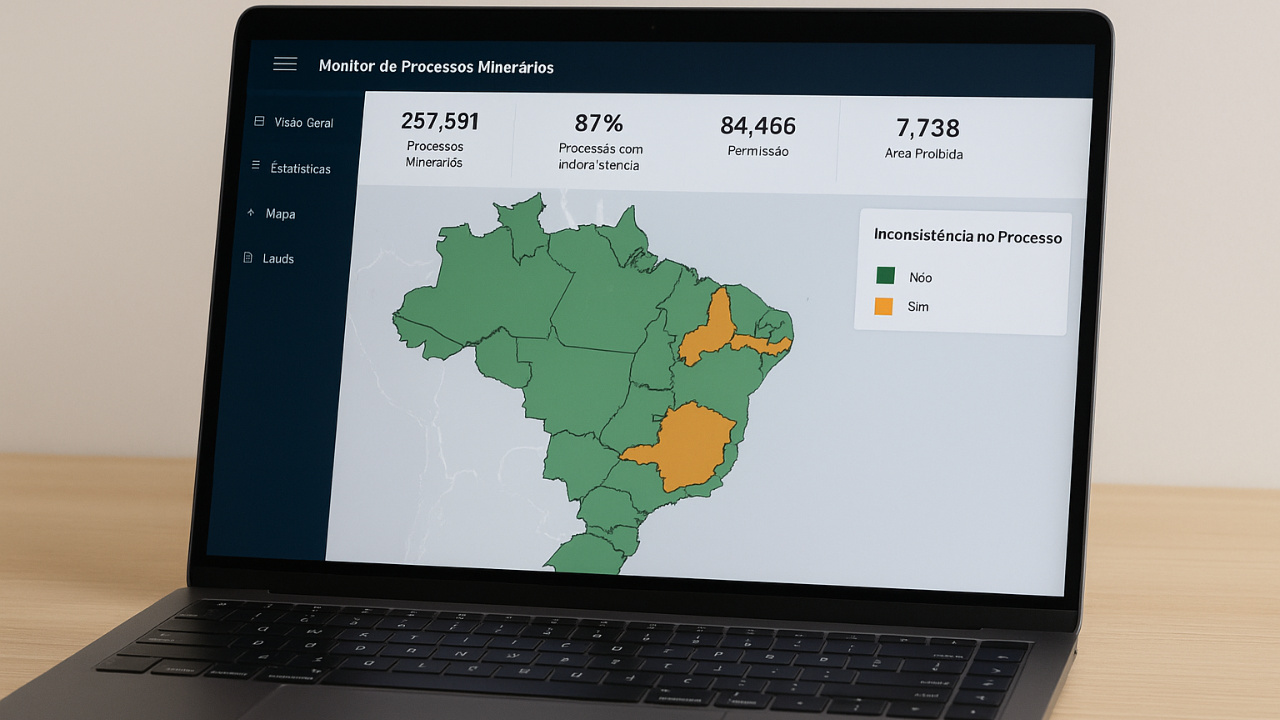
With 37% of Irregular Processes, Study Points Out Irregularity in Brazilian Mining and Reveals Structural Flaws.
A new survey published this Tuesday (2) revealed a worrying scenario for Brazilian mineral management.
The study indicates irregularity in 37% of mining processes in the country, according to data compiled by the Mining Monitor from MapBiomas, a platform that consolidates over 80 years of records from the National Mining Agency (ANM).
The system, launched nationally, shows what is irregular, who is affected, when and where the inconsistencies are identified, in addition to explaining how they occur and why they represent social, environmental, and economic risks.
-
Rare earths are in everything, from cell phones to bullet trains, and what almost no one realizes is why they have become the target of such a delicate global war.
-
Brazil extracts 26.3 million tons of ore from what was previously treated as waste, transforming residues into wealth, producing over 3 million tons of sand, and demonstrating how national mining is relearning to generate value.
-
A $3.5 billion megaproject in Latin America pumps desalinated seawater at 1,050 liters per second over 194 km to keep a copper supermine in the Andes operational for another 20 years.
-
A hidden mine in the Andes valued at nearly R$ 1 trillion is starting to attract global attention, containing copper, gold, and silver, and raises an intriguing question: why do Argentina and Chile need to act together to exploit this gigantic wealth?
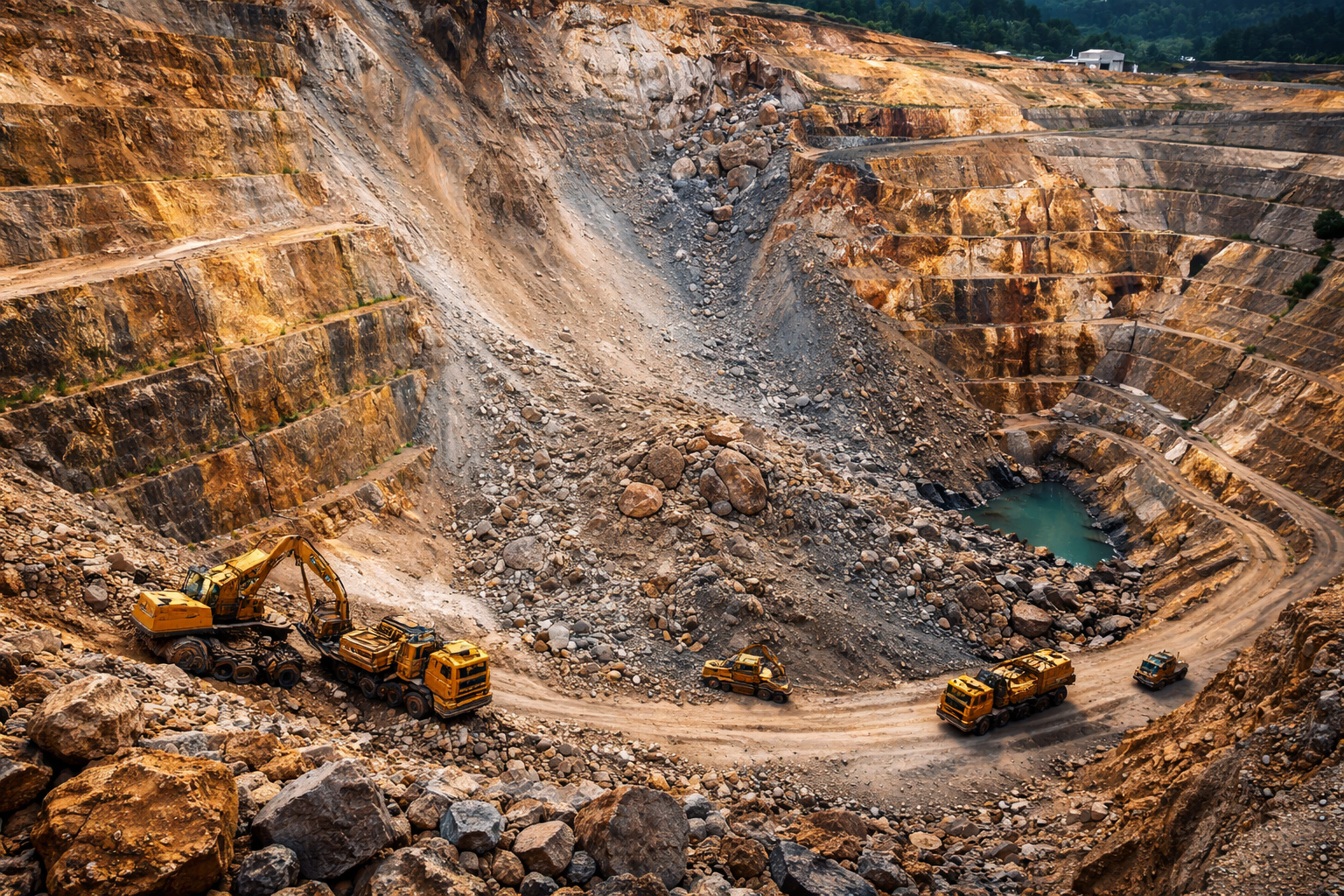
The monitoring, built from the cross-referencing of official information with annual maps of land use and cover, exposes flaws ranging from the absence of essential permits to operations in areas where the activity is prohibited by legislation.
Monitor Reveals Widespread Inconsistencies in Mining Processes
According to the study, Brazil currently has 257,591 active mining processes, and 95,740 of them show some type of problem, equivalent to the 37% highlighted in the report.
“The Monitor gathers and organizes dispersed data, highlights atypical situations, and presents the information clearly, understandably, and with free access,” it explains.
Thus, the largest share of inconsistencies is related to the absence of proper permission. There are 84,466 processes (33% of the total) without mining concessions, extraction records, licensing, or valid research authorization.
Operations in Prohibited Areas Increase the Warning of the Study
In addition to documentary flaws, the study also points out irregularity in 37% of mining processes in the country due to operations in areas where mineral extraction is prohibited.
In total, 7,738 processes (3% of the total) operate in protected territories, such as indigenous lands and integral protection conservation units.
Another critical point is the overlap of problems: 3,536 processes show both irregularities in the process and inconsistencies in the area where they operate.
Minas Gerais, Bahia, and Pará Lead in Number of Processes; Bahia Concentrates the Most Irregularities
The study details how inconsistencies vary among states. Minas Gerais (20.4%), Bahia (11.5%), and Pará (9.2%) comprise the majority of active mining processes.
Although Minas Gerais has the largest total volume, Bahia is the state with the highest index of irregularities, reaching 53% of the analyzed records.
Additionally, 4.83% of processes in Pará show signs of extraction beyond permitted limits, underscoring the need for stricter oversight.
Failure to Pay Compensations Worsens the Scenario
Another relevant piece of data refers to the noncompliance with the Financial Compensation for the Exploitation of Mineral Resources (CFEM).
In the last six months, 56.4% of processes required to pay the tax did not carry out the payment.
Thus, the platform allows for monitoring this type of irregularity, facilitating the work of public agencies and contributing to greater transparency in the mineral sector.
Tool Facilitates Access to Data and Complete Reports
Besides organizing statistics by state, phase, and type of process, the Mining Monitor allows for detailed filters and cross-referencing.
It also generates individual reports containing raw data, analyses, annual satellite mosaics, and sources used.








Seja o primeiro a reagir!