





 Portuguese
  English
  Spanish
  5 min of reading
  0 comments


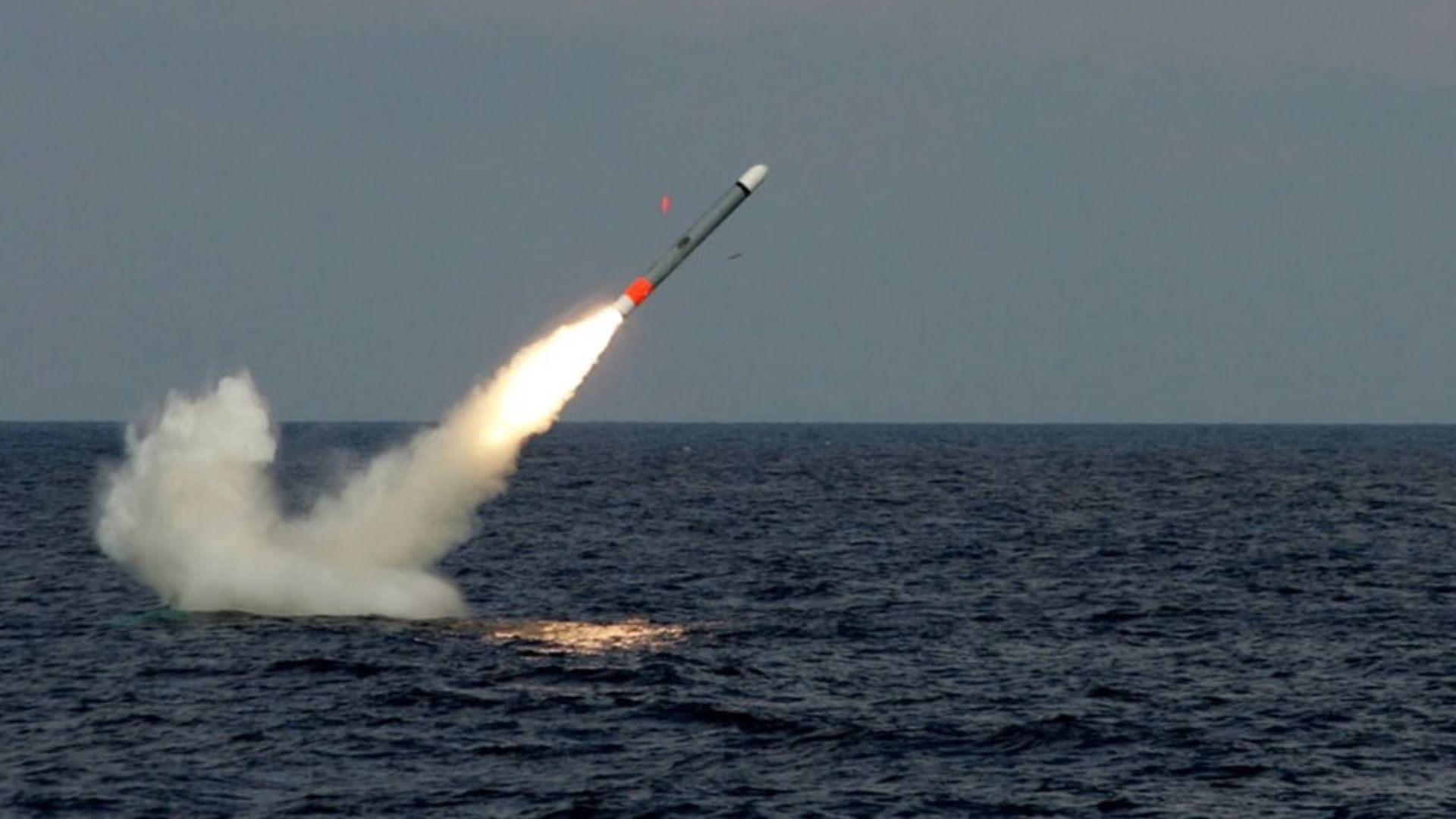
Official Launch Record Revealed Unusual Detail on the Airframe and Rekindled Focus on Long-Range Attack Weapons Used in Operation Epic Fury, Launched on February 28, 2026.
Images released by official U.S. channels recorded a Tomahawk missile leaving the launcher of a destroyer heading towards targets in Iran, amid the start of the offensive codenamed Operation Epic Fury, on February 28, 2026.
The detail that drew attention was the airframe with a dark finish, described as “black” in analyses based on public material.
The U.S. Central Command (CENTCOM) attributed the start of the operation to a presidential order and reported that American and partner forces began attacks on the morning of February 28, following a series of preparatory actions involving cyber and space capabilities.
-
According to an analysis by NASA, only one human-made structure is visible from space, and it is not the Great Wall of China or the Pyramids of Egypt.
-
After 377 years of history, the Brazilian Army will have its first female general: Colonel Claudia Cacho has been promoted to brigadier general by Lula and will receive the sword and command baton this Wednesday in Brasília.

-
A Mercado Livre customer opened their package and found 32 resumes of people looking for jobs crumpled as protective paper inside the box, exposing names, addresses, documents, and phone numbers of dozens of candidates.

-
Iceberg A23a, one of the largest in the world, is undergoing accelerated collapse and may disappear: what explains the end of the ice giant?

According to public statements and updates, the first phase targeted military structures in Iran linked to command and control, air defense, and points associated with missiles and drones.
Photo of USS Winston S. Churchill and Date of the Launch
In the official CENTCOM gallery, the caption of one of the images identifies the destroyer USS Winston S. Churchill (DDG 81) firing a Tomahawk Land Attack Missile (TLAM) in support of Operation Epic Fury, dated February 28, 2026.
This credit documented the association between the naval platform and the use of the missile in that initial package of attacks.

Other publications and official records collected in the same set of materials indicated that U.S. destroyers participated in similar actions in support of the offensive, reinforcing the role of the Tomahawk in launches from the sea.
At the same time, the selection of images presented to the public began to serve as a basis for external readings, even though it did not detail technical reasons.
Operation Epic Fury: Means Employed in the Attacks
Reports from Reuters described a large-scale action, using a combination of Tomahawk missiles, fighters, and bombers, in addition to attack drones, in an effort presented as multi-domain.
In one of these articles, the agency noted that the Tomahawk missiles used in the attacks are produced by Raytheon, now part of RTX, and that the weapon allows for targeting at long distances.
In public assessments from the initial period, U.S. military officials also reported that the offensive involved more than one hundred aircraft during the February 28 phase, in addition to long-range attack munitions and actions to degrade communication and defense networks.
This operational design helps explain why ship-based launches are a recurring element in opening attacks, when the goal is to reduce risks to crews.
Tomahawk TLAM: Range and Use in Long-Distance Attacks

In U.S. Navy institutional materials, the Tomahawk Land Attack Missile is described as a subsonic, long-range cruise missile launched from surface ships and submarines, designed for deep strikes.
The same official document defines the TLAM as “all-weather” weapon, emphasizing its suitability for use in various conditions and in highly contested environments.
RTX, in turn, presents the Tomahawk as a precision weapon capable of striking targets up to approximately 1,000 miles away, including environments with significant defenses, and highlights versions with data link and in-flight reallocation capability.
These descriptions help contextualize why the missile frequently features in operations where Washington seeks to hit land targets without solely relying on aircraft over heavily defended areas.
Black Coating of the Tomahawk and What Was Observed
The point that took the episode out of the strictly military circuit was the appearance of the specimen shown in the records, as the Tomahawk itself is a widely known and used system for decades.
The website The War Zone published an analysis on what it referred to as the “first” public sighting of a Tomahawk with a black coloring during attacks on Iran, based on officially released visual material.
The same reading appeared in coverage by BFBS Forces News, which cited munitions analyst Colby Badhwar commenting on images from the operation.

According to the report from the outlet, he stated: “The interesting thing about Tomahawk is that there was one or two pictures showing something unique, which was a Tomahawk that appeared to have sort of a black coating on it, which is something that we have not seen before.”
What Is Publicly Confirmed and What Has Not Been Explained
So far, public records clearly support three points: there were Tomahawk launches from destroyers in support of Operation Epic Fury, there is official material with USS Winston S. Churchill associated with a launch on February 28, 2026, and the missile’s dark coloring was perceived and described by analysts based on the released image.
These elements draw support from official sources and identifiable coverage.
On the other hand, the available statements and the consulted reports do not officially attribute a reason for the dark finish nor publicly confirm whether the specimen seen in the photos corresponds to a specific variant of the Tomahawk.
Observers pointed out hypotheses on social media, but without institutional confirmation or open technical documentation, this type of explanation remains outside of what is verifiable.
Official Images and Microdetails That Dominate the Debate
In conflicts monitored in real time through photos and videos, small variations in a known system tend to gain weight because the public has limited access to what was employed, in which lots, and with which adaptations.
In the case of cruise missiles, the overall shape is usually recognizable, but finish, markings, and external components can change for reasons of maintenance, operational standardization, or environmental needs, without this being detailed in public notes.
The centralization of material on CENTCOM pages and galleries creates, at the same time, a useful archive and a controlled showcase, with images that help reconstruct the “how” of employment, but rarely explain specific choices.
Thus, the photograph of the Churchill serves as documentary binding, while the “black” of the Tomahawk becomes a symbol of how a visual detail can dominate the debate, even in an operation marked by multiple means of attack.





Seja o primeiro a reagir!