





 Portuguese
  English
  Spanish
  5 min of reading
  0 comments


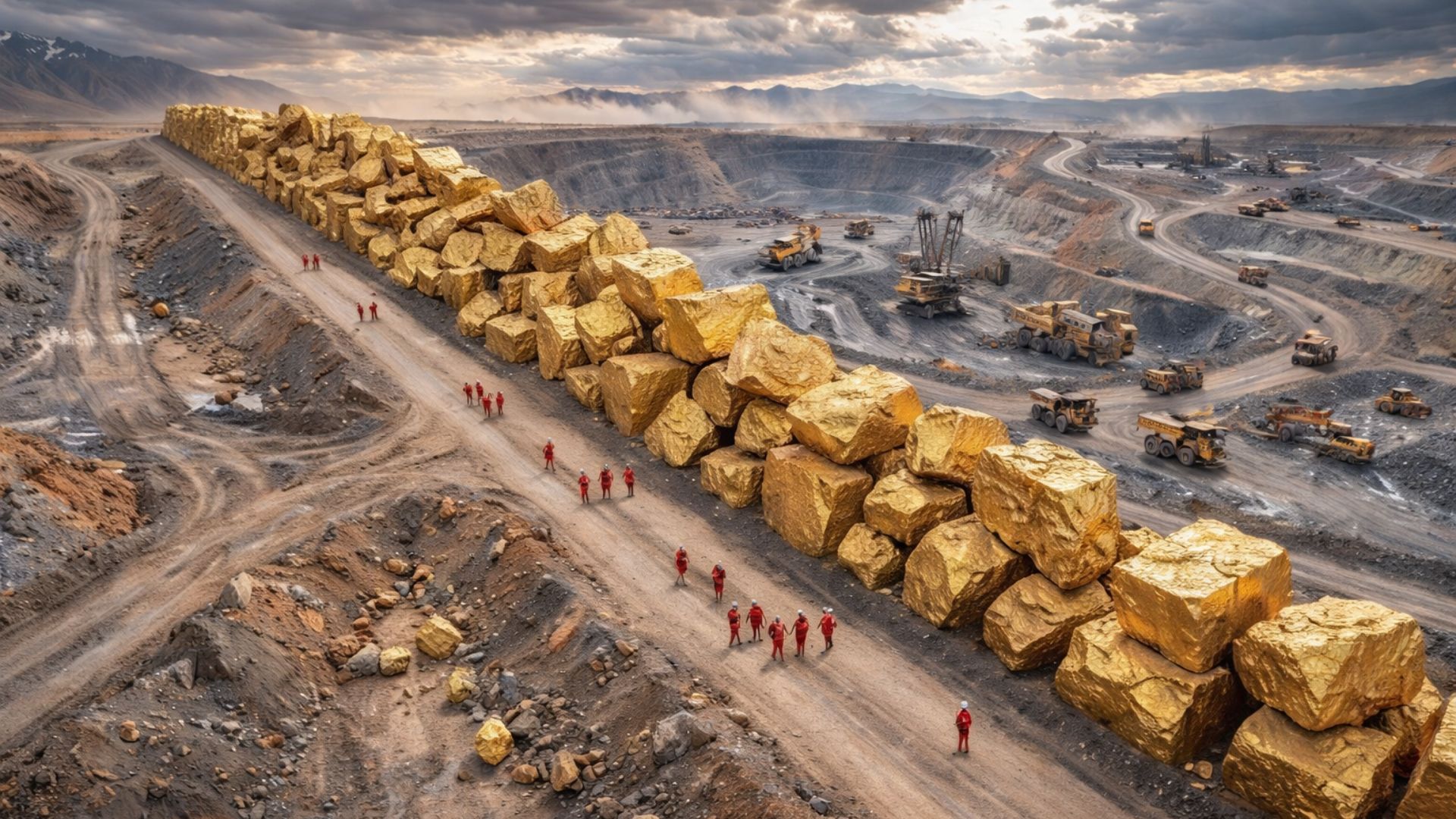
Monumental Scale, Low Mineral Grade, and High Financial Value Help Explain Why Gold Remains at the Center of the Global Economy, Even When It Emerges in Nature in Minimal Amounts and Requires Giant Mining, Chemical Processing, and Industrial Refining Operations to Reach the Market.
Gold remains at the center of global finance, but its physical scale is impressive precisely because of the contrast.
Estimates from the World Gold Council indicate that all the metal ever extracted throughout history totaled about 219.9 thousand tons in February 2025, a volume sufficient to form a cube of just over 22 meters on each side.
Still, mineral production remains intense: the USGS estimated about 3.3 thousand tons as the global annual production in 2024 and repeated the same level for 2025.
-
With a façade that resembles a giant zipper, the building in Milan creates a sense of strangeness, featuring lighting that transforms engineering and attracts the attention of residents and tourists.

-
The Brazilian city has 319 crooked buildings built on sandy soil without proper deep foundations, houses the largest beach garden in the world, with over 5 km, and is still considered the birthplace of surfing — meet Santos, in São Paulo.

-
New Zealand builds a shimmering building that vibrates, featuring a 62-seat cinema, moving sculptures, and an environment where sound, light, and energy are felt in the body.

-
Two colored cubes of 2.5 m transform a public bathroom into a selfie spot in Western Australia, costing up to 75% less than traditional construction and helping to reduce vandalism in public spaces.


This mismatch between value and volume helps explain why gold has crossed centuries as a store of wealth, a tool of power, and a strategic asset for central banks, investors, and jewelry.
Unlike other commodities, it occupies little space, resists corrosion, and maintains international liquidity, which sustains its economic relevance even when it appears in nature in very low concentrations.
Gold Mining Begins with Giant Operations
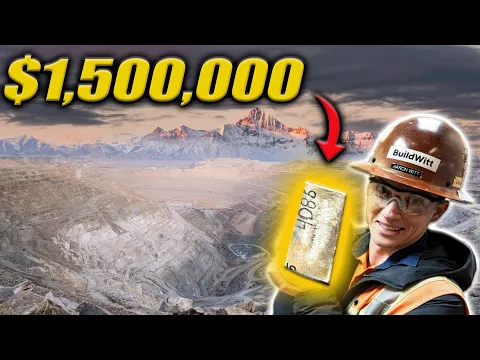

The gold route begins far from safes and trading tables.
In mining complexes like those in Nevada, in the United States, exploration combines open-pit mines and underground operations in one of the largest integrated production structures in the world.
Nevada Gold Mines itself describes the complex as the largest gold-producing complex on the planet, with a network of interconnected mines and processing plants.
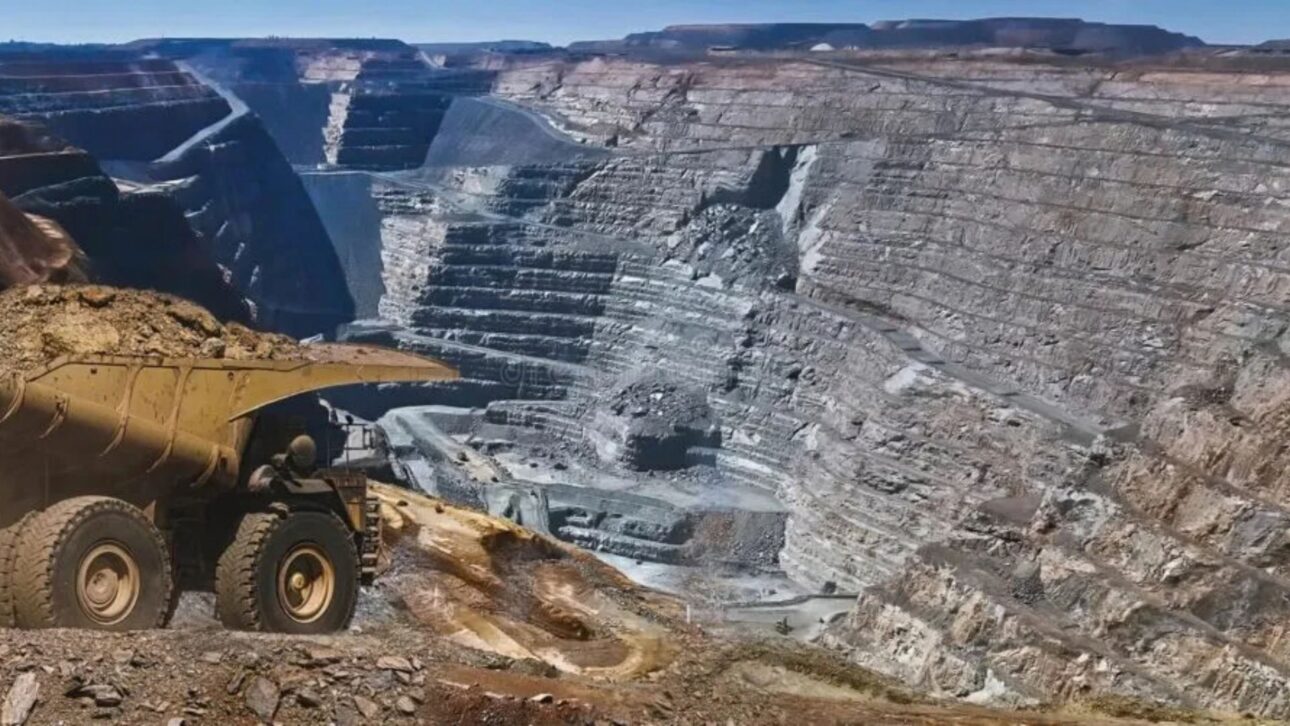
In open-pit mining, the first stage is to remove soil, vegetation, and rock without economic value until it exposes the mineralized body.
Then, drilling, blasting, excavation, and transport by large trucks come into play.
In such operations, the scale is measured in millions of tons moved over time, because gold is usually diluted in enormous volumes of material.
Not every deposit, however, can be accessed this way.
When the ore is at great depths, extraction moves to underground galleries, where the operation requires continuous ventilation, drainage, structural reinforcement, and strict safety controls.
In this environment, mining becomes more expensive and technically more complex, but it can still be viable when the ore grade and metallurgical recovery justify the costs.
Low Grade of the Ore Defines the Economic Logic
The economic logic of gold depends less on the luster of the nugget and more on industrial mathematics.
Technical reports from mines in Nevada show that the ore grade can vary from fractions of a gram per ton in some mining fronts to higher levels in specific underground zones.
In the Carlin complex, for example, there are references to material processed with an average grade of around 0.82 g/t in certain sources and circuits that treat ore close to 3 g/t or even 7 g/t, depending on the plant and type of material.
This means that the value lies not in the appearance of the rock, but in the ability to process gigantic volumes efficiently enough to recover nearly invisible particles.
The mineral stage is, therefore, a race for scale, technology, and operational cost.
Without this tripod, low-grade deposits cease to be a business, even during periods of high metal prices.
There is also a physical component that reinforces the perception of wealth associated with gold.
The metal is extremely malleable but remains very dense.
In the London Good Delivery standard, used in the large international market, a bar weighs about 400 troy ounces, generally something close to 12.4 kilograms, although the acceptable range is wider.
In other words, a relatively compact block concentrates enough value to circulate among refiners, banks, and institutional investors.
How Rock Turns into Gold Bars
After mining, the ore goes to the plant.
The industrial sequence includes crushing, milling, and screening, steps that reduce particle size and prepare the material for metallurgical recovery.
Next, chemical and physical processes are used to separate gold from the host rock, gradually increasing the concentration of the metal until it can be refined.
In large-scale operations, this phase defines a large part of profitability.
Facilities in Nevada include autoclaves, roasters, oxide mills, concentrators, and leaching circuits, all designed to treat different types of ore.
The infrastructure exists precisely because gold does not arrive pure at the surface: it needs to be released, concentrated, and only then converted into a high-value commercial product.
Refining comes afterward.
When the impurities are removed, the gold is <strong)melted and shaped into bars or transformed into other standardized formats.
The melting point of the metal is around 1,064 °C, and the final quality must meet requirements for weight, purity, and finish for the material to be accepted in international markets.
The LBMA, which establishes the Good Delivery standard, treats these specifications as the basis for trading among significant players in the London market.
Artisanal Mining and Environmental Impacts in the Gold Supply Chain
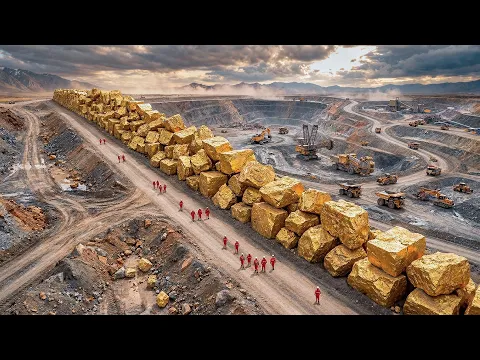
Alongside large mining companies, artisanal and small-scale extraction remains relevant in various regions of the planet.
Reports from the World Bank and international initiatives linked to the sector indicate that this activity involves millions of people and accounts for a significant portion of the global supply, especially in poor areas of Africa, South America, and Asia.
At the same time, the segment is associated with informality, precarious use of technology, and greater risk of pollution.
The environmental issue is one of the most sensitive fronts of the supply chain.
In operations without adequate control, artisanal mining can contaminate watercourses, degrade ecosystems, and amplify local conflicts.
Still, in many territories, it continues to be a direct source of income and livelihood, which keeps gold at the delicate intersection of market, labor, and social pressure.
It is at this point that the metal ceases to be just a symbol of wealth.
Each bar results from a combination of rare geology, heavy investment, sophisticated processing, and variable impacts depending on the extraction method.
The gold that reaches the financial system, therefore, carries a much longer trajectory than the polished surface lets perceive.








-

-

-

-

-

-

80 pessoas reagiram a isso.