





 Portuguese
  English
  Spanish
  4 min of reading
  0 comments


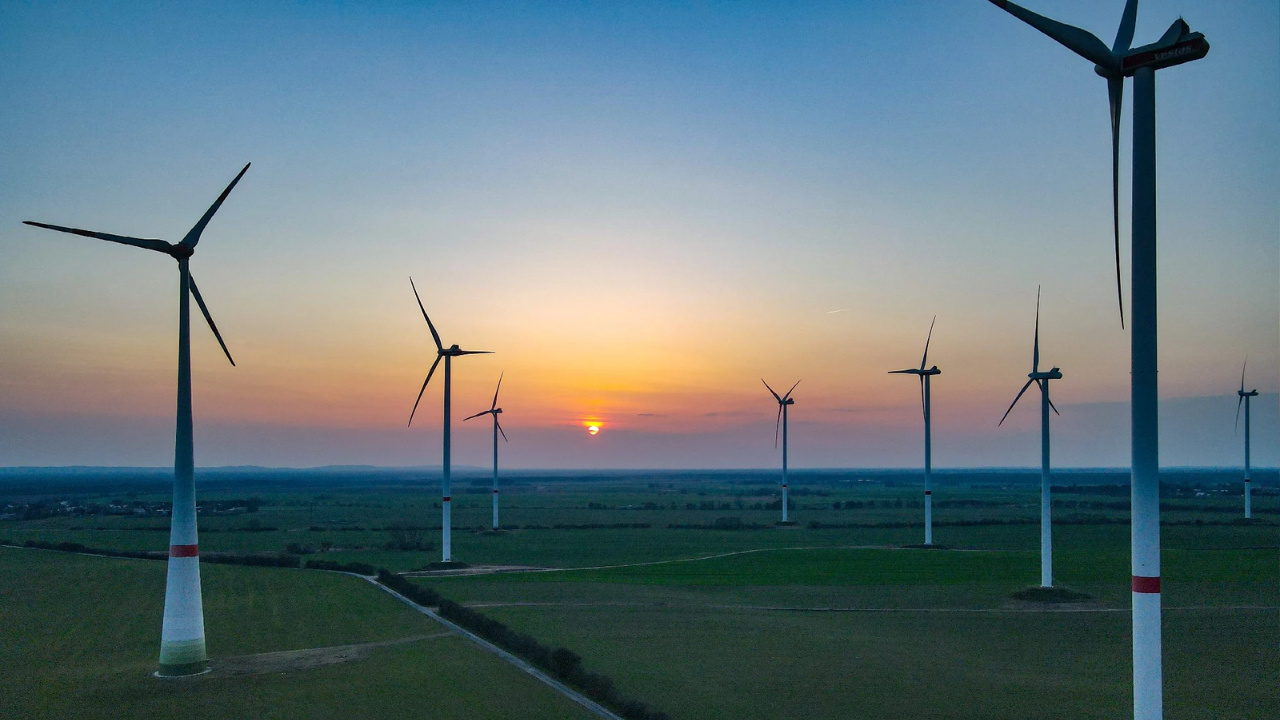
Europe Announces Historic Offensive to Expand Wind Energy in the North Sea and Reduce Dependence on Russian Gas. Leaders Sign Agreement and Promise to Create the Largest Clean Energy Hub in the World.
Europe has decided to hit the emergency button. After years of dependence on Russian gas and successive crises caused by geopolitical conflicts, leaders of the continent announced a new offensive based on wind energy.
The stage for this decision was Hamburg, Germany, where representatives from nine countries signed an agreement to transform the North Sea into the largest global center for clean energy generation.
The proposal comes at a time of diplomatic tension and energy instability. Additionally, there is growing fear of new gas supply blockages and attacks on strategic infrastructures.
-
Giant of the winds in Rio Grande do Norte: Serra do Tigre Wind Complex receives new investments and accelerates the expansion of clean energy generation to supply millions of Brazilian homes.
-
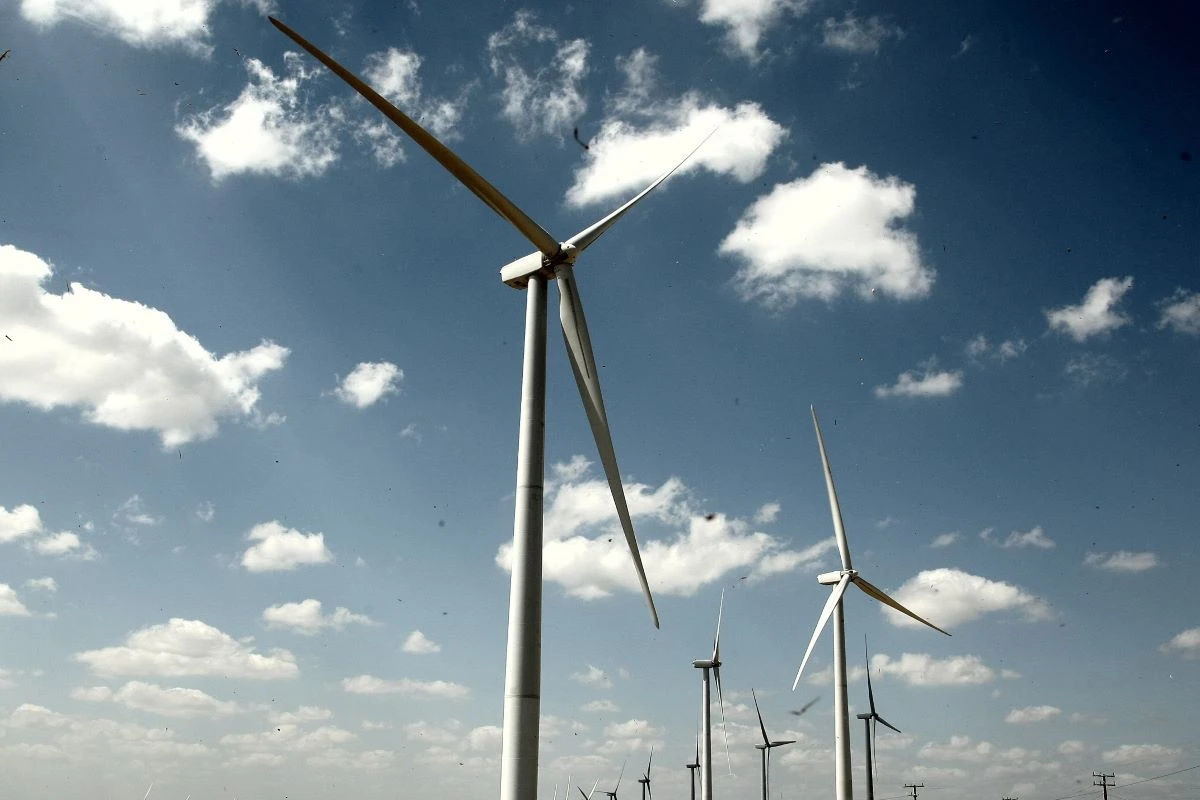
Urgent energy transition: Greenpeace advocates for massive investments and points to Brazil as a global leader in wind energy production in the coming years.
-
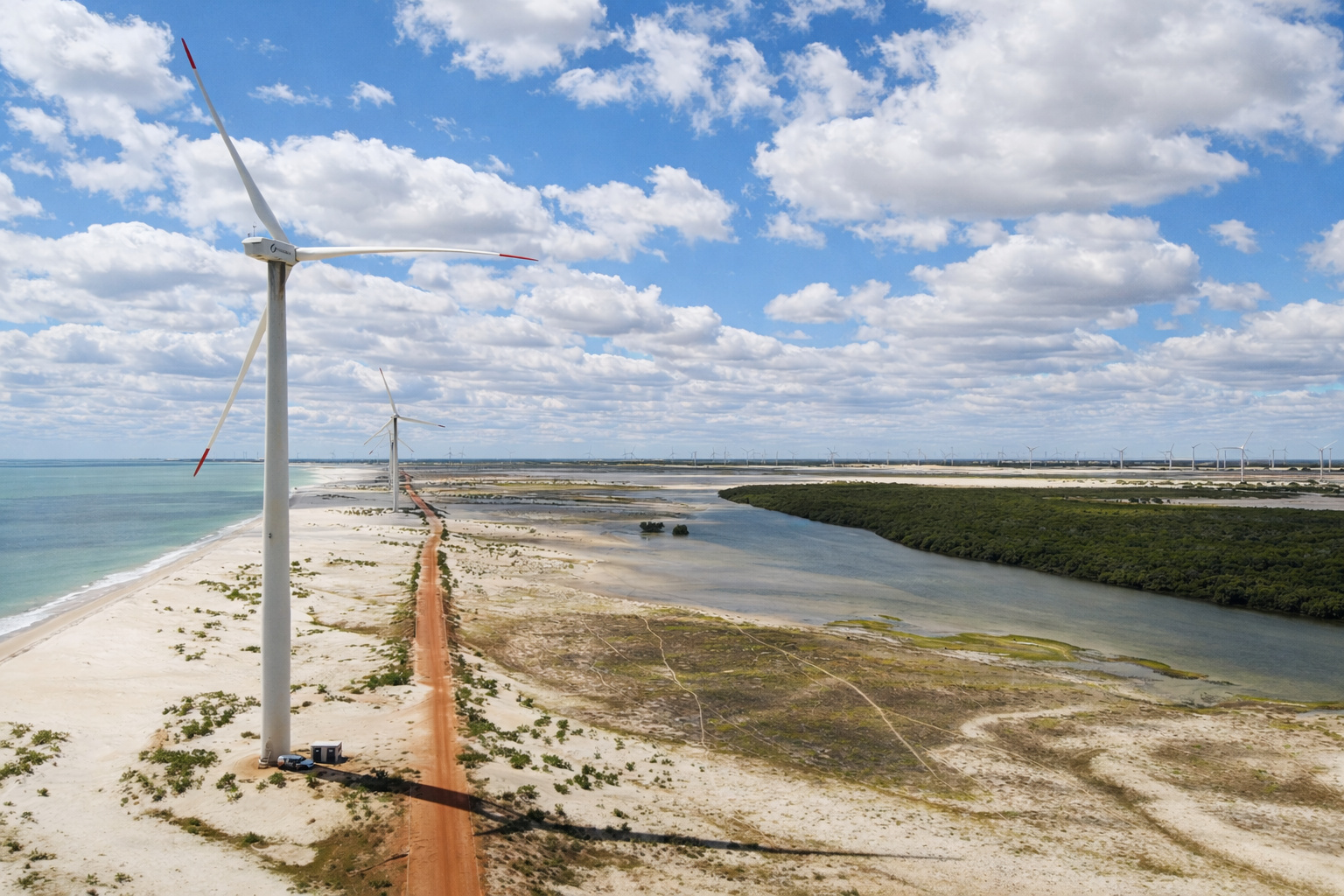
Conflict in the Sertão: Rural communities in Rio Grande do Norte report issues with wind farms and the new challenges of clean energy in the semi-arid region.
-
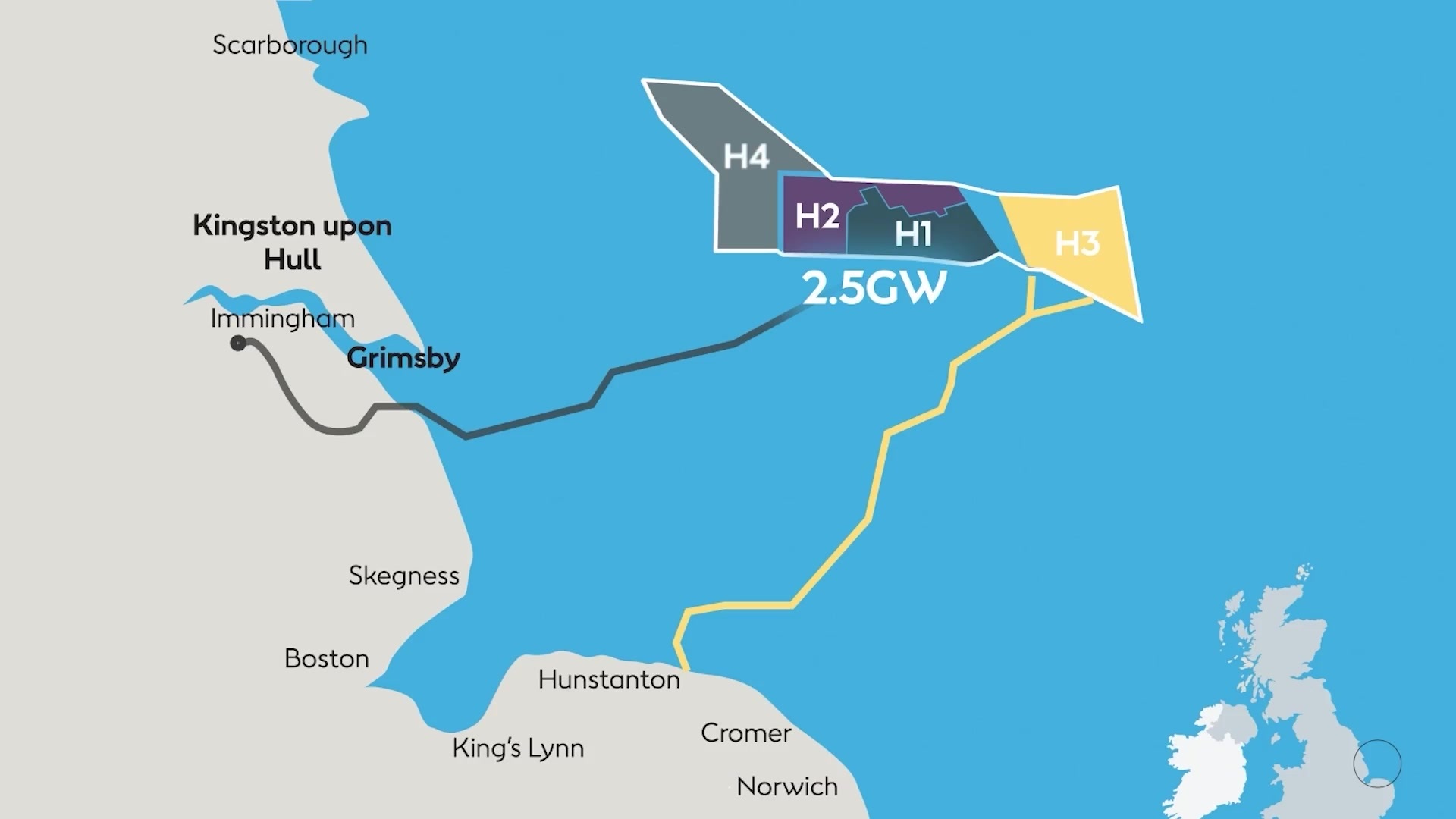
231 turbines of 260 meters at 160 km from the coast, monopiles weighing as much as nine blue whales embedded in the North Sea, and a crane ship taller than the Eiffel Tower: Hornsea 3 will be the largest offshore wind farm on the planet by 2027, and its first components have already arrived in England.
For this reason, governments decided to accelerate investments in renewable sources, betting on a model that promises more autonomy, security, and predictability.
North Sea Becomes a Key Component for Energy Independence
Contrary to what many think, the North Sea is not just a trade route. Now, it is consolidating as one of the most contested territories in the European energy sector.
The involved countries want to install large offshore wind energy farms capable of supplying millions of households.
According to the new agreement, Germany, Norway, France, Denmark, and the United Kingdom are set to launch a joint fleet of projects with a total capacity of 100 gigawatts.
This volume would be sufficient to supply around 100 million homes. Although the timeline has not yet been detailed, the promise is of unprecedented acceleration.
A Direct Response to the Past of Dependence on Russian Gas
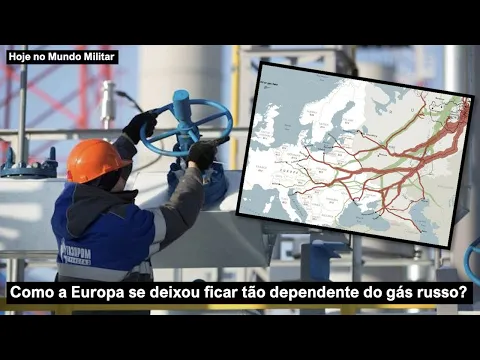
For decades, much of Europe built its energy matrix on natural gas from Russia. Germany was one of the clearest examples of this relationship. However, the invasion of Ukraine in 2022 broke this balance and exposed the continent’s fragility.

The rupture caused record inflation, energy shortages, and losses for major industries. Since then, governments have been seeking urgent alternatives. In this context, wind energy has become the symbol of a turnaround. “We are sending a very clear message to Russia: we will not allow them to use energy against us,” said Dan Jørgensen, European Commissioner for Energy.
At the second summit in 2023, countries had committed to achieving 300 gigawatts of capacity in the North Sea by 2050.
Additionally, an interim target of 120 GW by 2030 was set. However, experts admit that the current pace is still below what is needed.
Therefore, the new agreement emerges as an attempt to unblock projects, simplify regulations, and attract investors. The idea is to turn the region into a true laboratory for energy innovation, focusing on efficiency, network integration, and electricity storage.
Energy Security Enters Central Stage in the European Debate
The German Minister of Economy and Energy, Katherina Reiche, emphasized that the goal goes beyond sustainability. According to her, the plan aims to increase Europe’s “resilience” and “security of supply.” In other words, it is not just about reducing emissions, but also about avoiding new crises.
In this sense, leaders say they do not intend to repeat the mistakes of the past. The bet on wind energy represents an attempt to shield the continent from external pressures and market shocks.
Although the official focus of the summit was energy, regional security was also on the agenda. The increasing tensions in the North Sea and the Baltic Sea concern governments, mainly due to possible sabotage of pipelines and submarine cables.
Additionally, Greenland has returned to the political radar. Even though it was not on the formal agenda, the topic was mentioned by authorities who expressed concern about statements made by U.S. President Donald Trump. “The issue of Greenland is on everyone’s mind,” declared Jørgensen.
A Pact That Unites Governments, Industries, and Innovation
The agreement included Germany, Belgium, Denmark, France, Ireland, Luxembourg, Norway, the Netherlands, and the United Kingdom. Together, they intend to create “the largest global clean energy hub,” according to the German Ministry of Economy and Energy.
The strategy involves partnerships between governments, companies, and research centers. Sensors, smart networks, and new technologies are expected to integrate wind farms into the European electrical system, ensuring stability and reducing waste.
While leaders speak of security and sustainability, the ordinary citizen will also be affected. The promise is for more stable energy bills in the long run. However, the initial investments are billions and may generate debates about costs, taxes, and public priorities.
Still, supporters argue that the transition is inevitable. Wind energy emerges as the main bet to break with decades of dependence on fossil fuels and redefine Europe’s energy future.
In your opinion, who stands to gain the most from this new race for energy: governments, companies, or the population?



Seja o primeiro a reagir!