





 Portuguese
  English
  Spanish
 2 min of reading


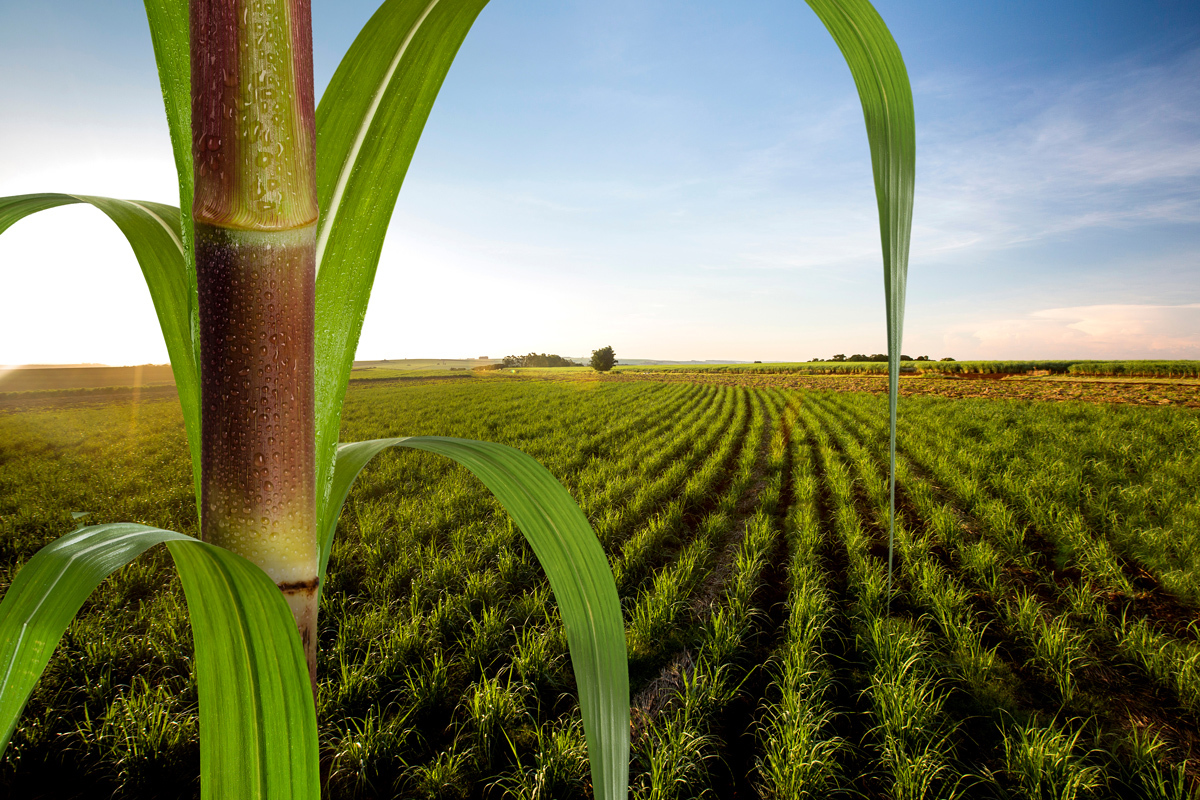
In One Year, Researchers from Bioplan-UEM and Lafieco-USP Achieved an Impressive 120% Increase in Sugarcane-Based Ethanol Production.
Biologist Wanderley Dantas dos Santos (photo) supervised the application of three natural compounds on the plants: one containing methylenedioxacetic acid (MDCA), another with piperolonic acid (PIP), and a third with daidzin (DZN). These compounds were specifically designed and applied to sugarcane, soy, and brachiaria to take advantage of their unique characteristics and properties.
According to Santos, MDCA, PIP, and DZN are lignin inhibitors, a molecule that provides rigidity to the plant cell wall. “In general, the compound we developed alters the lignin metabolism. This helps penetrate the plant’s cell wall, where cellulose is located. So there is potential to produce more sugars, more carbohydrates.”
The experiment was published in an article in the journal Biomass and Bioenergy. The project is supported by the Research Center for Innovation in Greenhouse Gases (RCGI), Research Center for Engineering (CPE) formed by FAPESP and Shell at the Polytechnic Institute (Poli-USP).
-
The institute that trained the greatest aerospace engineers in Brazil has just opened its first campus outside São Paulo after 75 years: ITA Ceará will have R$ 445 million, new courses in energy and systems, and classes are expected to start in 2027.

-
Luciano Hang, owner of Havan, goes to Juiz de Fora after the tragedy in February, brings R$ 1 million, hands out R$ 2,000 cards, and donates up to R$ 15,000 to victims in the region.

-
The Brazilian passport allows legal residence in dozens of countries without the need for a prior visa, and most Brazilians are unaware that they can apply for residency directly upon arriving in nations in South America, Africa, and even Europe.

-
Petrobras sends a message to Brazilian truck drivers after fuel collapse and reveals plan to have 100% domestic diesel.


Increase in Ethanol Production
In the case of sugarcane, the discovery may help to expand and shrink the production of so-called second-generation ethanol, produced from plant biomass residue (bagasse). The main producer of this alcohol is the joint venture Raízen, formed by Cosan and Shell, located in São Paulo state, responsible for 1.5% of the national production.
Currently, the industry is financially expensive for conducting the so-called pre-treatment, which removes lignin to make carbohydrates easier to digest and produce enzymes that can ferment sugars to generate new generation ethanol.
The biomass from sugarcane can be better utilized with the application of compounds developed by researchers. The researchers also tested the compounds on brachiaria animals used to feed livestock.
Modified lignin-containing soy can also be used as animal feed. Today, livestock is often fed with corn and protein supplements. Soy can partially replace this protein supplement. As the compound is applied, it becomes nutritionally more palatable and will satisfy the animal with smaller portions of feed.
Brazilian Corn Ethanol Production Grows More Than 1,000% in Six Years
Corn ethanol production, common in the United States, gained momentum in Brazil in less than a decade and is expected to consolidate a 1,000% increase compared to the crop six years ago. According to the National Union of Corn Ethanol (Unem), the growth forecast is attributed to the increase in corn production capacity, as well as the expansion and adoption of technology in the industrial sector.










Seja o primeiro a reagir!