





 Portuguese
  English
  Spanish
 5 min of reading
  0 comments


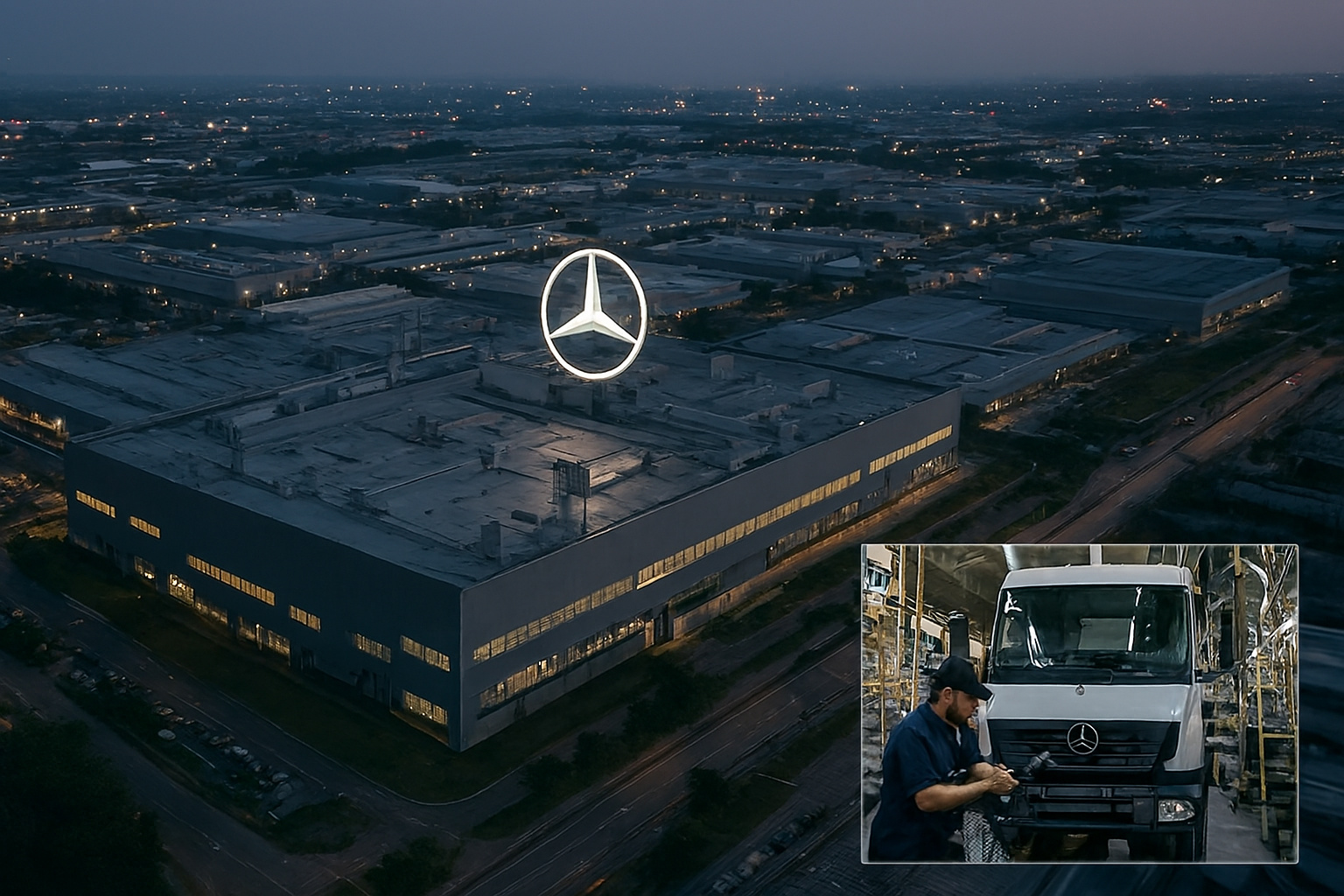
The Mercedes-Benz Factory in São Bernardo do Campo, with 2.6 million m², is the largest truck and bus manufacturer in Latin America and a symbol of Brazilian engineering.
In the industrial belt of ABC Paulista, in São Bernardo do Campo (SP), stands one of the greatest symbols of Brazilian engineering: the Mercedes-Benz factory in Brazil. Covering 2.6 million square meters, equivalent to nearly 370 soccer fields, the complex is the largest truck and bus factory in Latin America and one of the pillars of the national automotive industry.
For nearly seven decades, the plant has operated as a self-sufficient city — with internal roads, clinics, cafeterias, railway lines, and even its own power grid — producing around 200 vehicles daily that travel the roads of Brazil and the world.
A Landmark of Brazilian Automotive Engineering
Founded in 1956, the São Bernardo do Campo unit was the first Mercedes-Benz factory outside Germany, symbolizing the beginning of the modern era of the automotive industry in Brazil. At that time, the country was starting to industrialize, and the government of Juscelino Kubitschek encouraged local production of heavy vehicles. The German company chose ABC Paulista precisely for its strategic location and proximity to the ports of Santos and the emerging national road network.
-
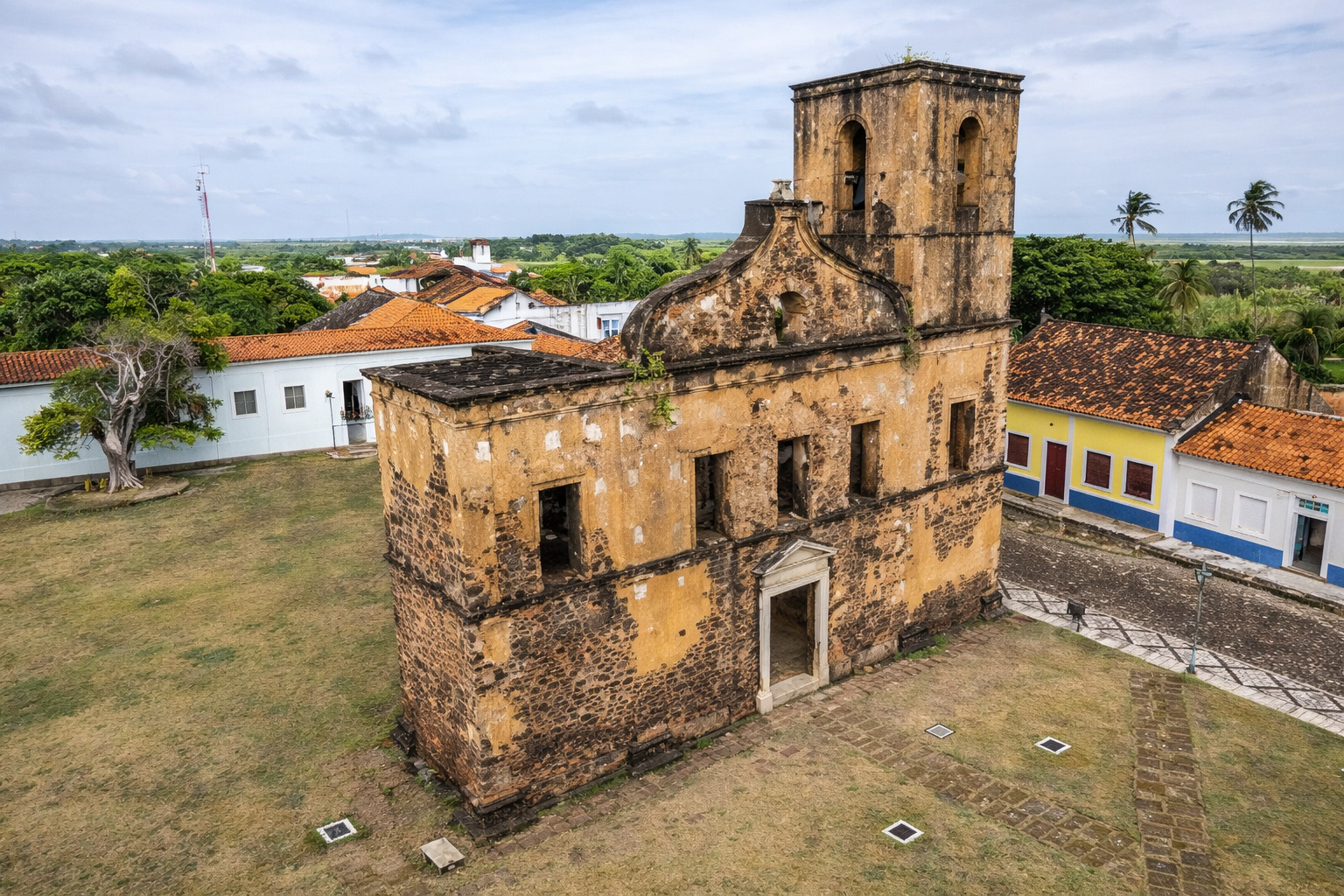
The Brazilian colonial city that stopped in time and shares territory with a rocket launch base.
-
79-year-old woman challenges limits, visits 193 countries in the world after 56 years of planning and reveals the behind-the-scenes of a global journey that few have managed to accomplish.

-
These are the drivers who may stop paying tolls on highways in a project that promises to reduce costs for those who live from transportation in Brazil.

-
(Video): Italian pilot lands plane on moving train at 120 km/h and achieves unprecedented feat in aviation, even with a narrow runway and without direct visual contact.



Since then, the factory has never stopped growing. Today, the complex occupies 2.6 million m², of which about 400 thousand m² are built area — housing warehouses, administrative buildings, research centers, and engineering laboratories. It is here that trucks from the Accelo, Atego, and Actros lines are manufactured, in addition to chassis for urban and highway buses exported to over 50 countries.
An Industrial Ecosystem That Functions Like a City
The factory’s scale impresses not only by its size but also by the complexity of its operations. Within its walls, over 10,000 people circulate daily, including engineers, technicians, operators, and outsourced workers. There are paved streets, water treatment stations, medical service posts, cafeterias with the capacity for thousands of meals, and even an internal transportation system.
The structure is comparable to that of a small industrial city. The production lines operate in three daily shifts, meaning that activities never cease: while one group finishes its shift, another begins assembling new trucks. On peak days, over 200 vehicles leave the assembly line, each with hundreds of components manufactured locally by suppliers located within a radius of up to 200 kilometers.
Automation, Robots, and German Precision on Brazilian Soil
The technology employed in the complex is cutting-edge. In the stamping and welding sectors, industrial robots perform high-precision operations, manipulating metal sheets with movements calculated to the millimeter. The painting and assembly areas feature automated systems that apply layers of paint with microscopic uniformity and check each component using optical sensors.
All production is monitored by a digital traceability system — each truck has a “birth history” that records the serial number of all installed parts, quality tests, and inspection results. This information is archived for decades, allowing for quick identification of potential failures and improvement of processes.
The result is an operation that combines German precision engineering with Brazilian creativity and resilience, making the unit one of the most efficient Mercedes-Benz facilities in the world.
Center of Innovation and Applied Engineering
In addition to manufacturing trucks and buses, the plant houses the Technological Development Center of Mercedes-Benz in Brazil, which conducts research on alternative fuels, electric motors, and vehicle connectivity. It was at this center that various pioneering brand projects in the country were born, such as the first electric truck manufactured in Brazilian territory, the eActros, and studies on biogas and advanced biodiesel engines.
The unit’s engineers collaborate directly with teams from Germany and India on global mobility projects. This integration ensures that São Bernardo do Campo is not only a production hub but also a laboratory for innovation and applied engineering.
The Economic Impact of the Largest Truck Factory in Brazil
The weight of the operation on the national economy is immense. According to data from the Federation of Industries of the State of São Paulo (FIESP), the Mercedes-Benz factory in São Bernardo is responsible for a significant share of the country’s heavy vehicle production. The complex generates thousands of direct jobs and supports a chain of hundreds of suppliers, from small metalworking shops to giants of the automotive sector.
Studies by the National Association of Automotive Vehicle Manufacturers (Anfavea) show that each direct job at the factory generates, on average, five indirect jobs — meaning that the operation creates about 50,000 job opportunities across the state. Furthermore, the presence of the plant boosts local commerce and the real estate sector, consolidating São Bernardo as the heart of the Brazilian automotive industry.
Sustainability and Clean Energy on a Large Scale
Despite its size, the factory also stands out for its environmental practices. In recent years, Mercedes-Benz has invested in solar panels, rainwater reuse, and industrial waste recycling systems. The unit is self-sufficient in effluent treatment and maintains reforestation and environmental compensation programs in the areas surrounding the complex.

Another relevant initiative is the reduction of energy consumption per vehicle produced: in just ten years, the plant has managed to cut over 30% of energy expenditure, while simultaneously increasing the volume of production. The trucks are also subjected to emissions testing in their own laboratory, aligned with Euro 6 standards, the strictest in the world.
A Legacy of Almost 70 Years
Since its inauguration, the factory has produced over 2.5 million vehicles including trucks and bus chassis. It has survived economic crises, political transformations, and technological revolutions, maintaining its status as a benchmark in productivity and quality.
During the most challenging periods, such as the 2020 pandemic, the unit adapted shifts and kept part of the production active, avoiding complete shutdowns.

Today, almost 70 years after its foundation, the plant continues to expand: it receives constant investments in digitalization, robotics, and electrification of heavy vehicles, solidifying its status as one of the most modern factories in the Southern Hemisphere.
A Colossus That Keeps Brazil Moving
On average, a truck rolls off the assembly line every 7 minutes and heads for the roads.
These vehicles cross the country transporting grains, fuels, medicines, and products that sustain the national economy. Behind each delivery is the strength of thousands of workers and the pulse of an industry that never stops.
With 2.6 million m², 10,000 employees, and 200 vehicles produced per day, the largest truck factory in Latin America is more than just a landmark of engineering — it is a living industrial city, where the sound of engines is the constant heartbeat of Brazil on wheels.







-

-

-

-

-

-

212 pessoas reagiram a isso.