





 Portuguese
  English
  Spanish
  5 min of reading
  0 comments


With Innovations in Speed, Energy Efficiency, and Comfort, New Chinese Trains Promise to Transform Global Rail Transport and Influence the Future of Mobility in Large Cities.
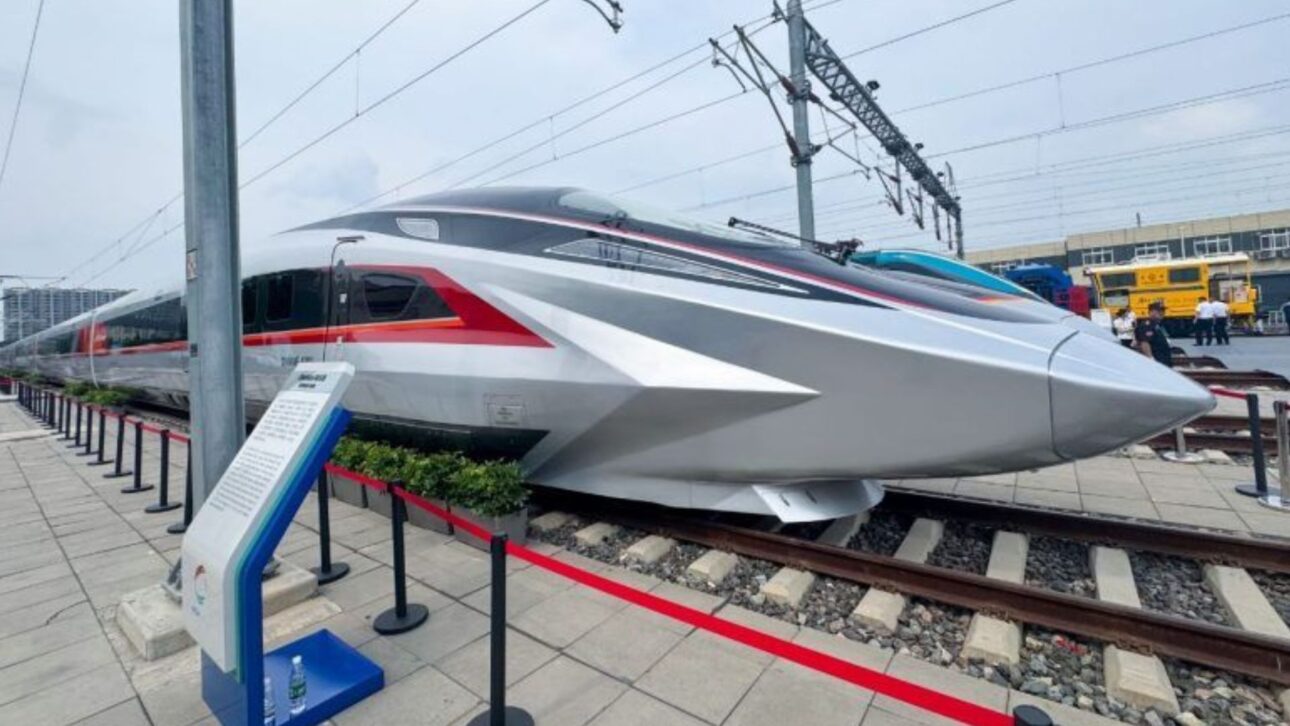
The Chinese manufacturer CRRC, which supplies trains for the São Paulo metro, unveiled to the world the new CR450AF and CR450BF models, designed to reach unprecedented speeds of up to 400 km/h, during the 12th World Congress on High-Speed Trains held in Beijing, China, in June 2025.
With a series of technological advancements, these trains promise to transform the global rail transport landscape by combining performance, safety, and energy efficiency.
According to CRRC, the new trains represent a milestone in the development of high-speed trains, surpassing the speed of current Chinese trains, which operate commercially at up to 350 km/h.
-
What if the Sun disappeared suddenly? Simulation shows Earth in darkness within minutes, extreme cold, and rapid collapse of life on the planet.

-
A 2,400-year-old iron foundry has been discovered in Senegal with 100 tons of slag, 35 furnace bases, and signs of nearly eight centuries of continuous metallurgical activity.

-
Four humans are flying towards the Moon inside the Orion capsule launched by the SLS rocket, and on April 6, Artemis II will disappear behind the far side of the Moon without communication with Earth for nearly an hour.

-
Worlds covered by water, atmospheres filled with hydrogen, and the possibility of life beyond Earth: ocean planets are rewriting the map of cosmic search and forcing scientists to rethink where to look.

The CR450 model, in its prototype version, incorporates innovative engineering solutions aimed at minimizing aerodynamic drag – a factor that significantly reduces energy consumption during high-speed operations.
Additionally, the manufacturer highlights the presence of vibration and noise control systems, essential elements to ensure greater comfort for passengers and enhance safety during travels.
By using lighter materials in its structure, the CR450 trains not only achieve a reduction in total weight but also feature an intelligent design project that integrates various functionalities aimed at operational efficiency and simplified maintenance.
These innovations, according to CRRC, establish a solid foundation for the future of electric trains capable of operating stably and safely at 400 km/h.
World Congress on High-Speed Trains Gathers Experts and Global Leaders
The launch of the new trains took place during the 12th World Congress on High-Speed Trains, an event considered the main international forum on technologies, challenges, and trends in the rail sector.
Held since 1992 by the International Union of Railways (UIC), the congress brings together representatives from rail institutions, government authorities, business leaders, researchers, and experts from various countries.
The meeting serves as a platform to showcase the latest innovations, promote the exchange of experiences, and outline guidelines for sustainable and integrated high-speed rail development worldwide.
During the 2025 edition in Beijing, discussions focused on recent technical advancements, the growing demands for faster and more efficient transport, and strategies to enhance connectivity between metropolitan areas.
The presence of CRRC, recognized as one of the leading global manufacturers of rolling stock, stood out as it revealed to the international audience the CR450AF and CR450BF trains and demonstrated the innovation capacity of the Chinese rail industry.
Technological Innovations of the New High-Speed Trains
Among the main technological differentials of the new models are the use of intelligent monitoring and operational management systems, which allow real-time analysis of train performance and identify potential needs for preventive maintenance.
The refined aerodynamic design results in decreased air resistance, directly contributing to reduced energy consumption and operational costs.
CRRC also reports that the new trains feature advanced solutions for acoustic insulation, high-efficiency braking systems, and automated mechanisms for stability control at high speeds.
Such characteristics raise the level of comfort, safety, and performance compared to previous generations of high-speed trains.
According to industry experts, the incorporation of lightweight composite materials, such as aluminum alloys and carbon fiber components, represents a growing trend in the global rail sector, always seeking a balance between structural strength and low weight.
The use of these technologies not only helps achieve higher speeds but also contributes to the durability and environmental sustainability of the new trains.
Global Impact of High-Speed Trains and CRRC Presence in Brazil
The operation of CRRC in the international market reinforces the presence of Chinese technology in strategic projects around the world, including the supply of trains for the São Paulo metro, where models produced by the company already operate on important lines in the capital.
The advancement of high-speed trains, reaching speeds of 400 km/h, has not yet arrived in Brazil, but experts indicate that innovations like those presented by CRRC could influence future urban and regional mobility projects in the country, encouraging investments in state-of-the-art rail infrastructure.
Additionally, the World Congress on High-Speed Trains plays a fundamental role in stimulating the development of public policies, promoting research incentives, and adopting new technologies across different continents.
The expectation, according to UIC representatives, is that the solutions discussed and presented at the event may serve as inspiration for modernizing railway systems in emerging countries and contribute to consolidating rail transport as a sustainable and efficient alternative for moving large volumes of passengers.
Perspectives and Future of High-Speed Rail Transport
The launch of the CR450AF and CR450BF models represents not only a significant advancement for the Chinese industry but also signals the accelerated pace of technological evolution in the global rail sector.
The challenge going forward will be to expand the application of these innovative solutions to other regions, making high-speed accessible to more people and solidifying sustainable mobility as a priority in large cities and regional corridors.
While Brazil is still assessing possibilities for investing in high-speed trains, countries in Europe and Asia have already established extensive and efficient networks, demonstrating the potential of this mode of transport to transform routines, reduce travel times, and promote integrated economic development.
On the international stage, the search for alternatives that combine speed, safety, energy efficiency, and sustainability will shape the coming decades in rail transport.
In light of these transformations, how can the innovations presented by the 400 km/h trains influence the future of urban and regional mobility in Brazil and other countries in Latin America?







Seja o primeiro a reagir!