





 Portuguese
  English
  Spanish
  5 min of reading
  12 comments


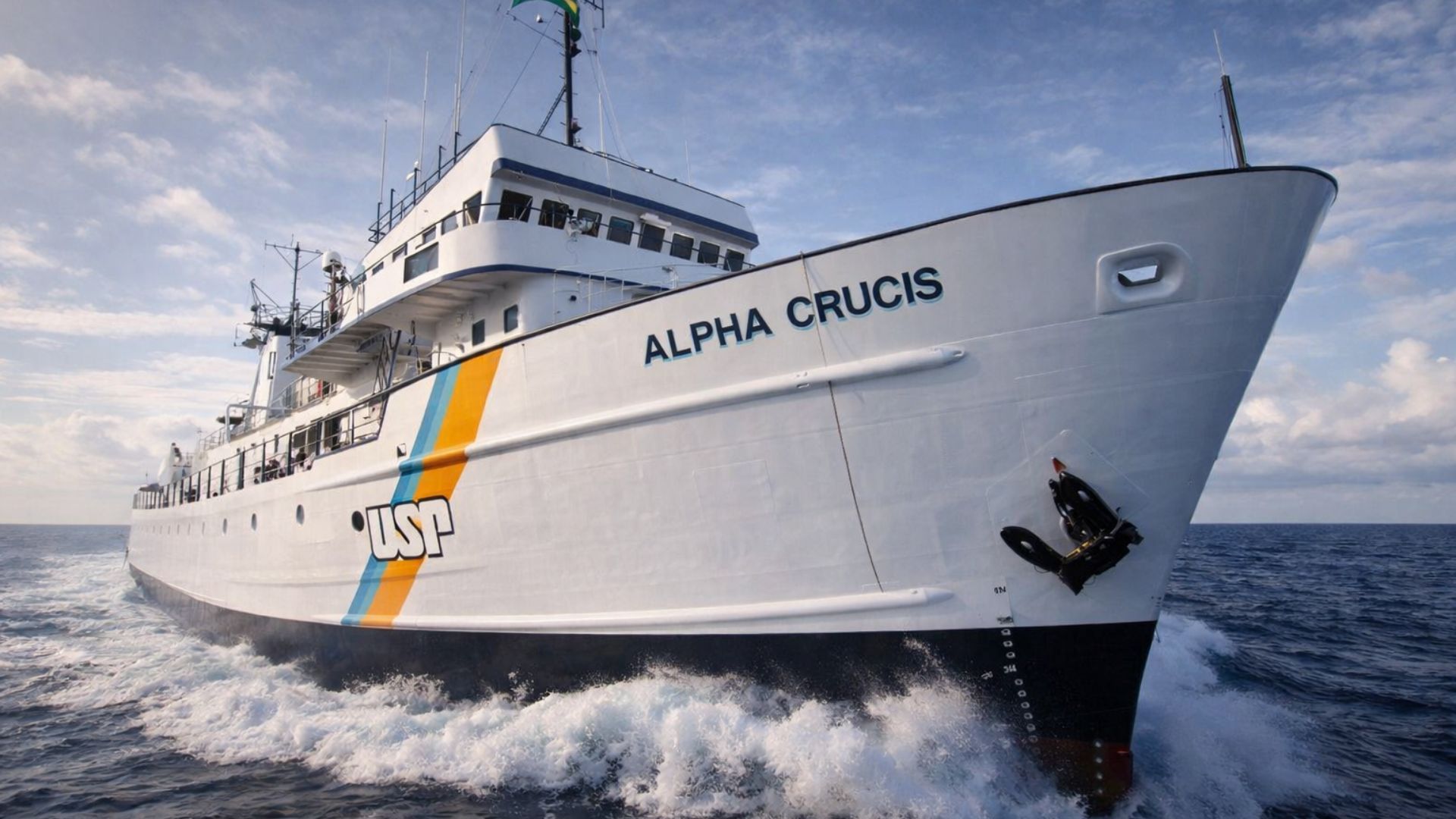


University Decision and Military Investment Highlight Debates on Use of Expensive Equipment, Delayed Maintenance, and Public Planning in Strategic Areas, with Direct Impacts on Scientific Research, Academic Training, and the Enhancement of Operational Capabilities of the Armed Forces.
The University of São Paulo and the Brazilian Air Force recently made decisions that reignited discussions about planning, maintenance, and the use of high-cost equipment in the public sector.
While USP chose to transfer one of its research vessels to the Navy, the academic area began to operate with a reduced fleet, precisely during a period of demand for field activities.
In the military realm, on the other hand, the Air Force proceeded with the acquisition of drones equipped with advanced sensors, intended for operational use and the training of specialized personnel.
-
Man never set foot on the Moon? 5 scientific proofs confirm that humanity has been there and definitively dismantle conspiracy theories.

-
The Brazilian Army will adopt humanoid robots to test the concept of future combat, says a website, surprising everyone, but later revealing that it was all just an allusion to April Fool’s Day.

-
There is a city in China right next to Hong Kong where people speak Portuguese, the streets have names in Portuguese, and the architecture looks like it came straight out of a historic city in Brazil.

-
Rare frog thought to be extinct after only appearing in fossils reappears, becoming a ‘living relic’ of evolution and gaining a real path to spread after combating introduced predators.


The contrast between the two initiatives highlighted issues related to the availability of strategic means, resource management, and the practical impact of these choices.
Reports published by different outlets and administrative documents help to reconstruct the paths that led to these decisions.
Donation of Alpha Delphini and Reduction of the Scientific Fleet
In August 2025, USP formalized the donation of the Alpha Delphini to the Navy, according to information echoed in recent reports.
The vessel, linked to the Oceanographic Institute, was inaugurated in 2013 and presented as an important reinforcement for scientific research in the country.

Built in Brazil, the ship was used in oceanographic missions and academic training activities over the last decade.
With the transfer of the Delphini, the institute was left with only the Alpha Crucis, a much older vessel.
Launched in 1973, the Crucis has been out of operation since 2024, awaiting technical maintenance.
This situation immediately reduced the operational capacity of the institute.
Research projects, practical classes, and scientific cruises were directly affected during this period.
According to the official justification presented by the university, the decision to donate the Delphini was based on the underutilization of the vessel.
Internal minutes and statements cited in journalistic coverage, however, recorded concerns among researchers and students.


The criticisms pointed to the increased dependence on outsourced vessels and the difficulty in maintaining regular activities without an available fleet.
Administrative Hurdles and Waiting for Maintenance
The leadership of the Oceanographic Institute attributed the prolonged stoppage of the Alpha Crucis to problems in the contracting process for maintenance services.
According to the information released, the first bidding launched for this purpose was unsuccessful.
As a result, a new contract began to be negotiated and entered its final phase.
The reported expectation was that work would begin in the following weeks.
The service is to be carried out in a shipyard located in Rio de Janeiro.
The procedure includes docking the vessel for inspection and repairs.
While maintenance is not completed, the institute adopted alternative measures to maintain some activities.
These include renting private vessels and using third-party means.
These solutions, however, were described as temporary by students and researchers.
For this group, the lack of predictability in the availability of ships compromises project planning and practical training for students.
Acquisition of Drones and Technological Strengthening of FAB
Alongside the difficulties faced by the university, the Brazilian Air Force advanced with an investment aimed at expanding its technological capabilities.

In early 2026, it was announced the intention to purchase eight drones of the DJI Matrice 30T model, at an approximate cost of R$ 1.8 million.
The equipment is equipped with thermal cameras, advanced sensors, and long-range zoom systems.
In addition to the aircraft, the package includes accessories aimed at standardizing the fleet.
Recharge systems, logistical support items, and components to increase operational autonomy are planned.
The bidding also includes solutions for signal repetition and connectivity in the field.
The stated goal is to reinforce activities of surveillance, monitoring, and training.
Another point highlighted in documents cited by the press is the presence of launchers capable of firing payloads of up to 500 grams.
These devices are associated with the development of doctrines and usage in controlled training environments.
According to the reference term, the choice of model aims to ensure interoperability, logistical efficiency, and operational safety.
The training of specialized military operators is also presented as one of the expected gains with the acquisition.
Canoas and the Operational Use of Equipment
The acquired drones will be allocated to the Aeronautics Garrison of Canoas, in Rio Grande do Sul.
The unit is expected to use the equipment for both surveillance actions and improving operational procedures.

The focus is on employment by the Aeronautical Infantry.
Highlighted capabilities include use in low visibility conditions.
The reports also mention the suitability of the drones for night operations, thanks to the onboard thermal sensors.
This array of resources broadens the operational spectrum in various scenarios.
The purchase is described as part of a broader process of consolidating the use of remotely piloted aircraft in the Air Force.
In this context, the standardization of equipment and continuous training of personnel emerge as priorities.
Though the texts do not detail a larger program, they indicate that the initiative aligns with doctrinal and logistical objectives.
Management, Availability, and Practical Impacts
Although involving distinct areas, both decisions began to be analyzed through the same lens.
In the academic field, the temporary reduction of scientific research capacity exposed weaknesses in maintenance management.
The interruption of field activities affected schedules and increased reliance on contracted solutions.
In the military environment, the investment in drones is presented as a strategy for operational strengthening.
In this case, public debate focuses on the scope of use of the equipment and the cost of the acquired package.
Logistical justifications and the limits of employing these systems are also part of the discussion.
With the Alpha Crucis still awaiting maintenance, the Alpha Delphini already incorporated by the Navy, and the bidding for drones ongoing, the matter remains open.







O orçamento da educação é um e das forças armadas são outro orçamento. Fica a pergunta pq a universidade não faz uma parceria com a marinha tanto na manutenção desse navio. Quanto a pesquisa? A marinha tem navio oceanográfico! Por que não paga à marinha para usar esses navios? Aí tem cheiro esquema o aluguel desses navios pela universidade.
Que matéria mal feita, que ligação tem os drones da fab com um naviozinho? Tá sem ideia vai dormir, não fica fingindo que está trabalhando.
Pessoal esquece que as Univerdades sofrem constantemente de corte de gastos. E sem dinheiro para manter o básico. Tem que fazer das tripas e corações para manter um navio? ~~