





 Portuguese
  English
  Spanish
  5 min of reading
  0 comments


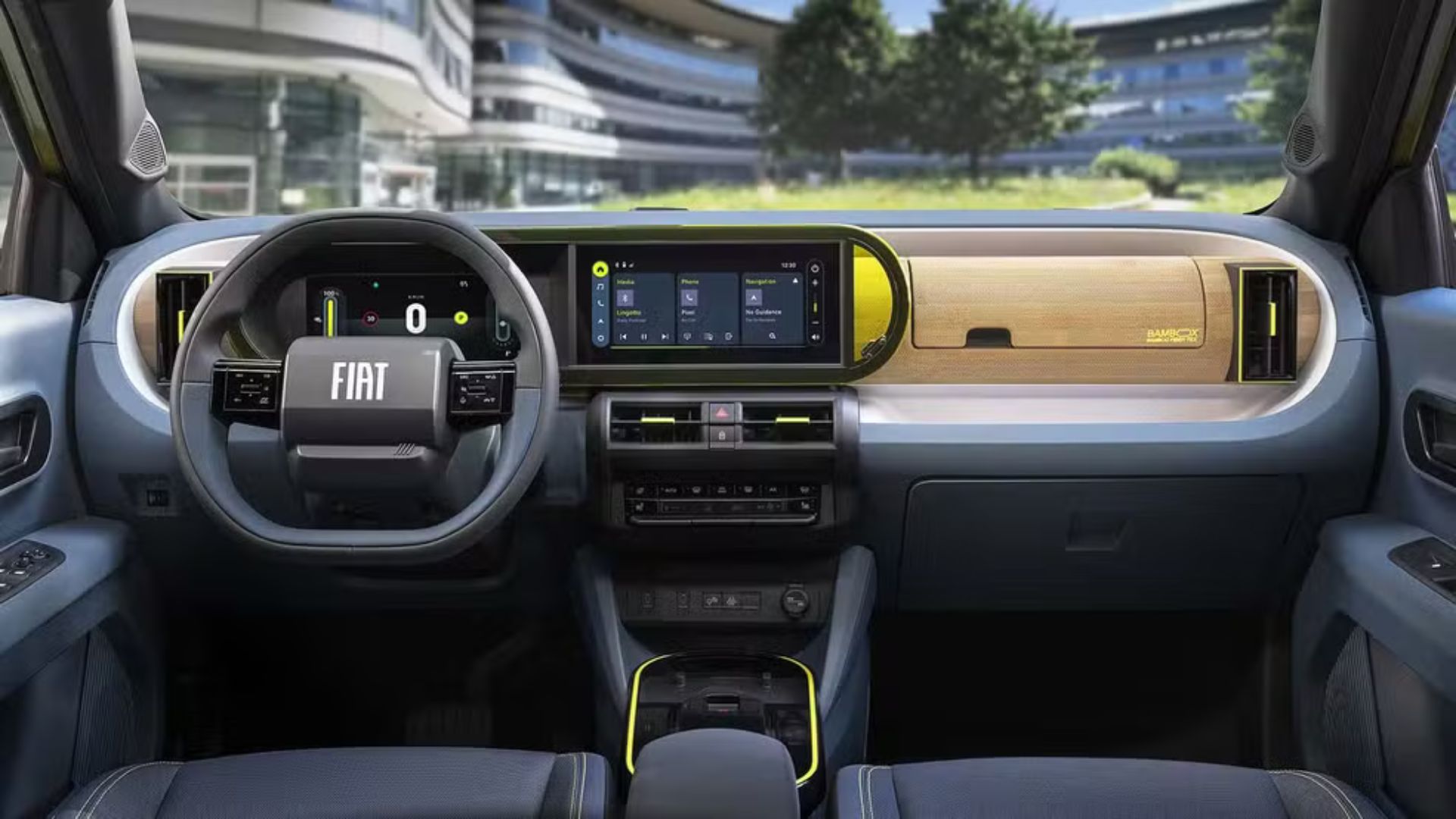
Global movement of Fiat points to a new phase with larger SUVs, design inspired by the Big Panda, and direct reflections in Brazil, in a strategy that combines electrification, shared platform, and repositioning of the brand in higher segments in the international market.
Fiat confirmed that it will present two new models in the C segment and a concept car at the 2026 Paris Motor Show, scheduled for October.
This offensive is part of the expansion of the global family launched in 2024 and developed on the Smart Car platform, a multi-energy architecture that supports the brand’s new phase in Europe and will also have direct reflections in Brazil.
Although the manufacturer has not yet revealed commercial names or complete technical specifications for these two launches, the European press associates the duo with a larger family utility vehicle and a fastback profile model, both derived from the concepts shown by the brand in February 2024.
-
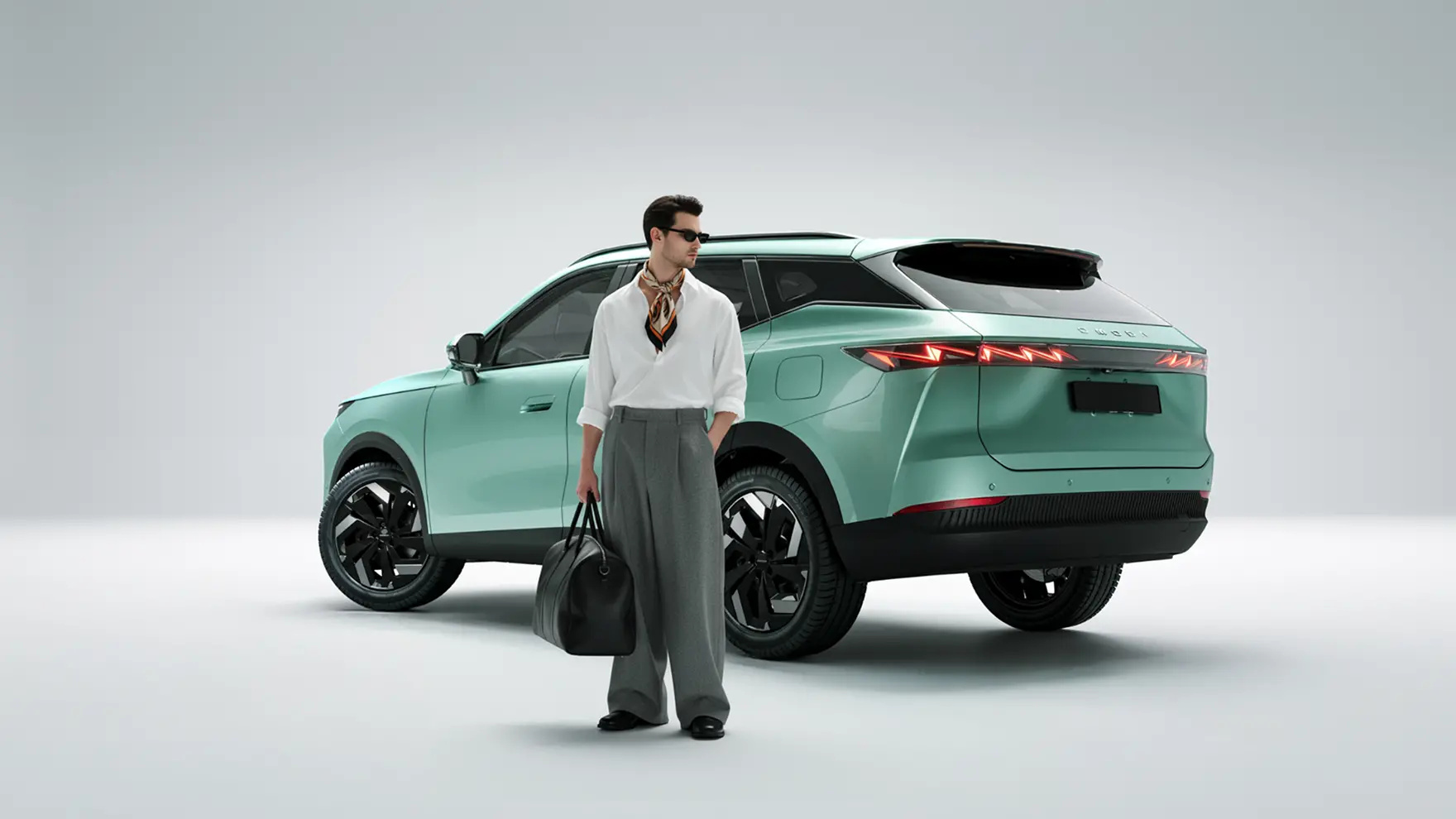
OMODA 7 transforms the car into a global aesthetic expression by combining automotive design and fashion in London.
-
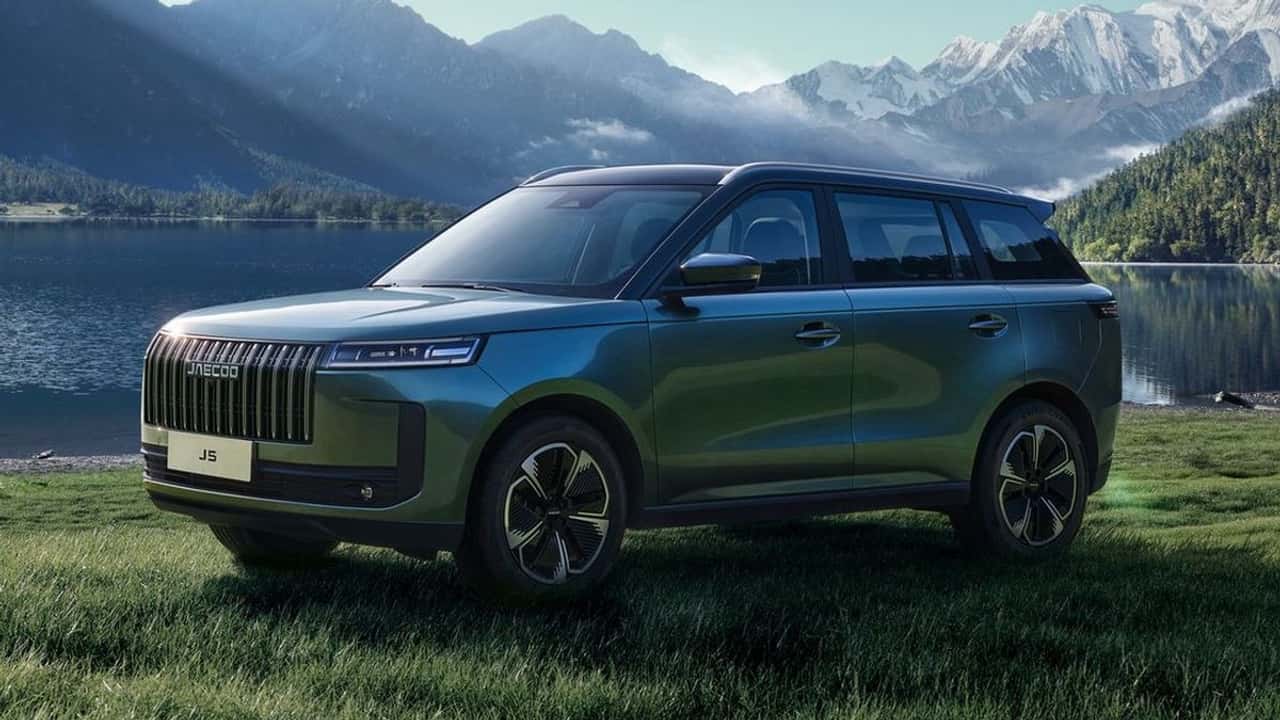
JAECOO takes the lead in global strategic markets and accelerates its trajectory to become a “global blockbuster maker” in the automotive industry.
-
OMODA redefines global aesthetics and elevates the OMODA 7 to a multicultural fashion icon, uniting design, technology, and international identity.
-
A 2024 Toyota Corolla hybrid with only 12,500 km ended up in the junkyard, and when the dismantling staff saw the car, they were shocked because they know that this model easily exceeds 300,000 km without serious mechanical issues.


This movement is seen as Fiat’s return to a segment above the Big Panda, which is currently positioned in segment B in Europe.
New global family of Fiat on the Smart Car platform
The foundation of this renewal is the Smart Car, an evolution of the CMP architecture used in compact models from Stellantis.
When presenting its new global family, Fiat stated that all future members would share a common platform and could receive combustion engines, hybrid setups, and even electric propulsion, depending on the needs of each market.
It was precisely from this strategy that the Big Panda was born, launched as the centerpiece of the brand’s new international generation.

The hatch debuted with a more geometric design, marked creases, and front lighting inspired by pixels, a visual solution that Fiat itself has started to treat as a style signature for upcoming products in this lineage.
In practice, this indicates that the two models expected for Paris should repeat the visual identity inaugurated by the Big Panda, with a raised front, straight lines, and modular-looking luminous elements.
Still, the brand has not officially detailed how the bodywork of each will look nor confirmed, so far, which one will have a proposal more focused on family use or the coupe format.
Larger SUV and new Fastback enter the European radar
The concepts presented by Fiat in 2024 already anticipated, with reasonable clarity, a larger conventional SUV and another utility vehicle with a fastback silhouette.
Specialized publications in Europe and Brazil began to link these studies to the future global successors of models currently restricted to specific markets, including the Fastback sold in Brazil.
In this scenario, the sportier profile project is the most interesting to the Brazilian market, as it could directly influence the next generation of the Fiat Fastback.
The most recurring interpretation among specialized vehicles is that the current B-segment utility will give way to a larger product, with international language and aligned with the new Smart Car family.
The other model, referred to in part of the press as a possible conceptual heir to the Multipla or as a “Giga Panda,” appears as a more family-oriented alternative within this offensive.
Reports published in Europe indicate that it could utilize dimensions close to those of expanded compact utilities from Stellantis, but Fiat has not yet officially confirmed the name, final measurements, or capacity for seven occupants.
Hybrid engines, electric version, and autonomy unclear
The recent experience of the Big Panda helps outline what may come in this new generation of products.
In Europe, the model has already appeared with an electric option of 44 kWh and up to 320 km of autonomy in the WLTP cycle, in addition to a hybrid setup with a 1.2 turbo engine, a 48-volt system, and an electrified dual-clutch transmission.

This combination reinforces the logic of multiple powertrains for the future line.
On the other hand, items frequently mentioned in preliminary reports, such as electric autonomy of up to 400 km for future versions, a seven-seater cabin, and a broader ADAS package, still appear at the level of expectation or projection from the press, and not as confirmed data from the manufacturer.
Fiat itself has, so far, limited itself to confirming the return to the C segment with two new models and a concept in Paris.
This caution is important because the brand’s strategy changes according to the region.
In Brazil, for example, Fiat already sells the Fastback with mild hybrid powertrain and maintains its own renewal agenda, distinct from the European timeline.
This means that the future global generation may influence the South American subsidiary, but adaptations of engine, content, and commercial positioning remain open.
Fiat’s plan in Brazil until 2030
The connection with the Brazilian market is not mere speculation.
In September 2025, Fiat officially announced that it will launch five new products in Brazil by 2030, with a completely new model each year.
This plan was presented as part of the renewal of the local portfolio and fits into the global strategy to expand the range with more connected, electrified cars based on shared architectures.
In this context, the family derived from the Big Panda gained strategic weight because it serves as a showcase for the brand’s next phase in various regions.
The Smart Car platform already supports models like Citroën C3 and C3 Aircross, and Stellantis reported in 2025 that deliveries of vehicles built on this base grew significantly, a sign that the architecture gained traction within the group.
For Fiat in Brazil, this helps explain why Argo, Strada, and the Fastback itself frequently appear on the radar for future replacements or deep evolutions.
The automaker has not yet finalized the individual calendar for these projects here, but the trend is already observed in both corporate discourse and industry readings about the reorganization of the lineup in the coming years.
What is effectively confirmed, therefore, is the presentation of two new models in the C segment and a concept at the Paris show in October 2026, within a global family initiated with the Big Panda.
The rest, including definitive names, seven-seater version, 400 km autonomy, and part of the driving assistance package, remains in the realm of expectations until Fiat discloses the technical details of the new models.






Seja o primeiro a reagir!