





 Portuguese
  English
  Spanish
  3 min of reading
  0 comments


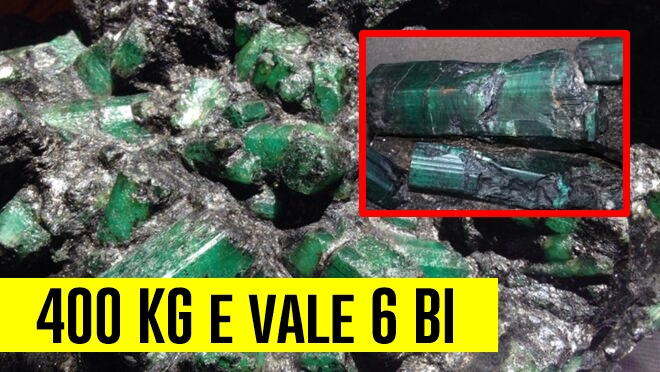
Weighing 400 kg and valued at nearly R$ 6 billion, the largest emerald in the world, found in northeastern Brazil, finally has its destiny decided.
The United States Justice Department ordered, last Thursday (21), that an emerald weighing 380 kilograms, illegally taken from Brazil, be returned to the country of origin. The decision, issued by Judge Reggie Walton of the District Court of Columbia, ends years of legal battles involving the largest emerald in the world.
The stone, known as “Esmeralda Bahia”, was extracted in 2001 in the municipality of Pindobaçu, in northern Bahia. Since then, its fate has been mired in controversies and international litigations. Estimates indicate that the value of the emerald could reach US$ 1 billion, equivalent to approximately R$ 6 billion.
The Fight for Justice for the Largest Emerald in the World
According to the Attorney General’s Office (AGU), the magistrate recognized that the stone was exported to the United States using falsified documents. The ruling also reaffirms that the exportation of the emerald violated Brazilian laws and international treaties.
-
Rare earths are in everything, from cell phones to bullet trains, and what almost no one realizes is why they have become the target of such a delicate global war.

-
Brazil extracts 26.3 million tons of ore from what was previously treated as waste, transforming residues into wealth, producing over 3 million tons of sand, and demonstrating how national mining is relearning to generate value.
-
A $3.5 billion megaproject in Latin America pumps desalinated seawater at 1,050 liters per second over 194 km to keep a copper supermine in the Andes operational for another 20 years.

-
A hidden mine in the Andes valued at nearly R$ 1 trillion is starting to attract global attention, containing copper, gold, and silver, and raises an intriguing question: why do Argentina and Chile need to act together to exploit this gigantic wealth?

The decision, considered an important victory for Brazil, imposes on the U.S. Department of Justice the obligation to formalize the repatriation by December 6. However, the case is still subject to appeal, which may delay the return of the stone to Brazilian territory.
Currently, the emerald remains in the custody of the Los Angeles police in California. If there are appeals, the repatriation process will be suspended until a new ruling from the American courts.
Cultural and Economic Value
In addition to its impressive financial value, the Esmeralda Bahia carries significant historical and cultural weight. Classified as Brazilian cultural heritage, the stone embodies the history of mining and the mineral wealth of the country.
For the Attorney General of the Union, Jorge Messias, the decision is emblematic. “This is a very important victory for the Brazilian State, the result of a joint effort by the AGU with the Federal Public Prosecutor’s Office (MPF) and the Ministry of Justice,” he stated. He also emphasized that, when it returns to Brazil, the emerald will be incorporated into the collection of the Geological Museum of Brazil, where it will be accessible for public visitation.
A Future of Uncertainties
Although the decision represents an important step for Brazil, the case is not completely resolved. The judicial ruling makes it clear that only the litigants contesting ownership against the Brazilian government were affected by the decision. This means that other individuals who may be interested in claiming rights over the stone could file new lawsuits in the future.
The story of the Esmeralda Bahia, the largest emerald in the world, serves as a reminder of the challenges faced by resource-rich countries in protecting their assets. The case reinforces the importance of strict preservation and enforcement policies to prevent national riches from being illegally extracted and traded in the international market.
Now, Brazil eagerly awaits the return of the Esmeralda Bahia. The episode reinforces the country’s sovereignty over its heritage and highlights the effectiveness of international cooperation in cases of transnational crimes.
If all goes according to plan, the stone will be back in Brazil next month. It will undoubtedly be a historic milestone for the country and a celebration of its ability to protect what is truly its own.








Seja o primeiro a reagir!