





 Portuguese
  English
  Spanish
 4 min of reading
  0 comments


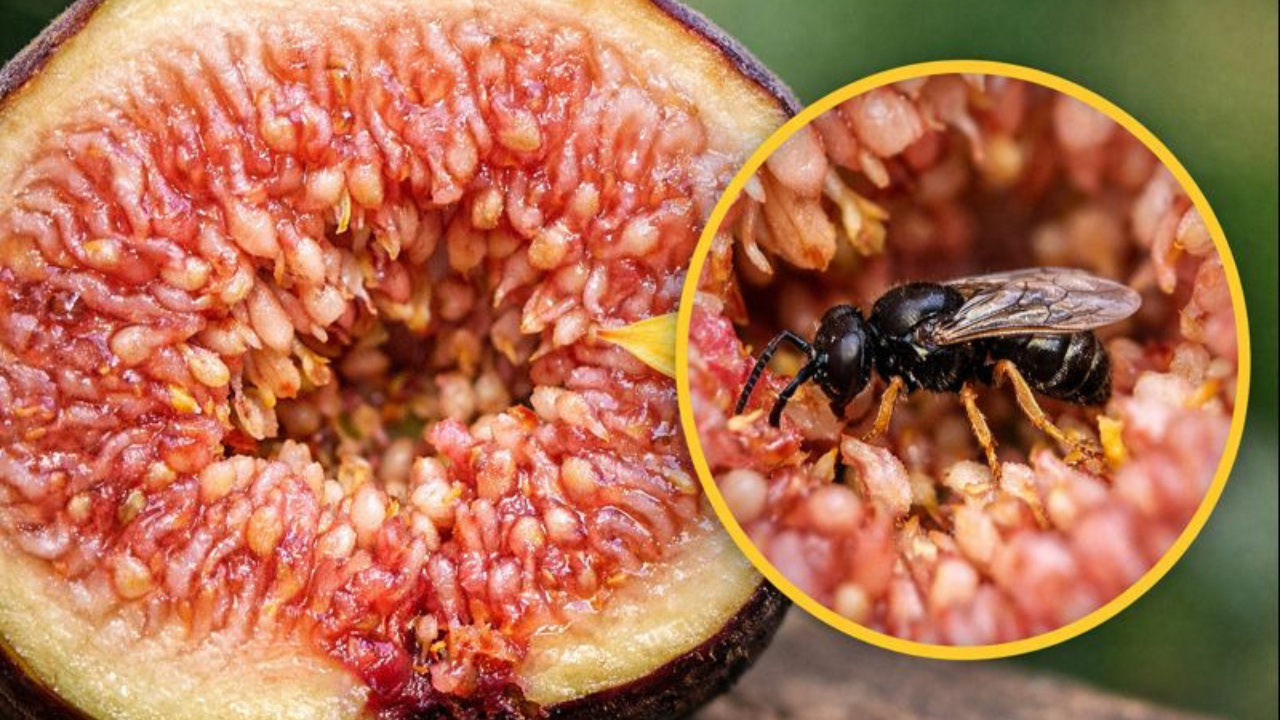
Fig Is Neither Fruit Nor Carnivorous Plant. Understand How the Inverted Flower Digests the Fig Wasp and What the Role of Pollination Is.
The fig, consumed daily by millions of people, is neither a fruit nor a carnivorous plant.
What seems contradictory is, in fact, a natural phenomenon related to pollination, the structure of the inverted flower, and the exclusive relationship with the fig wasp, a mechanism that has been occurring in nature for millions of years.
The process happens when the wasp enters the fig to perform pollination, gets trapped inside the flower, and ends up being digested by the plant’s natural enzymes.
-
China retires the J-7 fighter after years of military protection and can now transform military items into drones, following more than 60 years of operation of the J-7, derived from the MiG-21, with thousands of units produced and strategic use in the PLAAF and PLANAF.

-
Volunteers are sought to live in the mountains for a month: a study pays people to stay at 2,500 meters, with 24-hour monitoring of sleep, metabolism, and blood pressure.

-
Goodbye to kitchen cabinets: innovation retires the traditional furniture of Brazilian kitchens by introducing modern pantries with modules of up to 2.40 m, 40% more organization, ergonomic access, adjustable shelves, and smart lighting in 2026.

-
After the union of Brazil and China, BRICS plays a leading role in the merger between two powers: Egypt and India move forward with agreements exceeding US$ 4 billion, expanding industrial capacity in strategic sectors and accelerating the establishment of factories and global production chains.


Despite this, its goal is not to feed on the insect, but to ensure its reproduction, which completely changes its biological classification.
This explanation is provided by Paulo Minatel Gonella, a professor in the Department of Exact and Biological Sciences at Federal University of São João del-Rei (UFSJ), who emphasizes that the mechanism has no relation to plant carnivory.
Why the Fig Is Not Considered a Carnivorous Plant
Although it can digest the fig wasp, it does not qualify as a carnivorous plant.
According to Gonella, the digestion occurs as a side effect of the reproductive process and not as a nutritional strategy.
“Digestion is part of a defense and reproduction mechanism, not of feeding,” explains Paulo Minatel Gonella.
True carnivorous plants generally live in nutrient-poor soils.
Therefore, they capture insects to obtain nitrogen and phosphorus, essential elements for their survival.
The fig, on the other hand, does not depend on this resource to grow.
The Inverted Flower and the Exclusive Relationship with the Fig Wasp
What we call a fig is, biologically, an inverted flower.
Its flowers are turned inward, protected by a closed structure, with only a small opening.
It is precisely for this reason that only the fig wasp can access the interior of the flower.
Upon entering, it deposits the pollen and allows pollination to occur, which is essential for the formation of fertile seeds in nature.
This type of relationship is known as mutualism: the plant depends on the insect for reproduction, while the wasp depends on the fig to complete its life cycle.
What Happens to the Wasp Inside the Fig
During the pollination process, some wasps cannot exit the inverted flower.
In these situations, the insect ends up being decomposed by the fig’s natural enzymes.
This process, often interpreted as “digestion,” has no nutritional purpose.
It is merely the natural recycling of organic matter within the structure of the flower.
Therefore, despite its impressive appearance, the fig does not “hunt” insects or feed on them, reinforcing that it is not a carnivorous plant.
Is It Possible to Eat a Fig with Wasp?
In practice, consumers will hardly find a fig wasp in food purchased at the supermarket.
This is because the figs sold today no longer depend on natural pollination.
Over the years, researchers have selected varieties with more appealing characteristics for human consumption.
As a result, these figs only have internal female flowers and do not produce fertile seeds.
“Food for consumption no longer requires pollination,” explains the professor from UFSJ.
How Modern Fig Cultivation Works
In addition to genetic selection, commercially cultivated figs undergo another important care: they are bagged while still on the tree.
This procedure prevents the entry of the fig wasp and also protects the fruit from birds.
In nature, birds play an essential role in seed dispersal.
In agricultural cultivation, however, as the seeds are not fertile, this process becomes unnecessary.
Thus, farmers reproduce the fig through cloning and cutting, a technique that uses parts of the plant—such as branches or leaves—to generate new specimens.
Why Understanding the Fig Goes Beyond Curiosity
Understanding that the fig is not a fruit, but an inverted flower, helps to demystify popular concepts and values the complexity of ecological relationships.
Moreover, the topic reinforces the importance of pollination and the balance between species, showing how sophisticated natural processes sustain both biodiversity and modern agriculture.
Thus, far from being a carnivorous plant, the fig solidifies as one of the most fascinating examples of plant biology.
See more at: Fig Is Neither Fruit Nor Carnivorous Plant: Understand How It Can Digest Wasps | G1






-

-

-

-

-

20 pessoas reagiram a isso.