





 Portuguese
  English
  Spanish
  5 min of reading
  14 comments





Landmark Decision by the TST Alters Traditional Criteria for Provisional Stability, Reducing Formal Requirements and Opening Space for Debates on Social Protection, Legal Security, and Direct Impacts on Labor Relations.
The Superior Labor Court established thesis 125 and removed the old requirement of an absence of over 15 days and of work-related sick pay to ensure the provisional job security of Article 118 of Law 8,213/1991, provided that, even after the termination of the contract, a causal or concausal link between the occupational disease and the activities performed is recognized.
This change repositions the boundary between social protection and legal predictability, creating tension with operational criteria traditionally adopted by the INSS.
What Exactly Did the TST Decide
In ruling on the repetitive incident, the court consolidated the understanding that stability can be recognized even without the sum of objective requirements previously considered inseparable.
-
With the arrival of Law 11.788, internships are now recognized as professional experience.

-
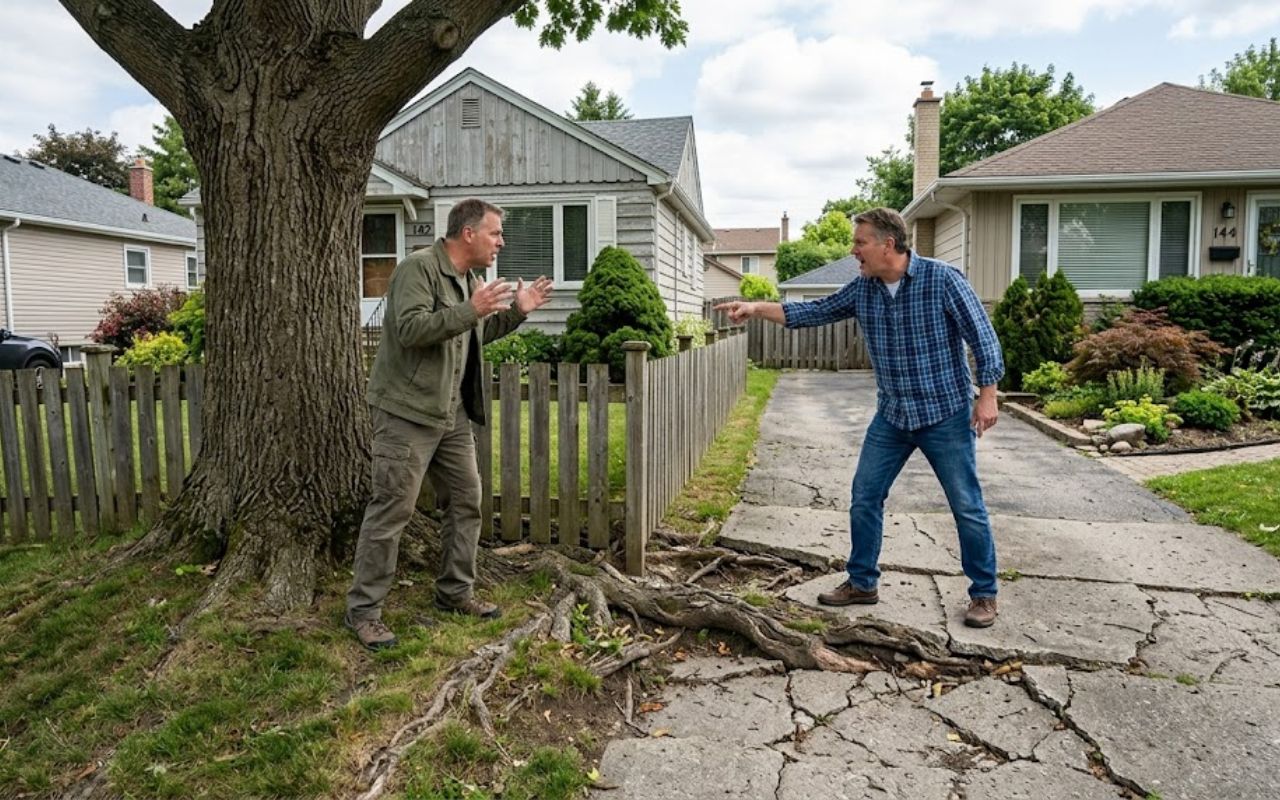
The Brazilian Civil Code states that a property owner has the right to cut the roots of a neighbor’s tree that invade their land, as long as it does not harm the tree itself. The owner must notify the neighbor before taking such action.
-
Engineer is sentenced to repay R$ 148 thousand after holding public positions in three municipalities in Rondônia with incompatible schedules, and the decision is upheld by the Court of Justice.

-
Chamber approves project that creates mandatory Life Insurance for police officers, firefighters, guards, and traffic agents.

The established statement is clear: “For the purposes of the provisional job security provided for in Article 118 of Law 8,213/1991, it is not necessary to be absent for a period exceeding 15 days or to receive work-related sick pay, provided that, upon termination of the employment contract, the causal or concausal link between the occupational disease and the activities performed during the employment relationship is recognized.”
This formulation addresses a recurring problem in occupational health: delayed effects.
There are diseases and sequelae that do not manifest immediately, making the 15-day filter insufficient in many cases.
With the thesis, employees who demonstrate a relationship between the activity and the disease, even if belated, are granted provisional stability.
Scope and Limits: Stability Is Not Automatic
Although the flexibilization of objective criteria broadens protection, the precedent does not universalize stability.
Social security legislation defines a work accident as an event that, while engaged in the activity, causes bodily injury or functional disturbance with loss or reduction of work capacity, even if temporary.
Without a real impact on the ability to work, protection is not established.
The mere issuance of the CAT (Communication of Work Accident), an administrative obligation of the employer, does not prove the right to stability by itself.
It is essential to demonstrate that there was occupational illness or sequelae resulting from the accident, with repercussions on work capacity.
Minor occurrences, such as superficial cuts, abrasions, or strains without incapacity, do not fall within the intended result of the precedent.
Occupational Diseases vs. Minor Accidents
The thesis was born focusing on occupational diseases and situations in which the causal link is recognized after the end of the relationship.
In these cases, protection is justified because the illness can be insidious, cumulative, or of complex diagnosis.
For minor accidents that do not cause significant absence or reduce capacity, stability does not apply.
An extensive interpretation that transforms every event into an automatic trigger for stability contradicts the objective of the rule.
Furthermore, specific decisions remind us that the reaffirmation of jurisprudence in repetitive cases highlighted the exceptionality linked to diseases, which has fueled the reading that, in typical accidents without sequelae, stricter proof requirements persist.
In other words: protection exists, but it depends on robust evidence of functional damage.
Legal Security and the Social Function of Stability
Article 118 of Law 8,213/1991 aims to ensure that injured workers have recovery time and reintegration.
By relativizing the necessity of social security benefits, the TST preserves the essence of the institution, focusing on clinical reality instead of exclusively bureaucratic criteria.
At the same time, the message is explicit: stability is not a privilege, but rather a tool directed at those whose capacity has been effectively reduced due to illness or sequelae related to work.
Role of Lawyers: Distinguishing as Key
In light of the new arrangement, the technical work of distinguishing gains importance.
Identifying peculiarities that distance the automatic framing of the specific case in the precedent is what avoids both the undue denial of protection and its trivialization.
It is up to the parties to demonstrate, with medical documents and elements from the work environment, whether there was or was not a causal/concausal link and what the degree of impairment of work capacity was.
In many processes, the discussion will shift away from merely the number of days of absence to focus on expert evidence, medical history, and the specific working conditions.
This change moves the debate from formal checklist to materiality of the injury.
TST vs. INSS: Criteria in Collision Course
Thesis 125 challenges the social security model that historically linked stability to absence exceeding 15 days and the granting of work-related sick pay.
By unlinking stability from this entry point, Labor Justice creates a precedent that may result in labor decisions recognizing guarantees even when social security benefits have not been granted or even requested.
This mismatch produces practical effects.
Companies will need to improve their accident and illness investigation routines, even after terminations, under the risk of recognizing stability too late.
Workers, in turn, gain a pathway more consistent with the clinical specifics of occupational diseases, especially those with slow progression.
Preventing the Trivialization of Stability
Without real incapacity, stability cannot be legitimized.
To maintain balance, the evidence must show inaptitude or reduction of capacity resulting from occupational illness or sequela.
Quick returns to activities, without the need for recovery, do not sustain provisional guarantees.
This cutoff line protects the institution against indiscriminate use and maintains coherence with the goal of reintegrating and recovering the affected worker.
At the same time, the thesis reinforces that the absence of social security benefits does not prevent judicial recognition of stability when causation is demonstrated.
The analysis, therefore, migrates from the administrative procedure to the technical evidence in labor proceedings.
Operational Impacts on Companies and Workers
For companies, the scenario points to investments in prevention, monitoring of occupational health, and consistent documentation.
Ergonomics programs, periodic evaluations, and detailed clinical records now play a central role in risk management.
In litigation, the quality of internal reports and the integration between HR, SSMA, and legal teams may be decisive.
For workers, the main consequence is access to protection that is less dependent on administrative milestones and more aligned with medical science.
Proper guidance at the time of dismissal and the retention of records and exams become prudent measures for any later recognitions of causation.
What Remains from the TST Precedent
Thesis 125 reaffirms the protection of worker health without abandoning the need for qualified proof.
Provisional stability requires demonstration of functional damage related to work.
Minor cases, without repercussions on work capacity, remain outside its scope.
Thus, the guarantee remains focused on those who truly need the protected time to recover and return to work.
In light of hasty interpretations, the question that remains is direct: how will the legal community apply thesis 125 without transforming stability into a general rule for any occurrence in the workplace?








E qdo a doença é uma Depressão Grave provocada por Assédio Moral, também se enquadra?
E Odair? Que fez um texto sobre assunto e falou nda
Quanto tempo de estabilidade tem o funcionário depois de um afastamento por doença ocupacional?
12
meses