





 Portuguese
  English
  Spanish
  5 min of reading
  0 comments


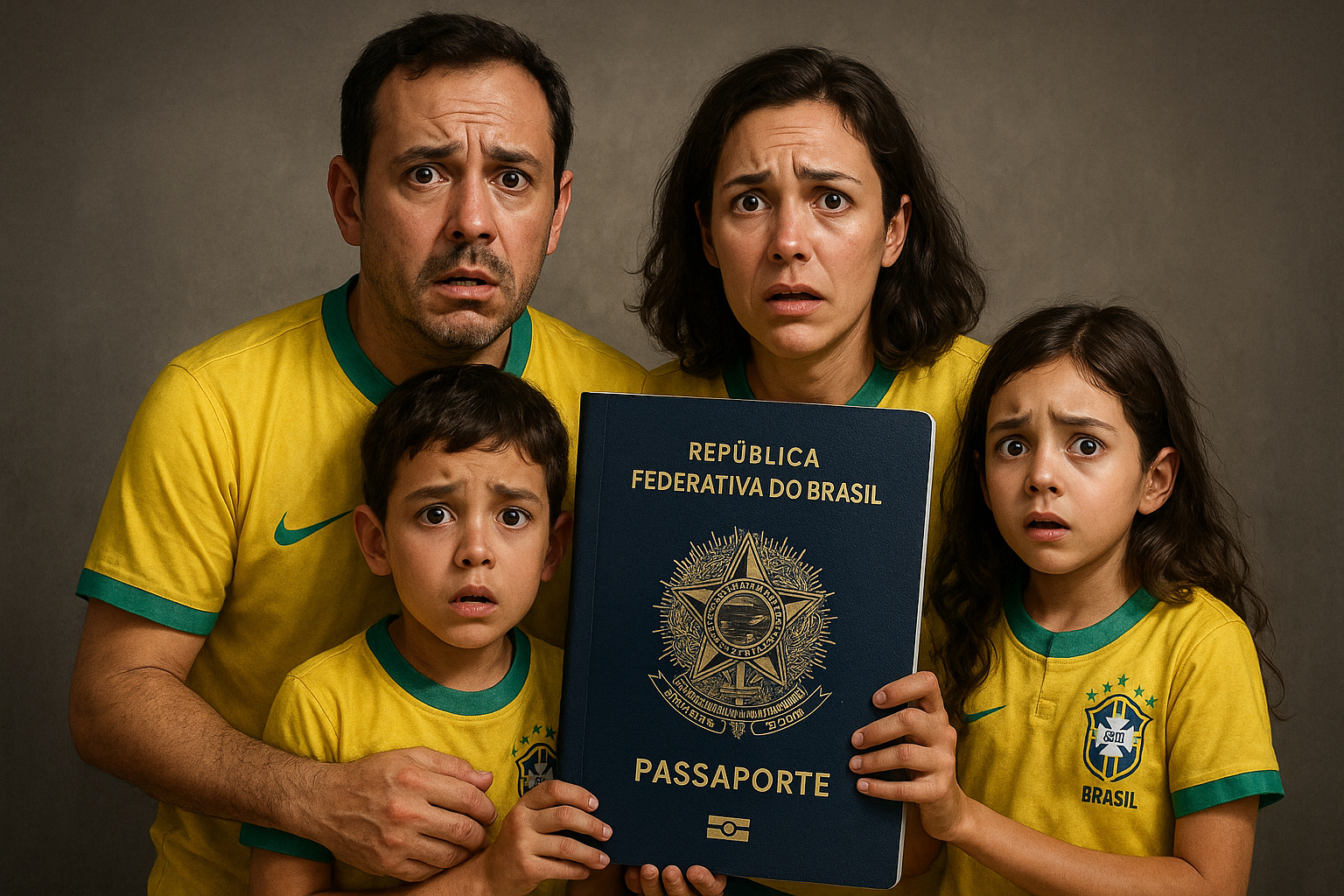
Migration Restrictions in Portugal Leave Thousands of Brazilians in a Delicate Situation, With Reports of Deportations at Airports, Detentions in Immigration Centers, and New Legal Requirements for Students, Tourists, and Residents
In recent years, Portugal has become the preferred destination for thousands of Brazilians in search of quality of life, professional opportunities, and the ease of a common language. However, this reality has been changing rapidly. What was once seen as an accessible path to start anew in Europe has now transformed into an environment of fear and uncertainty.
According to a report released by UOL, many Brazilians are reporting difficulties in renewing documents due to delays at the Immigration and Asylum Agency. The creation, in August, of a new police force specializing in foreigners has intensified this atmosphere of apprehension.
Deportations and Detentions Increase Concerns
The tension has grown even more after incidents of deportation. One of the most talked-about cases involved a Brazilian woman who, upon returning from vacation in Recife to Lisbon, was separated from her husband and young children and sent back to Brazil, solely because she was still awaiting her residence permit.
-
A bill could eliminate councilors in small towns in Brazil and replace fixed salaries with session allowances in municipalities with up to 30,000 inhabitants.

-
As the use of slimming pens grows in Brazil, a silent question arises among taxpayers in the 2026 income tax: why can’t these expenses be deducted and what specific detail could completely transform this rule into an isolated case?

-
He missed work to take care of his sick child, was fired for just cause, and ended up turning the tables in court with a decision that surprises companies.

-
STJ confirms that child support must be proportional to the father’s actual income and not to the mother’s standard of living — the decision reinforces balance in family obligations and prevents abuses in requests for increases.

Furthermore, Brazilians and other foreigners are currently detained at the Temporary Installation Center in Porto, awaiting expulsion. The facility has a capacity for 41 people and is the only official immigrant detention center in Portugal, although there are additional spaces at the airports in Lisbon, Faro, and Porto.
These actions are part of the strategy of the National Unit for Foreigners and Borders, a police force composed of 1,200 agents, authorized to approach people on the streets, public transportation, and demand documents. In the absence of documentation or irregularity, the foreigner can be detained immediately.


Growth of Political Extremism Pressures the Portuguese Government
According to immigration lawyer Alessandro Vieira Braga, interviewed for the report, this hardening is linked not only to administrative issues but also to the political landscape in Portugal.
In recent years, the Chega party, far-right, has been gaining ground and placed third in the legislative elections, almost tying with the Socialist Party. Although it is not part of the governing coalition, its political pressure directly influences the increase in restrictions.
The lawyer recalled that in 2023, the Order of Lawyers of Portugal ended an agreement that allowed professionals from the Brazilian OAB to practice in Portuguese territory, a clear signal of changing stance. As he highlighted, this trend is not isolated but rather a reflection of a global movement in which extremist parties, both right and left, impose stricter regulations against immigrants.
What An Immigration Lawyer Recommends
Given the increasingly strict scenario, lawyer Alessandro Vieira Braga warns that Brazilians wishing to live in Portugal should proceed with caution. According to him, it is no longer safe to “risk” the trip without legal planning.
“It is essential to seek a specialized lawyer before traveling. The changes are recent and will still generate much debate in the courts, both in Portugal and Brazil. Those who travel without support may end up being deported and experiencing extremely taxing situations,” he explained.
The specialist emphasizes that situations such as being stopped at airports, deported after long hours of flight, or even detained in immigration centers can be avoided with legal guidance and advance planning in the process.
Rule Changes Affect Students and Tourists
One of the most controversial changes occurred in the rules for students and tourists. Until recently, a Brazilian arriving in Portugal could apply for a visa while in the country. This privilege facilitated the regularization of their stay.
Now, the law has changed. Even those traveling to spend just two days as tourists need to obtain prior visas. For students, the process has also become more bureaucratic, requiring stricter documentation before departure.
This equal treatment of Brazilians with other foreigners from the European Union indicates the end of the “special treatment” that existed until now. “Today, entering Portugal is like entering any other country in Europe. The reciprocity that Brazil has always offered to Portuguese citizens is unfortunately not being maintained in the same way,” said Vieira Braga.
Comparison with the United States and Future Impact
The current situation in Portugal is starting to be compared to the actions of ICE, the immigration police in the United States. Although the newly established Portuguese Public Security Police has not yet conducted targeted raids on illegal immigrants in the streets, its presence in airports and official service locations is already causing fear.
According to experts, this policy reflects a global trend of increased surveillance and tightening of immigration laws, pressured by the rise of extremist parties and the growing hostility towards foreigners.
What to Expect Moving Forward
For those still planning to live in Portugal, the recommendation is clear: preparation, prior regularization, and legal support are essential. The dream of living in Portuguese lands has not ended, but it has become more distant from the ease that attracted thousands of Brazilians in recent years.
While Brazil has historically welcomed generations of Portuguese, Portugal is now closing its doors more and more. The expectation is that legislation will continue to be debated, but until new agreements come to fruition, Brazilians will need to adapt to stricter rules.
Source: The information was compiled from a report by W Prime, supplemented by an interview with lawyer Alessandro Vieira Braga and official data from Portuguese legislation.
In light of this new scenario of deportations, detentions, and increasingly strict requirements for Brazilians dreaming of living in Portugal, are we witnessing only a temporary change in migration policy or the beginning of a definitive cycle in which the “wide-open doors” close for those who sought a better, safer life in the European country, closer to their cultural roots?









-

-

2 pessoas reagiram a isso.