





 Portuguese
  English
  Spanish
  3 min of reading


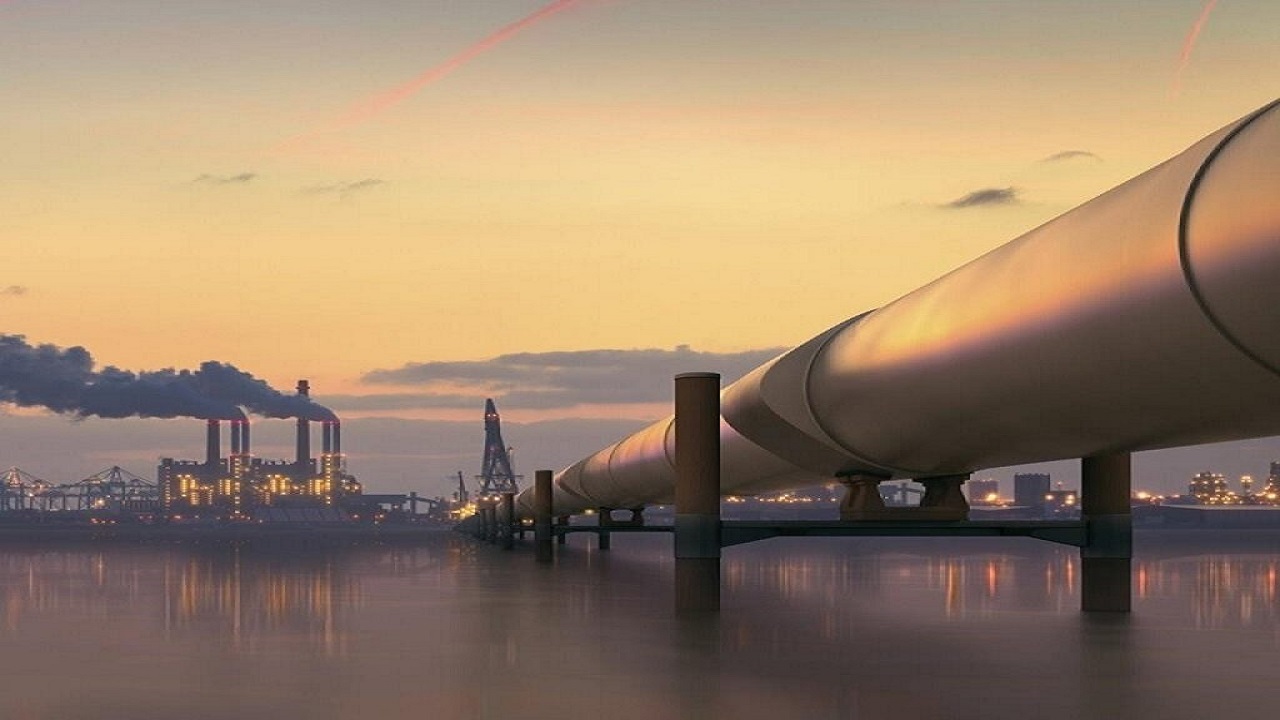
Firjan Plans To Make Natural Gas Available That Would Be Reinjected Into Wells To Industries With The Goal Of Transforming Rio De Janeiro Into A Petrochemical Hub.
Being the largest producer of natural gas in Brazil, Rio de Janeiro can circumvent the country’s dependence on the petrochemical sector by transforming the state into a petrochemical and fertilizer hub, according to the study “Petrochemicals: Attracting Investments to Rio de Janeiro” from the Federation of Industries of the State of Rio de Janeiro (Firjan).
Launched this Tuesday (25th) at 3 PM at Firjan’s headquarters, the study highlights the potential for developing the petrochemical and fertilizer industry in Rio de Janeiro through the use of natural gas as a feedstock. Additionally, the organization points out that the state of Rio de Janeiro is also a hub attracting investments for the new global energy frontier, hydrogen, with several projects already underway and potential integration with natural gas.
Vice-President of Firjan Talks About Attracting New Investments
According to Luiz Césio Caetano, Vice-President of Firjan, in order for industries to be attracted and settle in Rio de Janeiro, in addition to the availability of raw materials, which the state already possesses, it is also critically important to advance infrastructure and logistics projects.
-
“No one will make us change the Pix,” says Lula after the US report.

-
Lula responds directly to Trump and says that Pix is from Brazil and will not change under pressure from anyone, after a report from the United States pointed out the Brazilian payment system as an American trade barrier.

-
Amazon has just announced a new fee on all deliveries, and your online purchases will become more expensive starting April 17, including for those buying from the United States here in Brazil.

-
He sold his share for R$ 4 thousand, saw the company become a giant worth R$ 19 trillion, and missed the opportunity of a lifetime.


He emphasizes that the potential for investments in petrochemicals in the state from natural gas could reach R$ 65 billion, as expected by Firjan last year.
Industries in Rio de Janeiro Can Produce 932 Thousand Tons of Polyethylene
As a key player in Brazilian gas production from the pre-salt layer, Rio de Janeiro accounts for all of Brazil’s ethane production, derived from oil refining based on the Brazilian petrochemical sector. To further expand the production of this derivative and transform the state into a petrochemical hub, Firjan plans for part of the gas reinjected into wells to be made available to the industry, which could generate 932 thousand tons of polyethylene, based on 2022 data.
This potential production is equivalent to 1.14 times the total imported of this product by Brazil in 2022, based on a scenario of total utilization while accounting for the portion of pipeline gas consumed through distribution. About 18 billion cubic meters of natural gas were reinjected into production fields in Rio de Janeiro last year.
If this volume of gas were utilized, it could supply, for example, at least two Natural Gas Processing Units (UPGNs) with capacity similar to the Cabiúnas unit located in Macaé.
Rio de Janeiro Has Potential for 4 Petrochemical Hubs
Through the UPGNs mentioned above, it would be possible to obtain over 10 million tons per year of output streams after gas processing, distributed as 5.9 million tons per year of methane, 1.8 million tons of propane annually, 1.3 million tons of ethane per year, 796 thousand tons of butane per year, and 362 thousand tons of C5+ per year.
According to Karine Fragoso, manager of Oil, Gas, and Naval at Firjan, it is important to mention that Rio de Janeiro has the potential for 4 integrated natural gas hubs, in addition to the forecast of 5 units for producing green hydrogen, which can be applied in the process of generating nitrogen fertilizers such as ammonia and urea.









Seja o primeiro a reagir!