





 Portuguese
  English
  Spanish
  5 min of reading
  0 comments


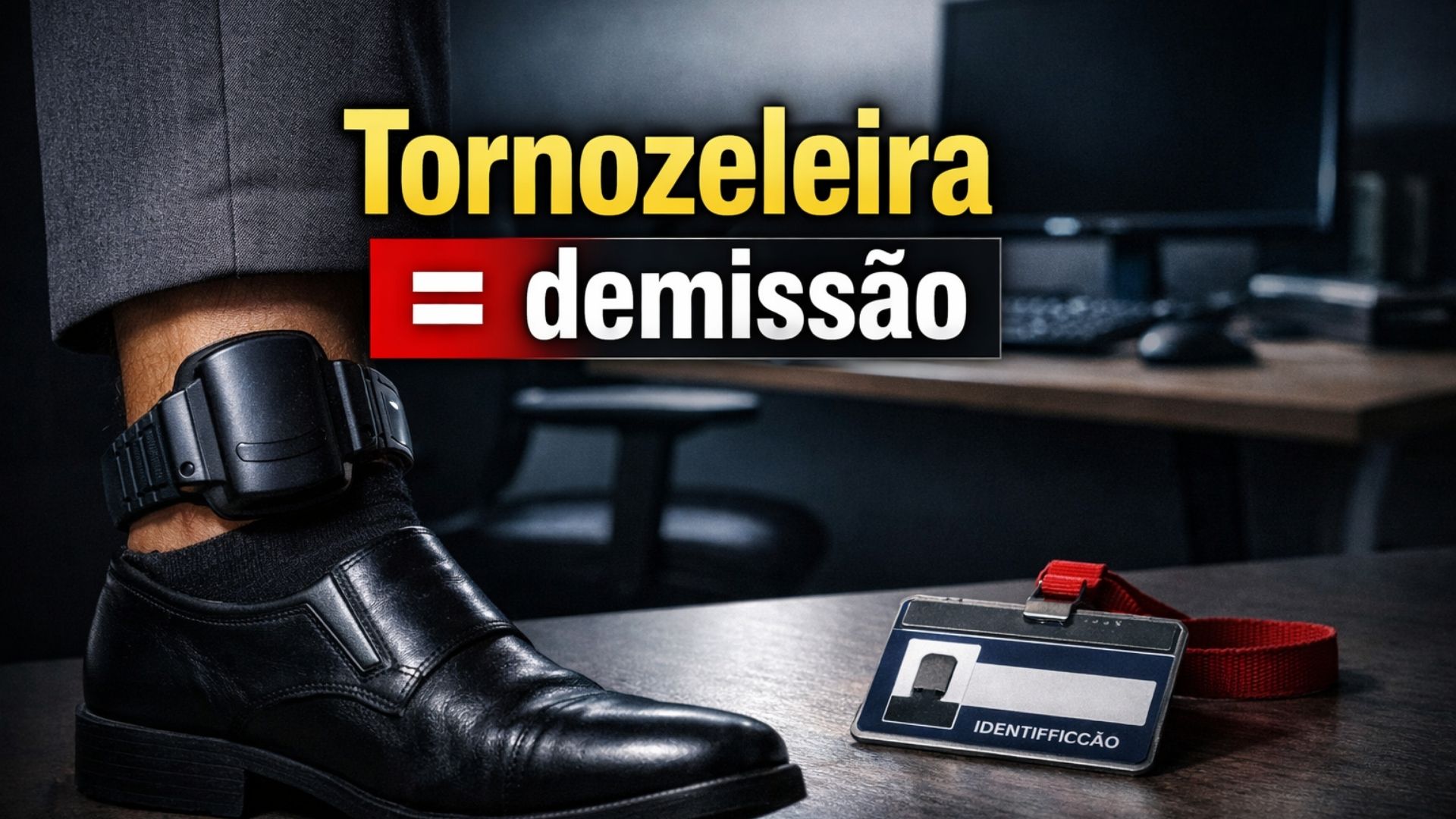
Dismissal Occurred on the Same Day as Judicial Communication Led Labor Court to Recognize Discrimination, After Company Failed to Prove Alleged Misconduct, Resulting in Compensation for Moral Damages and Expanding National Debate on Dignity, Stigma, and Limits of Employer Power.
The Labor Court ordered a company to pay R$ 8 thousand for moral damages to a worker dismissed on the same day he informed his superiors that he would start using an electronic ankle bracelet by judicial order.
According to the responsible judge, the sequence of events indicated discriminatory dismissal, and the company could not prove that the termination occurred for another reason.
The case was analyzed by the 13th Labor Court of Fortaleza (CE).
-
Government enacts new law: paternity leave increases from 5 to 20 days with gradual increases until 2029, and Social Security pays the paternity salary; companies no longer bear the absence cost, estimated at R$ 5.4 billion.

-
End of the 1-hour lunch break in the CLT? Current labor law maintains the break, allows for negotiated reductions, and defines rules for working hours and home office in Brazil.

-
Employee Fired After Accumulating 114 Days of Medical Leave in One Year, Labor Court Upholds Company’s Decision

-
Employee Fired While Treating Depression Wins in Court and Vale Is Required to Rehire Him Following Decision Based on the CLT and INSS Benefits


In the lawsuit, the employee argued that he communicated the need for the equipment and, a few hours later, received the news that he would be dismissed.
The company denied discrimination and claimed that the dismissal was due to the worker’s repeated misconduct, but did not present proof deemed sufficient by the magistrate.
Communication to Employer and Dismissal on the Same Day
According to the case records, the worker sought the company after receiving a decision in a criminal case that required the use of the ankle bracelet.
As part of the procedure’s requirements, he requested an employment declaration for judicial purposes, choosing to be transparent about the situation.
The company’s response came quickly.
As reported in the records and highlighted in the ruling, the employee was informed that he would enter into notice shortly after the request, which served as one of the elements to conclude that there was a direct relationship between the communication and the dismissal.
In the reconstruction of the dialogue presented in the decision, a company employee informed that there was an internal impasse regarding the signing of the document because one of the superiors had agreed to sign the declaration while another manager did not.

Subsequently, the worker received the message: “Unfortunately, it didn’t work out, and starting today you’re on notice, the notice will be worked.”
According to the process, at another point, the employee was informed that the notice period would be compensated, which reinforced the controversy over how the dismissal was communicated and formalized.
Defense of the Company and Allegation of Misconduct
In its defense, the company claimed that the dismissal had nothing to do with the use of the ankle bracelet.
The justification presented was that the worker had engaged in inappropriate conduct, impacting the discipline and internal order of the work environment.
Among the arguments, the company alleged that the employee encouraged colleagues to interrupt work activities during a strike.
It also pointed out that he had sent videos to a WhatsApp group composed of employees and to the union, with the intent of mobilization and to hinder the execution of a service.
Despite these allegations, the judge noted that the evidence submitted by the company did not demonstrate harm to the work environment.
As recorded in the ruling, the only video presented did not prove the conduct that the defense described, and, on the contrary, would indicate that there was no damage to the work environment.
Understanding of Justice on Discrimination in the Workplace
For the magistrate, the temporal proximity weighed in the analysis.
The decision emphasized that the dismissal occurred “a few hours” after the worker communicated that he would start using an electronic ankle bracelet and sought the document to present in the criminal case.
Another point taken into account was the burden of proof.
As the company maintained that the reason for the dismissal was different from that indicated by the worker, it was up to the defense to demonstrate that the termination was not linked to the communication about the equipment.

In the judge’s evaluation, this did not happen.
The magistrate also noted that participation in strike movements and union activity cannot be treated as a justification for punitive dismissal.
The ruling observed that encouraging the organization and mobilization of workers is a topic protected by the legal framework and requires care in interpreting conduct to avoid penalties incompatible with labor rights.
In this context, the decision concluded that the dismissal was discriminatory and set compensation of R$ 8 thousand for moral damages.
The process can still be subject to appeal.
Impact of the Decision and Alert to the Labor Market
The case rekindles discussions already present in labor lawsuits regarding limits of the employer’s power to direct, protection of the worker’s dignity, and consequences of discriminatory practices.
In the assessment expressed in the ruling, fulfilling a judicial order in a criminal case does not eliminate the employee’s right to respectful treatment and protection against decisions based on stigma.
Situations that result in embarrassment or exclusion in the workplace can be analyzed by the Justice under the perspective of violations of personality rights, especially when there are indications that the dismissal was motivated by the employee’s personal condition and not by performance or objective service needs.
At the same time, the process shows that allegations of misconduct require concrete proof.
When the company claims a disciplinary reason for a dismissal and the worker points to discrimination, the robustness of the evidence becomes central to the outcome of the case, including the setting of compensations.
With decisions of this type gaining visibility, employers and employees tend to pay increased attention to how to communicate legal requirements and how to conduct dismissals in sensitive circumstances, to avoid violations of rights and legal disputes.
What measures can companies and workers take to ensure transparency and reduce the risk of hasty decisions in similar situations?









-

Uma pessoa reagiu a isso.