





 Portuguese
  English
  Spanish
  4 min of reading
  0 comments



Understand Simply: Does the Law Require Gas Stations to Pass on Price Reductions?
This is a question that every Brazilian has had: are gas stations legally required to lower the pump price whenever there is a drop in refinery prices, such as when Petrobras announces a reduction in gasoline or diesel prices? If you have also wondered about this, don’t worry — here you will find out what the laws, the government, and the regulatory agencies have to say on the matter.
What Does the Law Say About Fuel Prices?
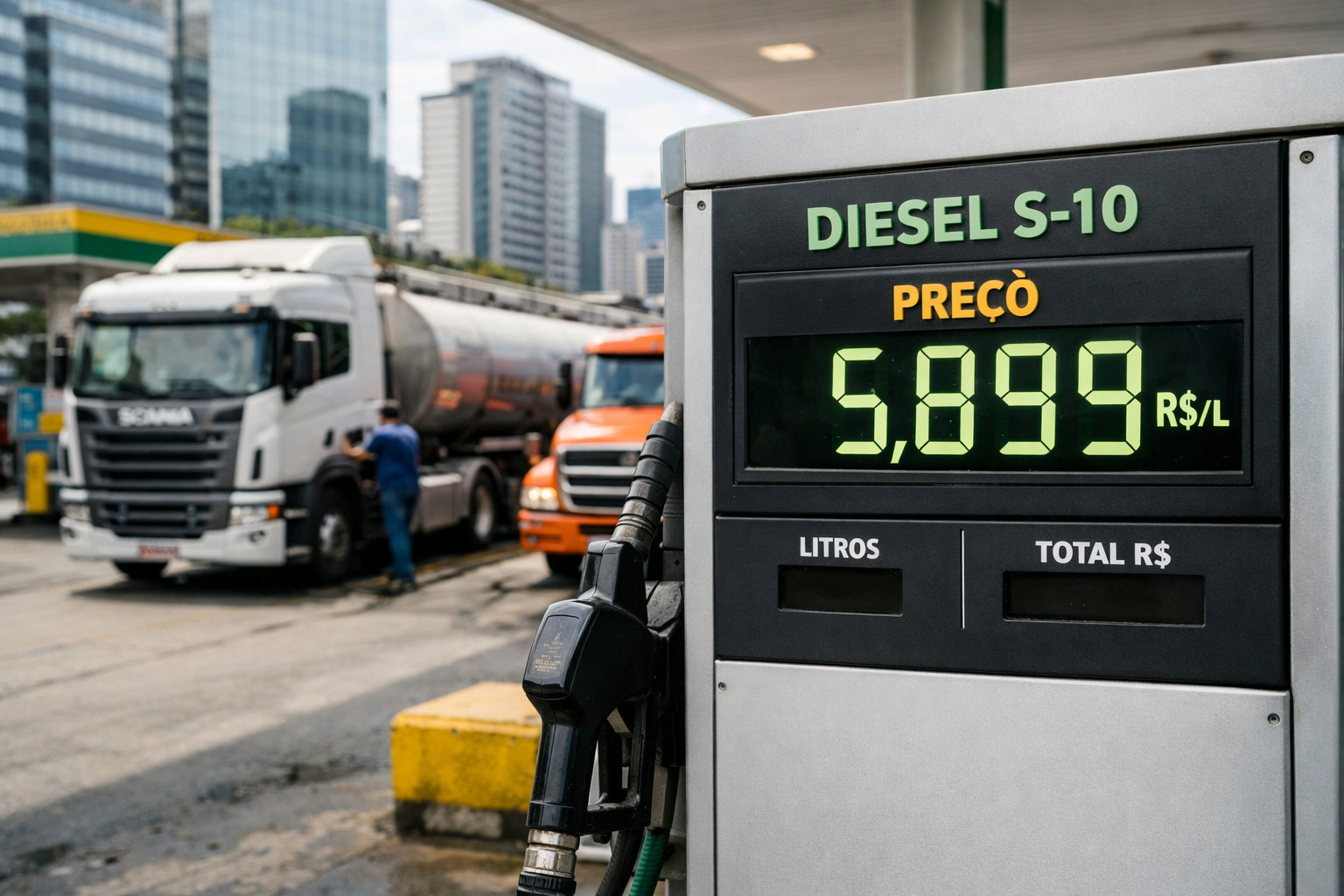
First important point: fuel prices in Brazil are free. In other words, there is no law that requires gas stations to lower prices every time there is a reduction at refineries. Each owner can set their own prices as long as they respect competition and do not engage in abusive practices.
This price freedom has been guaranteed since 2002 by the National Agency of Petroleum, Natural Gas and Biofuels (ANP) and is reinforced by Article 170 of the Federal Constitution, which addresses the principles of economic order:
-
Fuels come into focus: national task force expands oversight at over 5,300 fuel stations, identifies price distortions, and promotes measures that enhance consumer protection and transparency in the sector.

-
3 times more ethanol per hectare can be produced with Eike Batista’s supercane amid rising gasoline prices — how can this technology change fuel prices in Brazil?

-
Former president of IBP highlights that dependence on diesel imports pressures prices in Brazil, increases vulnerability to global crises, and underscores the need for more robust and sustainable energy policies.

-
Middle East War Drives Up Oil Prices, And Petrobras Increases Diesel: Fuel Reaches R$ 3.65 Per Liter At Distributors

Art. 170 — The economic order, based on the appreciation of human labor and free initiative, aims to ensure everyone a dignified existence, according to the dictates of social justice…
Moreover, the so-called “Petroleum Law” (Law No. 9.478/1997), in Article 1, Clause III, highlights that one of the objectives of energy policy is “to protect consumer interests regarding price, quality, and supply of products.”
Abusive Practices Are Prohibited by the Consumer Defense Code
Even though the law does not require immediate pass-through of reductions, practices deemed abusive are prohibited. The Consumer Defense Code (Law No. 8.078/1990) clearly states in Article 39 that it is forbidden for the supplier to:
“Require the consumer an exorbitant advantage; unjustifiably raise the price of products or services; and condition the supply of one product or service to the supply of another product or service.”
In other words, if a gas station systematically refuses to pass on reductions when it is able to do so, it can be investigated for abusive practices, especially if consumers feel harmed or if there are indications of a cartel.
What Do Government Agencies Say: Senacon, Cade, and the Ministry of Mines and Energy?
In May and June 2025, after a series of refinery price reductions announced by Petrobras, the National Consumer Secretariat (Senacon), linked to the Ministry of Justice, sent letters demanding explanations from distributors and gas stations on why price cuts were not reflected at the pumps in the same proportion.
In the official document, Senacon emphasizes:
“Although prices are free, disproportionate increases are illegal and constitute practices prohibited by both the CDC and the Competition Defense Law (Law No. 12.529/2011) and Law No. 8.176/1991.”
Additionally, the Attorney General’s Office (AGU) and the Administrative Council for Economic Defense (Cade) have opened investigations, citing studies that show that increases are quickly passed to consumers, while decreases take longer or may not reach the pumps at all.
Excerpt from the letter:
“In cases where the refinery adjustment represents an increase, resellers fully pass it on. However, in reductions, they reduce by a smaller proportion, thereby obtaining additional income.”
So Why Doesn’t the Price Always Drop at the Pump?
Even when there is a reduction at refineries, the final price of fuel depends on several factors:
- Old Stock: Many gas stations purchase fuel before the drop and will only pass on the new price when renewing their stock.
- Logistical Costs: Transportation, taxes (such as ICMS, PIS/Cofins), and profit margins.
- Local Competition: Regions with less competition tend to pass on decreases less.
Nevertheless, when consumers notice that gas stations are not passing on reductions fairly, they can contact consumer defense agencies, as, according to the aforementioned legislation, the practice may be considered abusive.
What Can You Do as a Consumer?
- Research and Compare Prices using the ANP app or comparison websites.
- Report Abusive Practices to Procon, Senacon, Cade, or the Public Prosecutor’s Office, especially if you notice that gas stations in the same area are not passing on the decrease.
- Keep an Eye on Official Communications — investigations have a legal basis and may result in penalties for establishments that exploit consumers.
In Summary: Is It Mandatory to Lower the Price Whenever There Is a Reduction at the Refinery?
There is no law that requires gas stations to immediately pass on any refinery reductions. The market is free, but abusive practices — such as not passing on decreases without justification — can be investigated and punished based on the Consumer Defense Code (Law No. 8.078/1990, art. 39), the Competition Defense Law (Law No. 12.529/2011), and Law No. 8.176/1991.
Therefore, the next time you see gasoline prices drop at the refinery, be aware that the station may take time to pass it on, but if the reduction never reaches consumers, they have rights and can demand oversight.
Have you noticed this price difference for fuel in your city? Do you usually research before filling up or just go to your usual station? Let us know in the comments!









-

Uma pessoa reagiu a isso.