





 Portuguese
  English
  Spanish
  6 min of reading
  1 comment


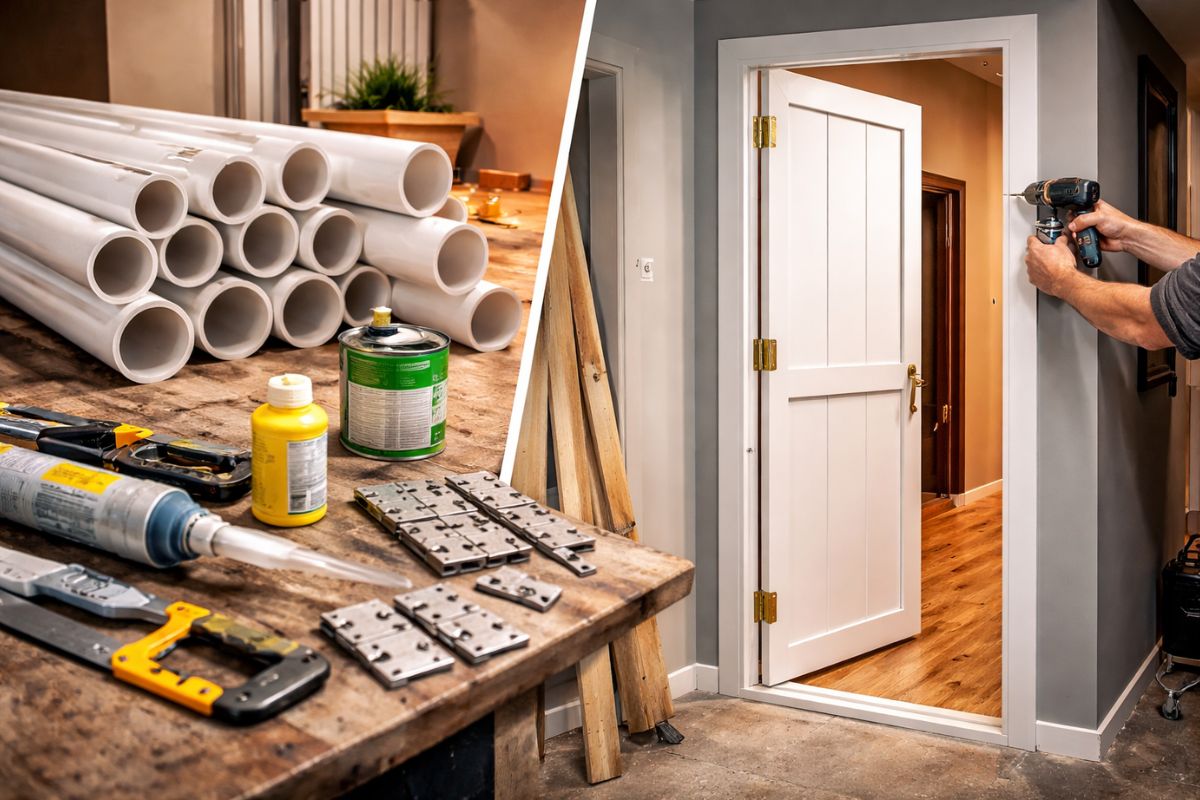


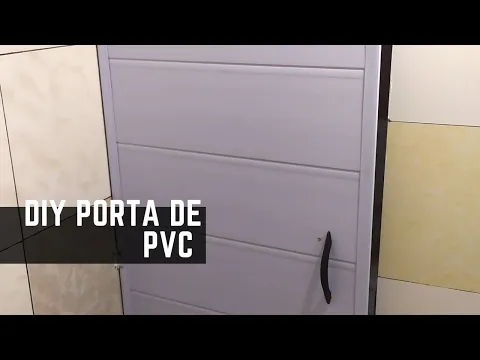
With a Door Assembled from Cut PVC Profiles, Structural Adhesive Applied After Cleaning the Parts, Finished with a U-Shaped Profile, Hinges Secured with Through Bolts, and Reused Handles, the Process Shows How to Close an Opening Without a Frame in a Practical, Cheap, and Organized Way at Home.
The proposal to assemble a door with PVC profiles and few components stands out because it brings together three factors that rarely appear together in the same project: ease of execution, low cost, and functional result. The process starts with cuts adjusted to the opening, goes through gluing the entire structure, and finishes with direct installation on the wall.
Instead of relying on a complex assembly, the idea works with a straightforward logic. Each piece is prepared to the correct size, fitted for verification, glued after cleaning, and finished with a side trim. In the end, the door receives hinges, handles, and can already serve its function without requiring a traditional frame.
How the Door Begins to Take Shape Even in the Cutting Stage
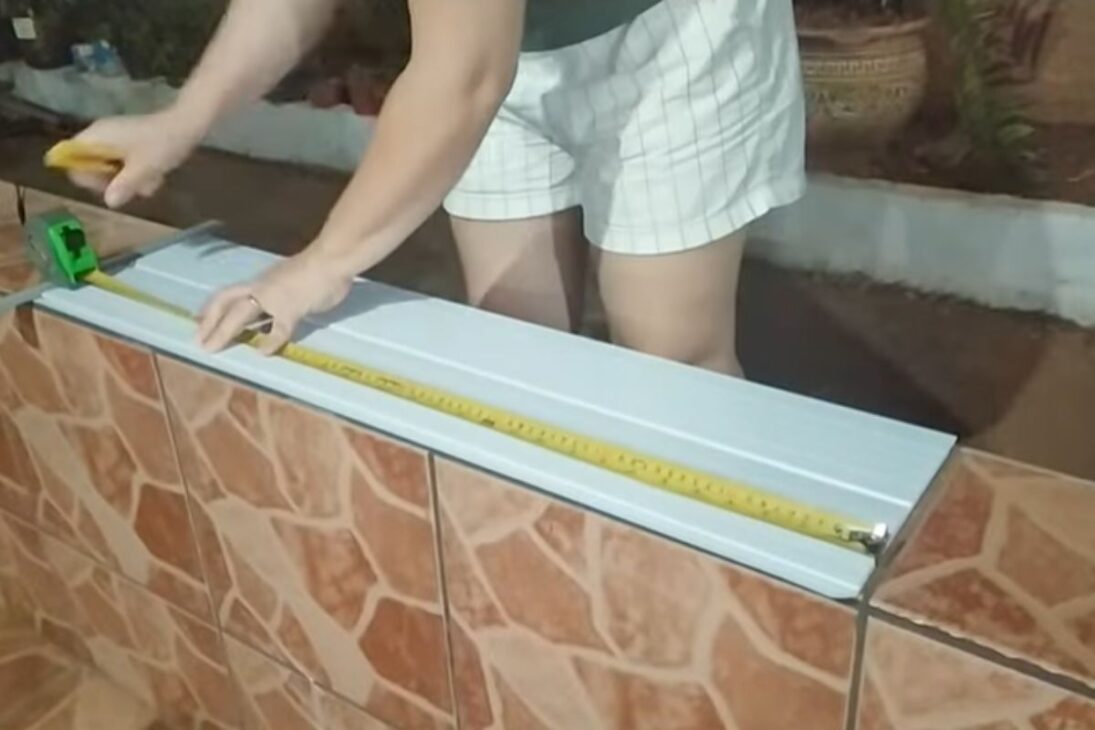
Everything starts with measuring the opening. The door is designed based on this space, and the cutting of the PVC profiles occurs with a slight gap, reducing half a centimeter on each side. This detail is important because it prevents the piece from being too tight, compromising the fitting or later installation.
-
Between tunnels, bridges, and billions in investment, Istanbul is preparing to receive a 125-kilometer railway that crosses continents, enhances the circulation of goods and passengers, and changes the strategic outlook of Turkish transportation.

-
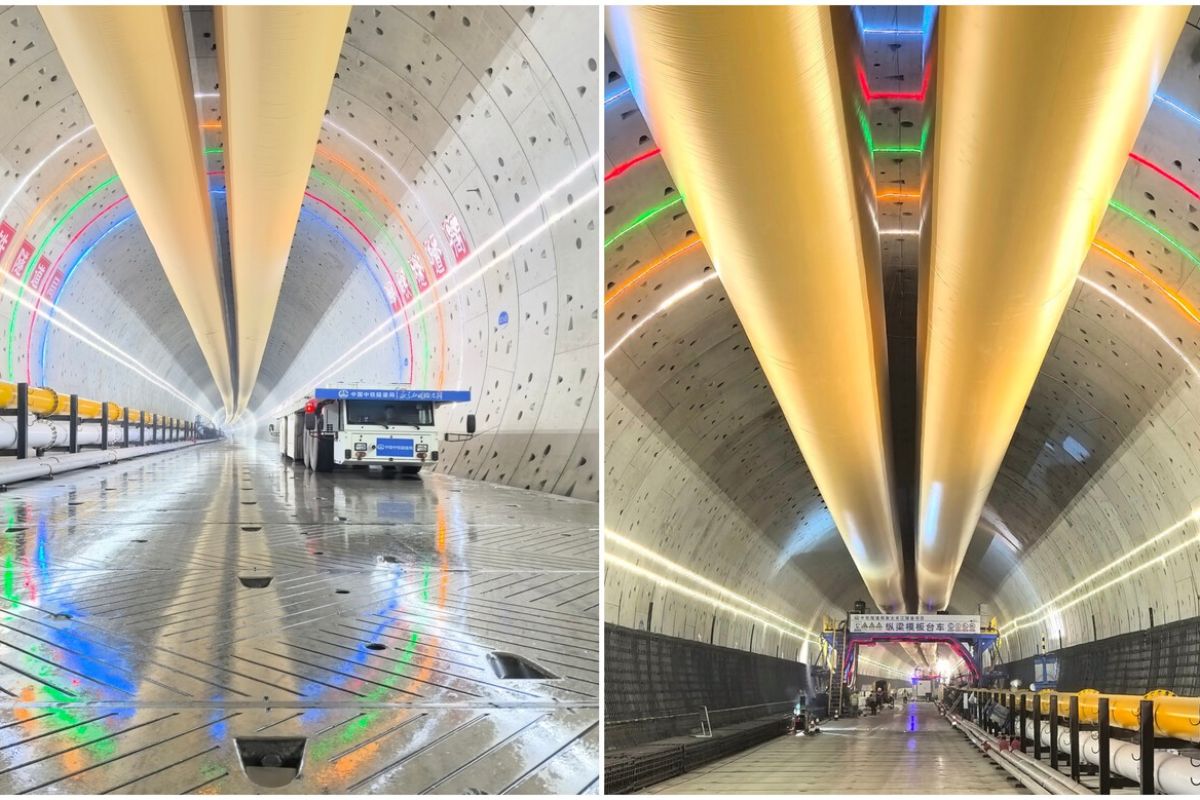
China completes the most critical section under the Yangtze River with the intelligent tunneling machine Linghang, excavating 11.32 continuous kilometers at depths of up to 89 meters and transforming the Chongming-Taicang tunnel into a landmark that redefines the scale of high-speed rail engineering in the 21st century.
-
The government of São Paulo surprises South America with a plan to transform the famous Ibirapuera with underground shops, air conditioning, and a 25-year concession in a billion-dollar project that expands the audience, alters a protected area, and provokes an immediate reaction.

-
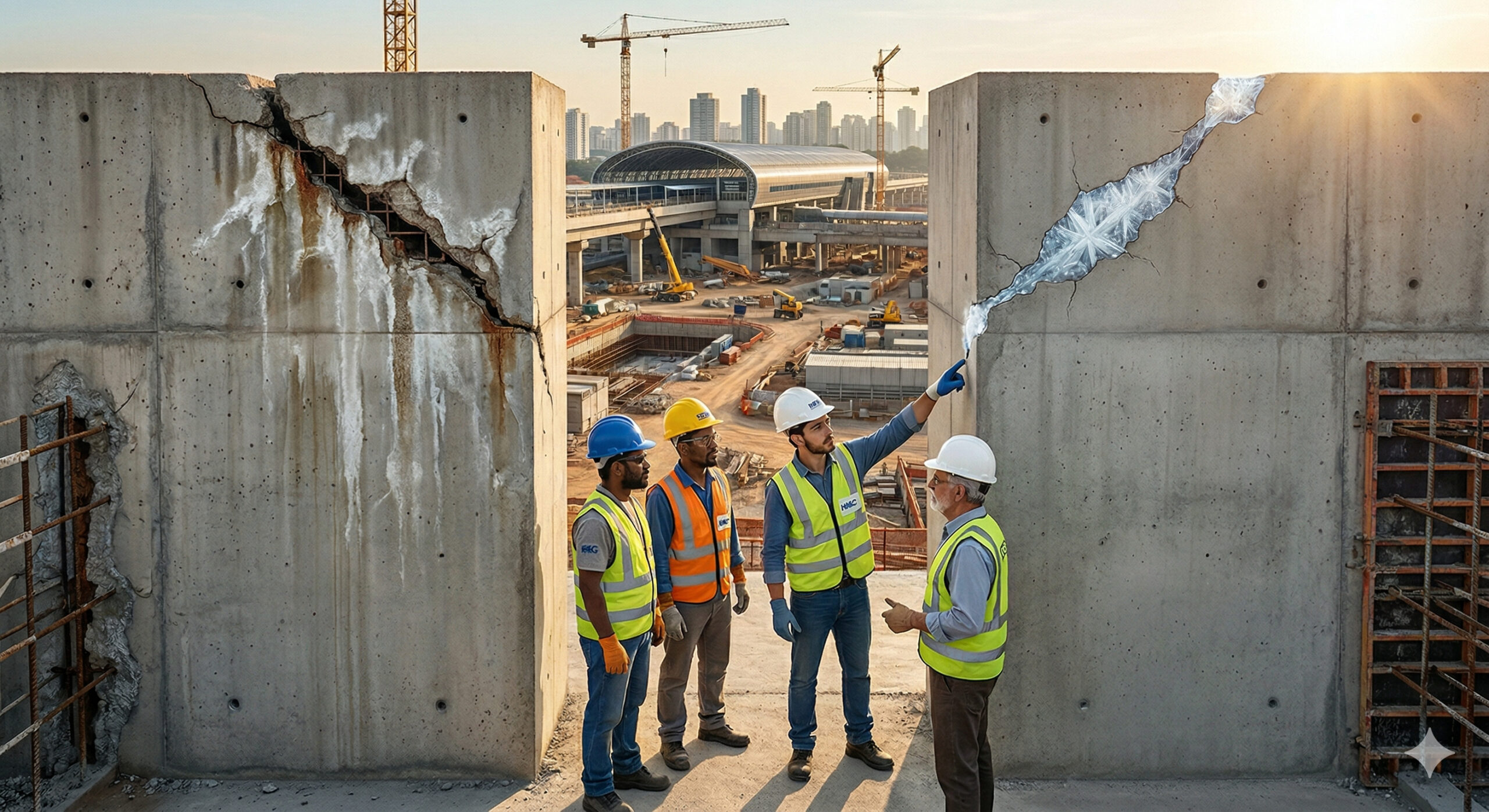
With a lifespan of up to 60 years and a cost up to 30% higher than conventional concrete, self-healing concrete is already being used in Brazil to eliminate leaks, reduce maintenance, and is changing the real cost of construction projects.

After cutting, comes a phase that seems simple but makes a difference in the result: the fitting test. Before the final gluing, all pieces are positioned to check if the sizes are correct and if the structure is uniform. This carefulness prevents accumulated errors and helps ensure that the door remains aligned from the start.
When this verification is done calmly, the assembly ceases to be improvised and follows a logical sequence. This explains why the method works even when using accessible materials. The savings do not come from skipping steps but from organizing the execution well.
It is also in this phase that you understand who can benefit from such a solution. The door caters especially to those who want to close an internal opening in a practical way without resorting to a heavier structure or a more expensive installation.
The advantage lies precisely in transforming an open space with simple and easy-to-handle elements.
The Gluing of the Door Replaces More Complex Fixings in the Structure
With the pieces verified, the assembly advances to the gluing. The surface is cleaned before applying the adhesive, and only after that, each profile is fitted. The logic here is clear: clean, apply glue, and join the parts. This sequence improves adhesion and gives more consistency to the assembly.
The use of structural glue stands out because it reduces reliance on nails or screws to form the body of the door. Instead of drilling the entire structure from the beginning, the method relies on the adhesion of the pieces, which simplifies execution and makes the process less labor-intensive for those assembling at home.
This type of solution also helps understand why the project can be inexpensive. The cost tends to drop when the assembly uses few elements besides the profiles, the glue, and the final hardware. There is no excess of components or unnecessary steps, making the proposal more feasible for those seeking functionality without spending a lot.
At the same time, gluing requires attention. Rushing can compromise the alignment and fixation of the parts. Therefore, the method values the careful repetition of the same procedure throughout the entirety of the door, maintaining uniformity in the structure from start to finish.
The Finishing with U-Shaped Profile Reinforces the Visual and Fit of the Door

After the main structure is assembled, the U-shaped profile used for finishing comes in. It is slightly open, receives glue, and is fitted over the edges of the door. In some spots, the glue can also be applied directly to the piece before the finish is placed, to improve adhesion.
This step serves not only to hide edges or give a cleaner appearance. The finishing helps to consolidate the outline of the door and leaves the whole visually more uniform.
This is the moment when the piece stops looking like just an assembly of profiles and starts to take on a more complete aspect.
The repetition of this process on all sides is important because it maintains the same standard around the structure. When the finishing is done unevenly, the door may still function, but it loses visual regularity. When the application follows the same rhythm, the final result is more organized.
This point also naturally responds to why the method stands out. It is not just about assembling a door cheaply, but about achieving a piece with sufficient finishing for domestic use, without relying on more sophisticated processes or a specialized workshop.
Direct Installation on the Wall Shows Where the Door Gains True Function
With the piece ready, the next phase is drilling to receive the hinges. At this point, the door leaves the assembly stage and enters the functional part of the project. The hinges are installed with through bolts, nuts, and washers, a solution that reinforces the fixation and prepares the piece for everyday use.
The installation is done directly on the wall, without a frame. This detail significantly changes the reading of the project, as it shows that the proposal is not just to build the door, but also to solve the closure of the opening with a streamlined structure. The absence of a frame simplifies the application and reduces the number of steps involved.
This is precisely where the method demonstrates where this solution makes the most sense. It works in situations where the goal is to close a space practically, using the wall itself as a base for the hinges. The focus is not on an elaborate construction, but on an efficient and straightforward adaptation.
In the final part, the old handles receive a matte black paint and are glued to the piece, although they can also be bolted. This reuse reinforces the economic logic of the proposal. The door does not depend on new accessories to achieve a resolved look, contributing to keeping the project simple and accessible.
When the Simplicity of the Door Becomes the Main Differentiator
What stands out the most in this type of assembly is that the door does not emerge from a sophisticated process, but from a well-executed sequence of small actions. Measure, cut, test, clean, glue, finish, drill, and install. Each step is straightforward, but the result depends on the sum of all of them.
This helps explain why the solution seems so appealing to those seeking practicality. There is no excess of technique, but there is method. And it is precisely this combination that transforms PVC profiles, glue, and hinges into a piece capable of closing an opening with organization and utility.
In the end, the proposal shows that a door can be assembled at home without excessive complexity, as long as the cutting respects the measurements, the gluing is done with care, and the installation follows a secure order. The project does not try to appear more than it is: a simple, cheap, and functional alternative to solve an internal closure.
And in your case, would you use a door made of PVC assembled this way at home? In which environment would it make the most sense for you: laundry room, hallway, pantry, or another space?








Sim usaria nos quartos e banheiros da casa de campo.