








New aerial scans reveal geoglyphs hidden by vegetation and expand knowledge about the organization of ancient Amazonian societies.
Large circles, squares, and rectangles continue to be identified beneath the Amazonian landscape.
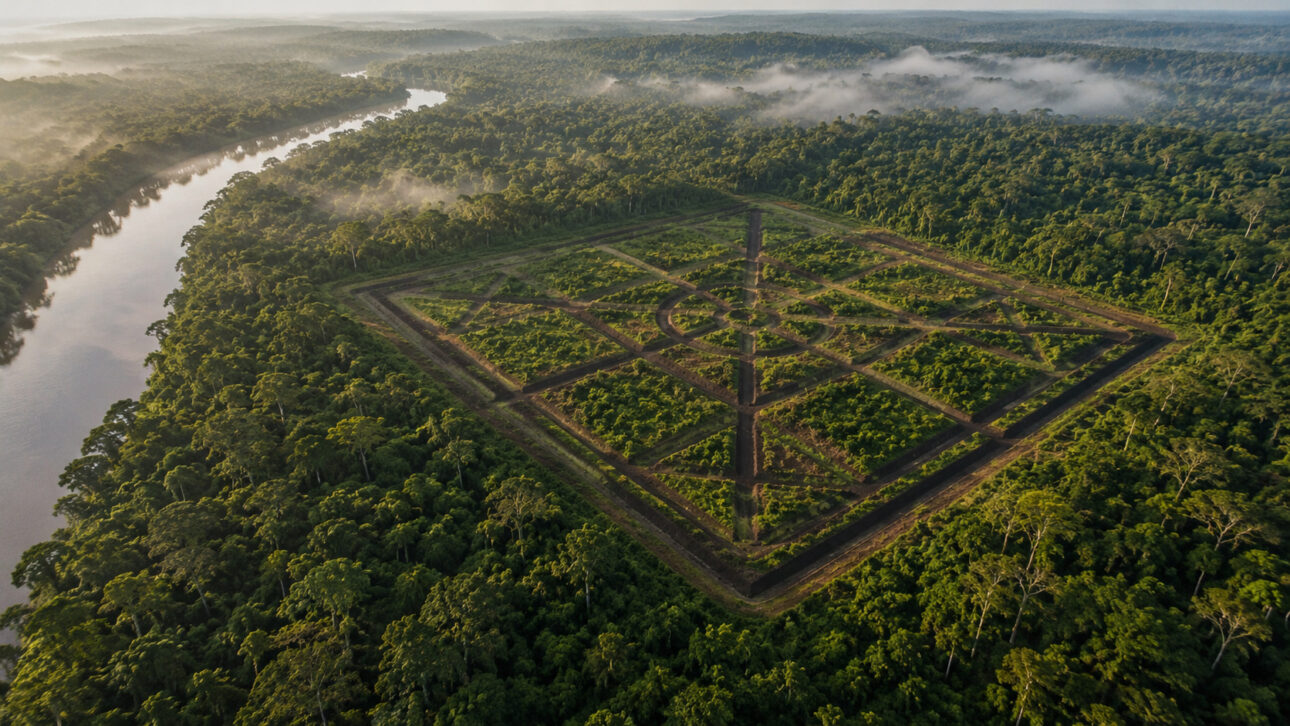
The structures, known as Acre geoglyphs, have monumental dimensions and designs that draw attention due to their symmetry.
New aerial surveys have increased the number of observed figures and revealed straight paths connecting different constructions.
-
Brazil abolished slavery over a century ago, but its prisons still carry an old logic of punishment, abandonment, and racial exclusion.

-
Two Brazilians defied secret orders from Getúlio Vargas and used visas, passports, and diplomacy to save persecuted Jews during the Holocaust.
-
Viking ship used in “The Odyssey” returns damaged after six months of filming, and owners charge Universal $6,000.
-
Rare translucent squid appears with eggs in the freezing waters of Greenland, revealing for the first time surprising details of its reproduction.


These discoveries reinforce the hypothesis that ancient indigenous peoples planned, organized, and modified extensive areas of the Amazon.
Geoglyphs form giant drawings on the Amazonian soil
The Acre geoglyphs are large structures formed by ditches, earth mounds, and enclosed areas.
Their shapes include circles, squares, and rectangles, some of which are only fully visible from above.
The forest cover kept many of these constructions hidden for long periods.
Flyovers, satellite images, and high-precision surveys have allowed for better observation of the drawings distributed across the territory.
Archaeological research on these structures began to gain prominence during the 1970s.
More systematic studies were expanded from the 2000s onwards, when new technologies facilitated the location of the sites.
Precision of circles and squares surprises researchers
Geometry remains among the most impressive elements of the geoglyphs.
Well-defined circles, almost perfect squares, and carefully positioned accesses indicate that the works were not constructed randomly.
Straight roads also connect different structures and demonstrate territorial planning.
The scale of the constructions raises questions about the methods used by the ancient inhabitants of the Amazon.
Modern measuring equipment did not exist during that period.
Technical knowledge, collective organization, and planning allowed for the execution of monumental works in different areas.
Function of the structures still raises doubts
The exact purpose of the geoglyphs has not yet been definitively determined.
Some researchers associate these spaces with the performance of religious ceremonies and meetings between indigenous communities.
Other interpretations suggest possible territorial, social functions, or those related to the organization of important areas.
Excavations continue to be conducted to understand how these sites were used.
New evidence may also explain why these societies left such extensive marks on the landscape.
Discoveries reveal an organized Amazon
The structures modify old interpretations about human occupation of the forest.
Numerous and organized societies may have lived in different parts of prehistoric Amazonia.
Among the main elements observed by researchers are:
- Geometric figures with a high level of symmetry;
- straight roads connecting different constructions;
- planned distribution of structures;
- strong evidence of landscape management;
- monumental works carried out collectively.
Scientific research published in 2017 identified hundreds of pre-Columbian structures spread over an extensive area of Acre.
Studies by the National Institute of Historical and Artistic Heritage also contributed to expanding knowledge about the geoglyphs.
Deforestation revealed hidden heritage
The removal of vegetation allowed for various geoglyphs to be identified for the first time.
This process also increased the risks of degradation of the archaeological heritage.
Remote sensing technologies have started to locate new structures without relying exclusively on the clearing of forest areas.
Aerial mapping helps researchers study the sites and expand knowledge about the Amazonian past.
Amazon may still hide new constructions
Decades of studies have not been enough to fully explain the geoglyphs of Acre.
Each discovery raises questions about the technical capacity, social organization, and territorial knowledge of ancient indigenous peoples.
The figures demonstrate that human history in the Amazon may be much more complex than previously imagined.
New surveys may still reveal circles, squares, roads, and other constructions hidden beneath the forest.
How many other monumental works may still remain hidden within the Amazon? Share your opinion!


