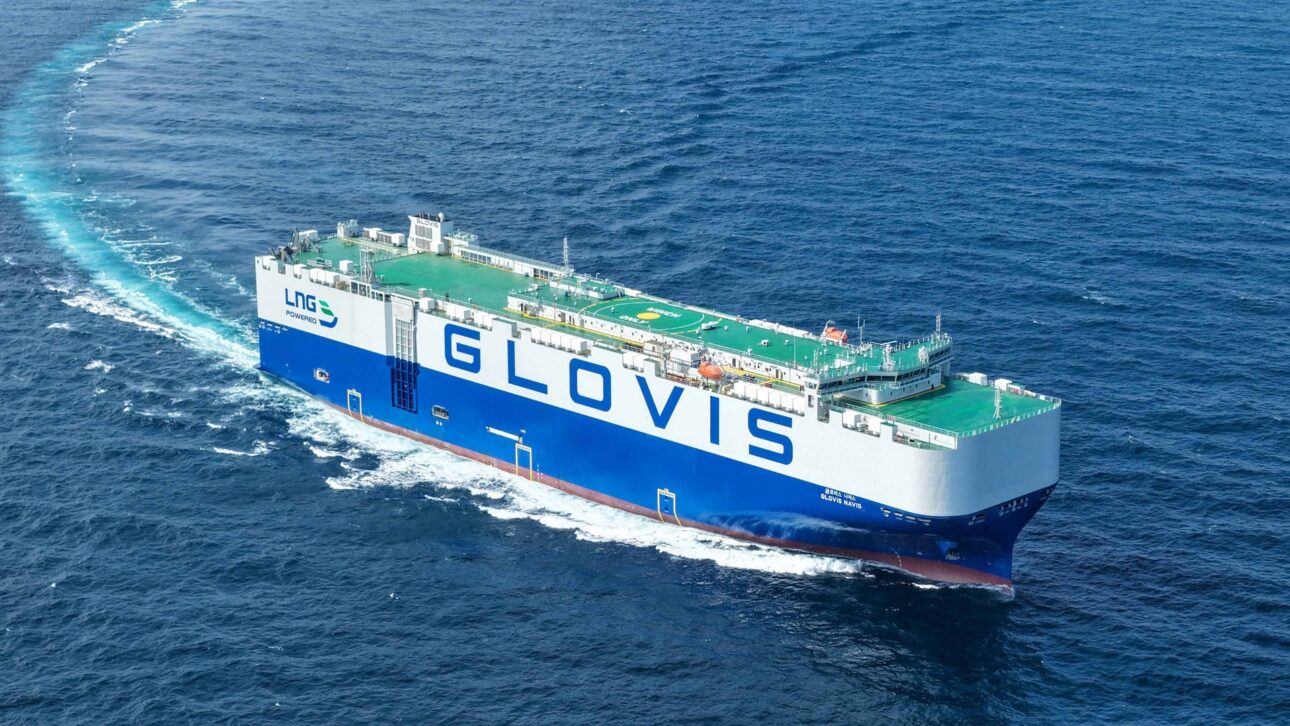

Hyundai Glovis CEO Lee Kyoo-bok attended the naming of the Glovis Navis in Guangzhou on November 26, a 230-meter pure car and truck carrier with 14 vehicle decks and room for up to 10,800 compact cars, which Korean outlets describe as the largest ship of its kind now in service.
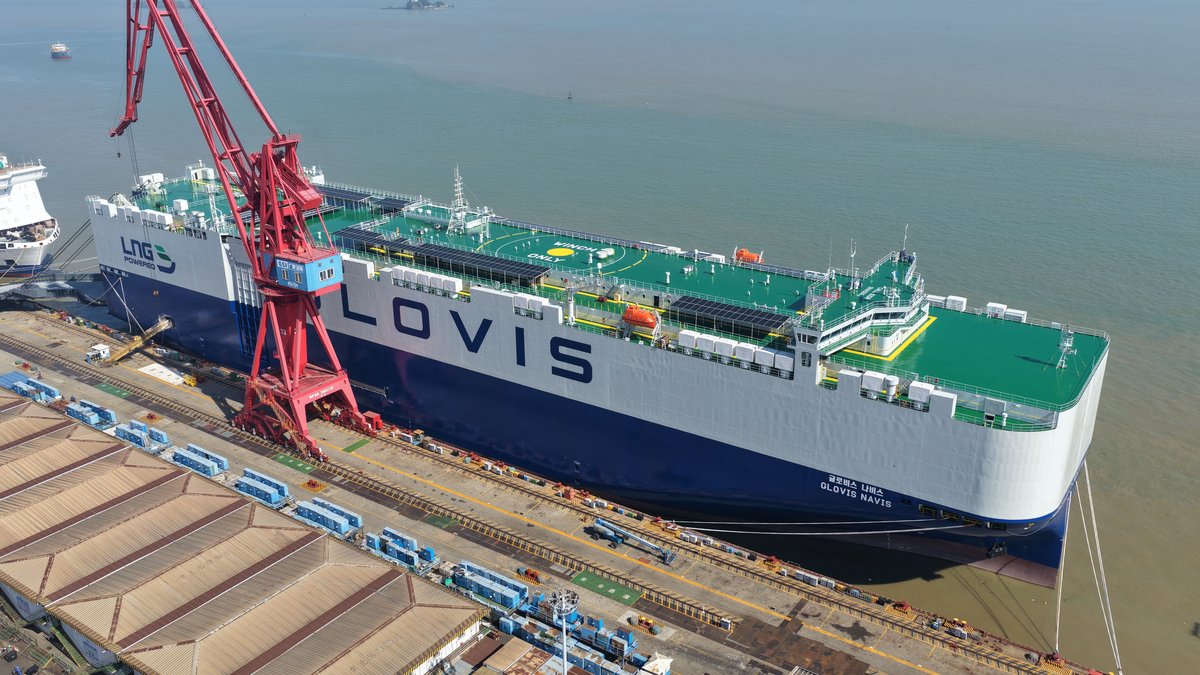
The ceremony took place at Guangzhou Shipyard International (GSI) in Guangdong Province, China, and the company announced the deployment on Sunday, November 29, The Korea Herald reported.
Besides Lee, the Herald listed Kim Hyung-joon, head of the maritime strategy division at the Korea Ocean Business Corporation (KOBC), among the key officials present. KOBC provided the policy financing behind the vessel.
A lion dance and a pair of scissors
The ship’s godmother was Lee Seo-young, head of Hyundai Motor’s Global SCM Support Office. She cut the line attached to the vessel with scissors, revealing the name “GLOVIS NAVIS,” according to The Asia Business Daily, which sent a reporter to the yard.
-

-
-
-


Maeil Business Newspaper described the South Korean flag and China’s five-star red flag flying side by side, while performers in lion costumes danced to drums and gongs in a traditional Chinese ceremony.
The same report said the hull looked as tall as a 15-story apartment building and carried the words “LNG POWERED” on its side, a sign that the ship can burn liquefied natural gas.
How big the Glovis Navis really is
The vessel measures 230 meters long and 40 meters wide, with 14 vehicle decks and a maximum capacity of 10,800 compact cars, the Herald reported, calling it the world’s largest PCTC currently in service.
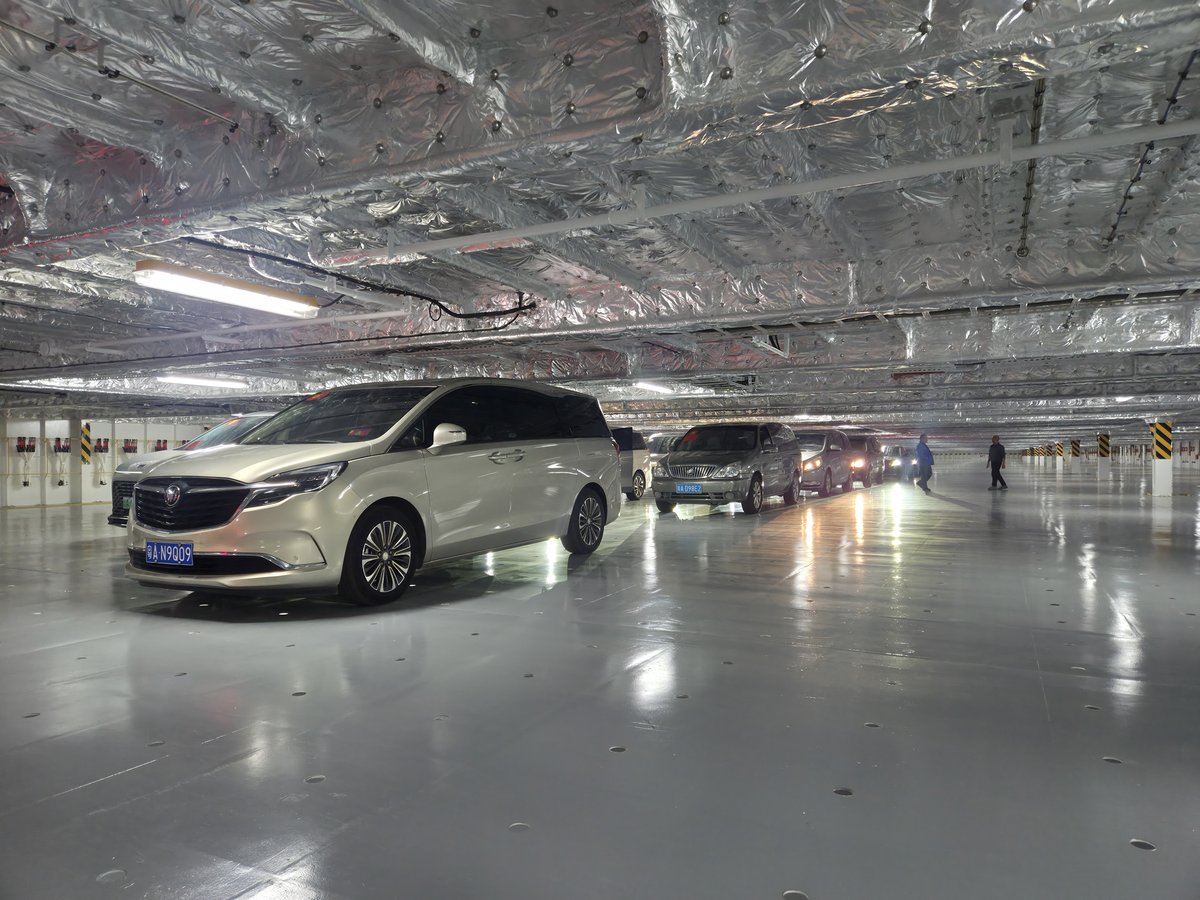
Maeil Business said the total loading area is equivalent to 14 soccer fields. Inside, reporters from several Korean newspapers compared the cargo space to a vast underground parking garage.
The Chosun Ilbo reported that each deck is about 1.9 meters high and can hold around 770 compact cars. Thousands of holes, spaced about 60 centimeters apart, are drilled into the floors so crews can strap down every vehicle.
Five of the 14 decks have adjustable heights. According to the Chosun Ilbo, their ceilings can be raised to as much as 6.9 meters, allowing the ship to carry buses, trucks, excavators, railway cars and wind turbine blades on return trips from Europe.
A crew of 21 and a first stop in Korea
Twenty-one people will run the ship, Maeil Business reported, led by Captain Kim Jang-hyun, who has 30 years at sea. The crew includes six South Koreans and 15 Filipinos.
Kim told the Chosun Ilbo that the global shortage of car carriers means the vessel will go straight into service. “It will first head to Gwangyang Port in Jeollanam-do on December 1 to load Hyundai Motor vehicles for South America,” he said.
Maeil Business added that the ship will load Hyundai Motor and Kia exports at Gwangyang and then sail to Mexico, Ecuador and Peru. Over time, the Chosun Ilbo said, it will mainly serve long routes from Korea and China to Europe and the Americas.
LNG engines and shore power
The Glovis Navis has a dual-fuel engine that can run on liquefied natural gas. When burning LNG, the ships in this class can cut carbon emissions by about 26% compared with conventional low-sulfur fuel, Maeil Business reported.
The Asia Business Daily said the vessel can also plug into an alternative marine power system, receiving electricity from shore while berthed instead of running onboard generators, which helps it meet rules such as the European Union’s Emissions Trading System.
Why a Korean carrier built its flagship in China
With domestic shipyards concentrating on higher-value vessels, Chinese yards such as GSI have become the main builders of car carriers, the Chosun Ilbo reported, adding that builders for car carriers cannot be found in Korea.
The ship is the product of a 2024 agreement between Hyundai Glovis and KOBC. Under that deal, KOBC secures the vessels through policy financing, and Hyundai Glovis leases and operates them over the long term, Maeil Business said.
The Herald reported that the Navis is one of four KOBC-financed carriers. The Glovis Nova arrived in July, the Glovis Noble and Glovis Navis in November, and the Glovis Nautilus is due in February.
Thirty ships ordered while prices were low
After charter rates soared following the pandemic, Hyundai Glovis began investing in 2023 to secure 30 large car carriers: four for 7,000 vehicles, six for 8,600 and 20 for 10,800, according to Maeil Business.
The Navis is the seventh 10,800-vehicle ship the company has received this year. One more is due by year-end, followed by 10 next year and two in 2028, the newspaper said.
Measured in 6,500-vehicle ship equivalents, the fleet is projected to grow from 106 vessels this year to 128 by 2030, the Herald reported. Hyundai Glovis told Maeil Business that a ship ordered now would not arrive until the second half of 2030 or around 2031.
China’s export boom fills the decks
Citing China’s Ministry of Industry and Information Technology, Maeil Business reported that China exported 9,271,000 vehicles from January to October, up 65.1% from a year earlier. Hyundai Glovis forecasts 12 million this year and up to 15 million next year.
Car carrier capacity out of China, by contrast, is expected to reach only about 6.08 million vehicles this year and 7.4 million next year, the company said, which pushes some Chinese automakers onto container ships.
Daily charter rates for car carriers doubled from an average of about $49,000 last year to $100,000 in October, Maeil Business reported, citing shipping analyst Clarksons. Red Sea disruptions linked to Middle East conflicts have made the shortage worse.
Hyundai Glovis ranked first with a 12.2% share of China-origin car carrier traffic from January to September, and it plans to raise that to 13.6% next year with more large ships, the Herald and Maeil Business reported.
Readers following the rivalry may recall that BYD reportedly ordered 10 car carrier ships to expand its own fleet, one of the Chinese moves Lee addressed in Guangzhou.
Lee’s bet on scale and the 20% goal
At a press conference the day before the ceremony, Lee played down the threat from BYD and SAIC. “Chinese shipping companies and automakers operate around 80 car carriers, with annual transport capacity of only about 2 million vehicles,” he said, according to Maeil Business.
He added that he did not expect the oligopolistic structure of the market to be disrupted suddenly, and said logistics may be the area where Hyundai Motor Group is most competitive against other global and Chinese automakers.
The Asia Business Daily reported that Hyundai Glovis plans to raise its annual seaborne volume of finished vehicles from 3.4 million to 5 million by 2030. If it succeeds, the outlet said, the company would handle more than 20% of global seaborne car transport.
The Herald attributed the same 20% ambition to Kim Jung-seok, head of the marine business division at Hyundai Glovis. Revenue from car shipping already rose 38.5% year on year in the third quarter, to 1.3659 trillion won, Maeil Business said.
Will giant ships like the Glovis Navis keep Korean carriers ahead as BYD and other Chinese automakers build fleets of their own?