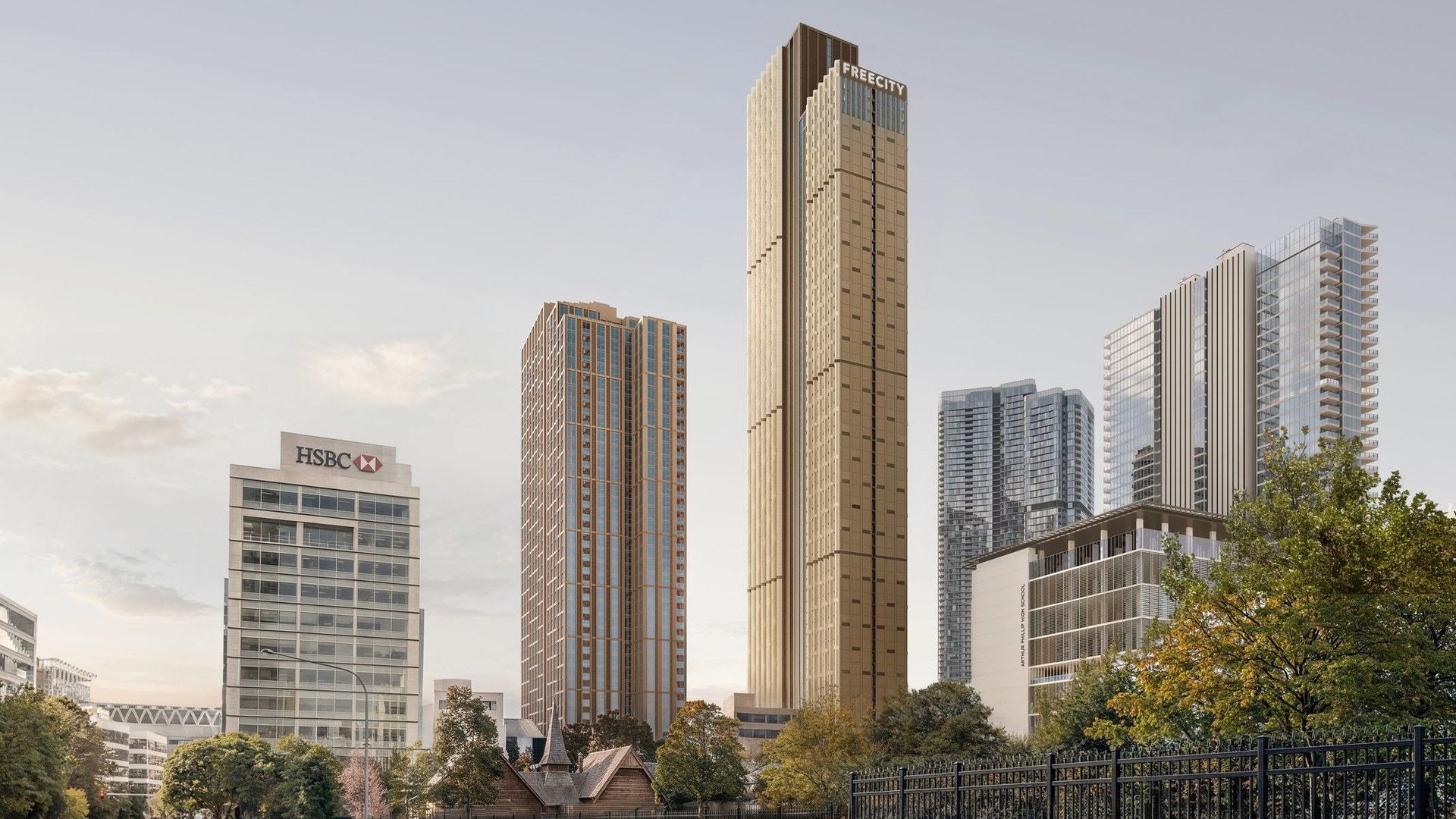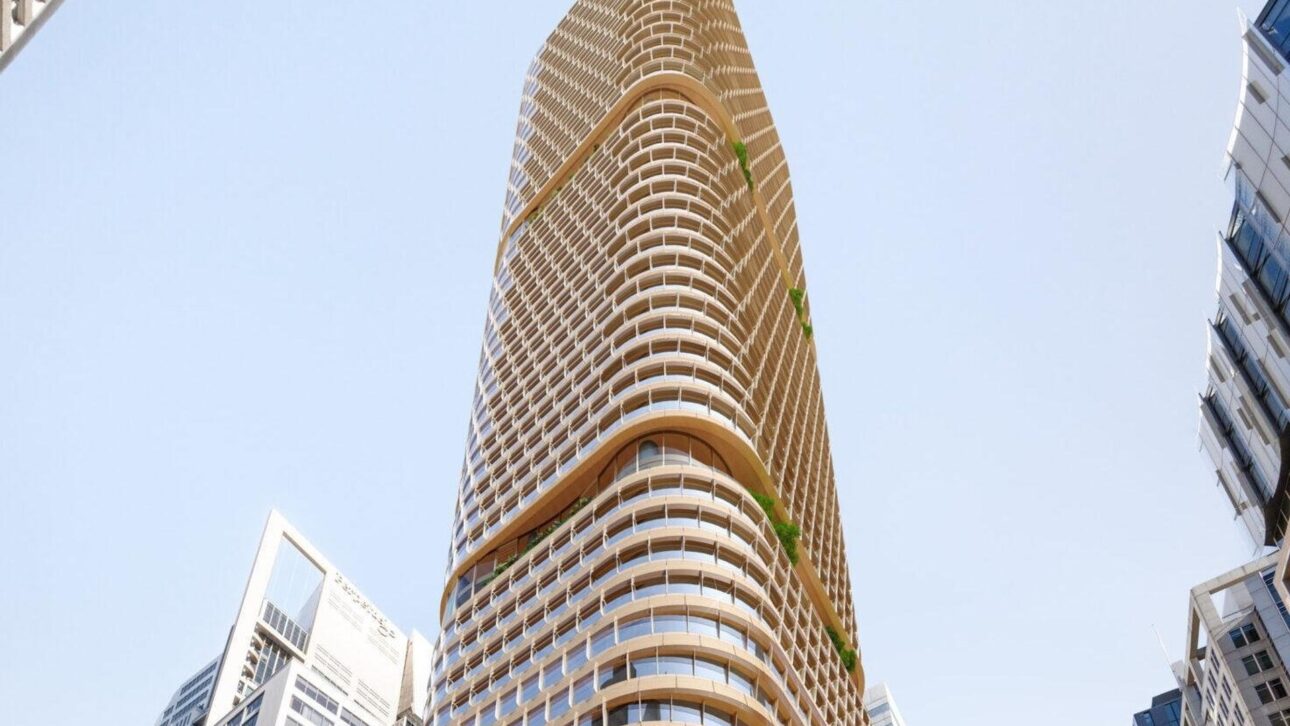

Milligan Group founder James Milligan says the Halo tower can finally move to construction, after Multiplex signed on to build the A$1.8 billion, 55-storey hybrid timber office block at Hunter and Pitt streets in Sydney and early works began this week.
The joint venture between Milligan Group and Cbus Property confirmed this week that Halo has its approvals in place and a signed construction contract, according to The Urban Developer and Wood Central.
“These achievements mark a significant step forward and cement Halo’s future as a landmark on the Sydney skyline, allowing us to turn our full attention to construction and leasing alongside our partner, Cbus Property,” Milligan said, as quoted by Build Australia.
The tower will rise above the planned Hunter Street metro station in the central business district. The Urban Developer put the cost at A$1.8 billion, and Hardhat Report gave the same figure, citing the Asia real estate outlet Mingtiandi.
-

-
-
-
How tall Halo is meant to be
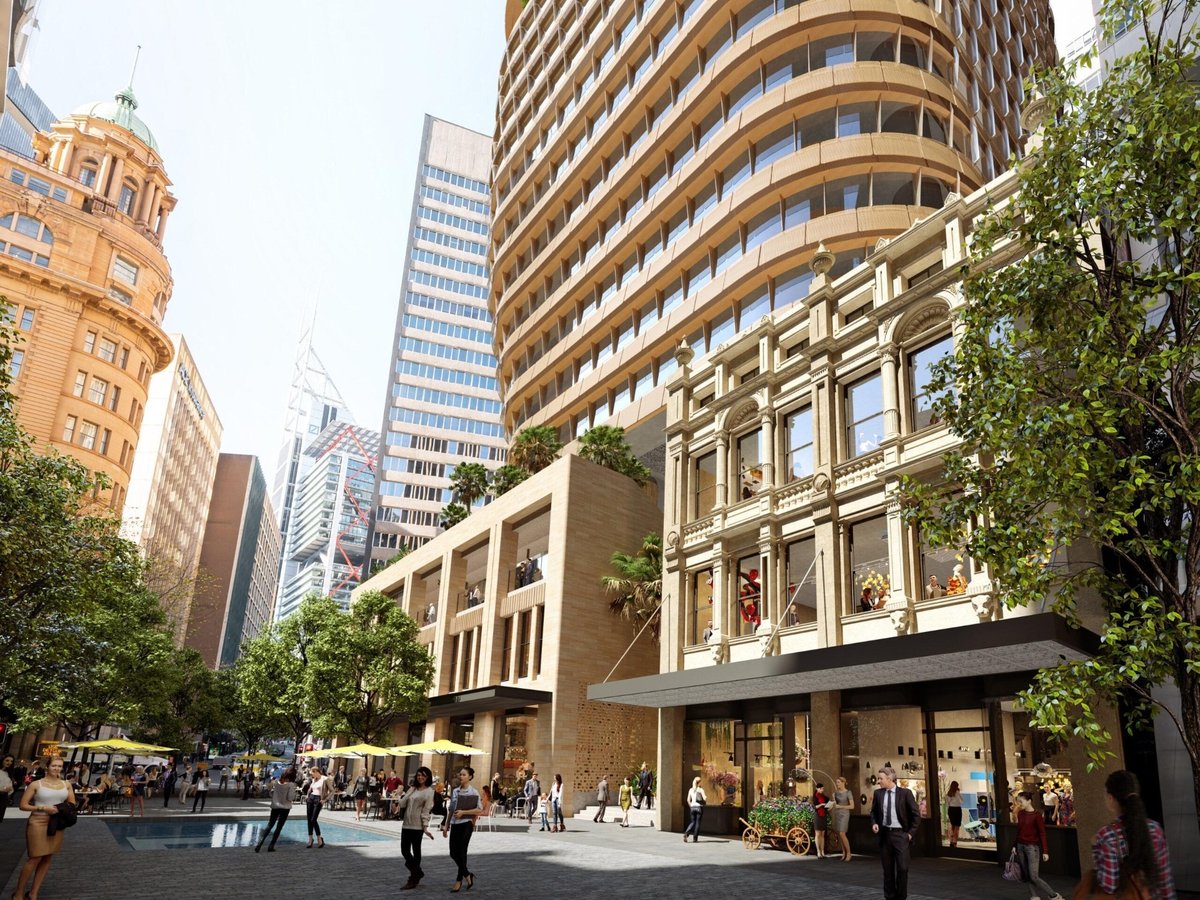
Halo is planned at 55 storeys. Milligan Group’s planning proposal to the City of Sydney sought a maximum height of 213.5 metres, Wood Central reported, for a tower its architect, Bates Smart, bills as “set to become the world’s tallest timber hybrid tower.”
The record it is chasing sits only a few blocks away. Atlassian Central, which topped out 180 metres above Central Station in July, is currently the world’s tallest hybrid timber office tower, rising 39 storeys, according to The Urban Developer and Wood Central.
If Halo is built as planned, it will stand 16 storeys taller than Atlassian Central, Wood Central reported. The partners themselves are a little more careful, describing the project as “one of the world’s tallest hybrid timber towers,” ArchitectureAU noted.
The current titleholder was covered here when it passed its predecessor: a wooden skyscraper that reached 180 meters and more than doubled the height of the former record holder.
What the timber actually does in the structure
Bates Smart says timber hybrid floor structures will make up 80 per cent of the tower, according to Wood Central. The structural engineer is TTW, the same firm that worked on Atlassian Central.
The timber is also written into the planning agreement that Milligan Group struck with the City of Sydney, which lists the “integration of a timber hybrid structure” among its sustainability targets, Wood Central reported.
The joint venture has not named a timber supplier, and the announcement gave no volume or species. At Atlassian Central, by comparison, the cross-laminated timber floors were cut from European spruce supplied by Stora Enso and Austria’s Wiehag, the outlet said.
A solar skin and three stacked volumes
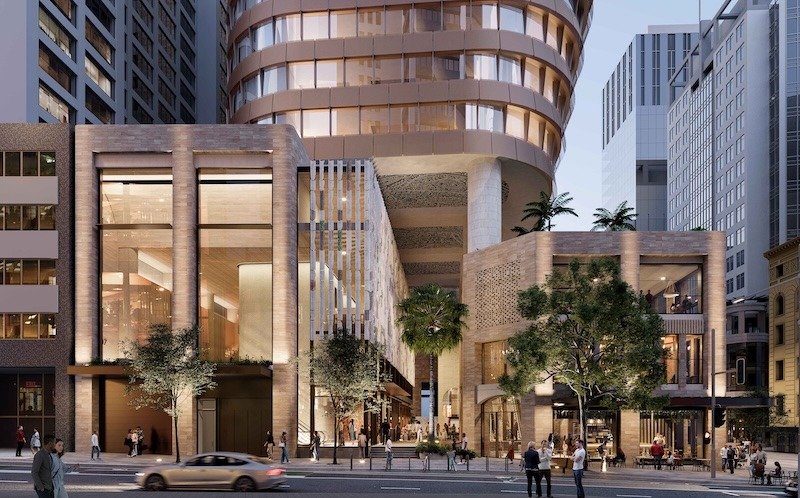
The tower is designed as three stacked volumes separated by terraced village decks, tapered to let sunlight reach the laneway below, according to ArchitectureAU. The whole form is wrapped in a glass facade that generates electricity.
Bates Smart says that solar skin can supply 15 per cent of the tower’s energy, Wood Central reported. The podium will even be clad in sandstone offcuts taken from the site’s own excavation.
Halo will be an all-electric building targeting a 6-Star Green Star Buildings v1 rating and a 5.5-Star NABERS Energy rating, The Urban Developer said. Bates Smart project director Guy Lake described the tower as “rich in amenity and grounded in place.”
“It is designed to give as much to the city as it does to the people who work there,” Lake said, according to ArchitectureAU, which listed Subtropic Design, Prism and art advisor Barbara Flynn among the other members of the design team.
Five buildings and 72 titles under one tower
Before any of this could be drawn, Milligan spent years pulling the site together. The precinct was assembled from five existing buildings and 72 individual titles on the corner of Hunter and Pitt streets, Build Australia reported.
One of those buildings stays. Pangas House, an 1880s, four-storey Victorian Italianate commercial building at 15–17 Hunter Street, will be retained and adaptively reused beneath the new tower, according to The Urban Developer.
Multiplex NSW regional managing director David Ghannoum said the builder had been involved in the early design and buildability phase, including how the heritage house is folded into the scheme, The Urban Developer reported.
“Halo will bring together the best of innovation and sustainability in construction, delivered in one of Sydney’s most complex building environments,” Ghannoum said, in remarks carried by ArchitectureAU and Build Australia.
The financial rescue that came first
The project nearly stalled. Merricks Capital arranged a A$465 million loan in 2023 for the land purchase, a planned sale to Lendlease fell through, and second-ranked lenders issued a default notice, Hardhat Report said, citing Mingtiandi and The Australian Financial Review.
KPMG was later appointed administrator of the site-owning companies. A group of 22 former landowners, who are owed part of their sale price when the project is finished, took the resulting arrangement to the Federal Court, according to Hardhat Report.
Cbus Property then bought a 50 per cent stake in September 2025, a deal that helped stabilise the scheme, The Urban Developer said. Wood Central described the earlier Lendlease deal as non-binding and believed to be worth $685 million.
Multiplex, now owned by Japan’s Obayashi, has delivered more than A$3 billion of projects with Cbus Property, including the recently completed 435 Bourke Street office tower in Melbourne, the outlets reported. The partners did not disclose what Cbus paid.
Tenants are already asking about space
Cbus Property chief executive Chris Kakoufas said the joint venture has fielded unsolicited interest from prospective tenants, with individual requirements ranging from 10,000 to 20,000 square metres, The Urban Developer reported.
“The scale and breadth of this interest demonstrates the underlying demand for well-located, premium workplaces that can offer an exceptional experience for their people,” Kakoufas said. The tower will offer more than 40,000 square metres of office and retail space.
According to CBRE, cited by Wood Central, Halo is expected to be the only new office development delivered in the CBD between 2027 and the next wave of supply, which could begin in 2033.
Sydney’s appetite for unusual towers
Halo is not the only Sydney project testing new ways to build tall. In Parramatta, developer Freecity has proposed a 71-storey tower made of factory-built steel modules, another bid to push an alternative system to record height.
Multiplex also has form with timber in the region. Wood Central reported this week that the builder is working with MODEL on two mass timber build-to-rent schemes, while its owner Obayashi was part of the joint venture that built Atlassian Central.
When the doors could open
When Cbus bought in, it expected main works to start in late 2026 and practical completion in the first quarter of 2030. The Urban Developer now reports practical completion in 2031, while ArchitectureAU said a completion date is not yet confirmed.
The metro station beneath it is due by 2032 and is forecast to become one of the Southern Hemisphere’s busiest train stations, according to the developers. For now, only early works have started on the corner of Hunter and Pitt streets.
Should cities like Sydney push timber hybrid towers past 200 metres before the first record holder has a few years of service behind it?