Portuguese
  Spanish


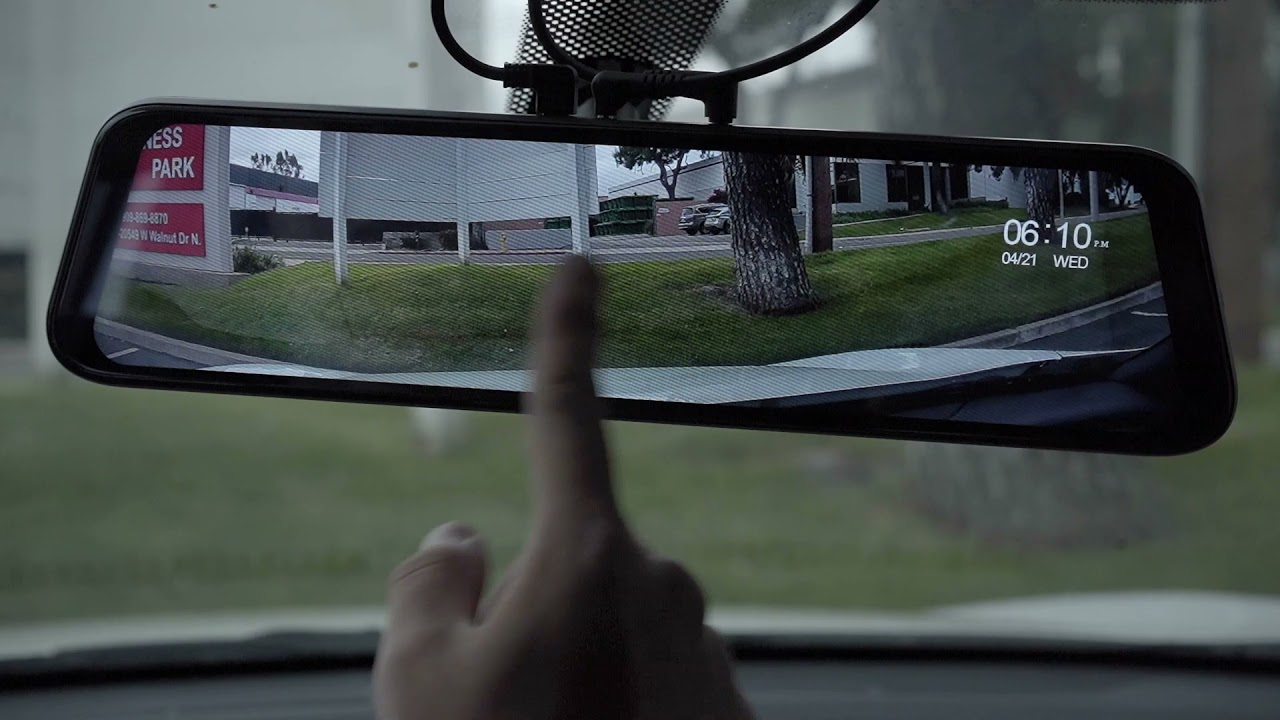

Digital rearview mirrors, side cameras, CMS, and cars without external mirrors are already advancing in Europe and Japan, but remain limited in the USA.
Digital rearview mirrors are no longer just a feature of concept cars. In markets such as the European Union, Japan, and South Korea, production models can use side cameras instead of traditional external mirrors, provided the system meets technical requirements for field of view, performance, image, and certification.
According to Endego, an automotive engineering company, these systems are already accepted in countries that adopt United Nations international standards for indirect vision devices. In the United States, however, the situation is different: the NHTSA still considers the replacement of mirrors with camera systems as a regulatory issue under review, because the federal rear visibility standard remains based on physical mirrors.
What is the CMS system that replaces the external mirror with side cameras
The technical name for the technology is CMS, which stands for Camera Monitor System. In practice, the setup replaces the mirror with a camera installed on the side of the vehicle, an image processing unit, and a screen positioned inside the cabin.
-
With a 2.0 turbodiesel engine, nine-speed automatic transmission, and 4×4 traction, the Fiat Toro Ranch surprises by costing less than the Chevrolet S10, Toyota Hilux, and Ford Ranger, without compromising on premium finish.

-
The Brazilian Elon Musk promised the first 100% national electric car but changes strategy after an investigation by the MPF, claims to have addressed 90% of cancellations, bets on a Chinese electric hatch, and promises to nationalize production by 2030.
-
Leapmotor equips entry-level electric SUV with 800 V platform, maintains 30% to 80% recharge in just 16 minutes, increases B10’s range to 610 km, and brings premium car technology to a model under R$ 100,000 in China.
-
Generating 40.1 billion reais in revenue and growing 6.2% in the year, the Brazilian flexible plastic packaging industry produced 2.321 million tons in 2025, with factories operating at 70.4% of installed capacity.


These screens are usually located at the base of the front pillars, on the dashboard, or on the door trim. The idea is to keep the image in an area close to the visual field where the driver would already look for the external mirror, reducing the adaptation time to the new system.
According to UNECE Regulation No. 46, which deals with indirect vision devices, camera-monitor systems can be used to fulfill functions previously assigned to mirrors, provided they meet specific field of view and approval requirements. This means that installing a common camera is not enough: the setup needs to be approved as a vehicle safety system.
Digital rearview mirror image is not just common video transmission
Digital rearview mirrors use automotive cameras designed to operate in various conditions of light, rain, fog, night, and intense glare. The image displayed to the driver can undergo automatic adjustments for brightness, contrast, and exposure, features that a conventional mirror cannot offer.


In some models, the system also allows changing the framing, brightness, and orientation of the image. During maneuvers or lane changes, the screens can display reference lines and visual alerts integrated with blind spot sensors.
The technical advantage lies in the combination of optical capture, electronic processing, and the internal position of the screen. While a mirror depends on the direct reflection of ambient light, the CMS can enhance visibility in low-light situations and reduce interference caused by strong headlights behind the vehicle.
Lexus ES was a pioneer among production cars with a digital rearview mirror
The first major milestone of the technology in production cars was the Lexus ES sold in Japan. According to the Toyota Global Newsroom, Lexus announced in 2018 the use of Digital Side-View Monitors in the new ES, presenting the system as the world’s first in a production car.
The set replaced external mirrors with small side cameras and displayed the images on internal monitors. The feature was initially launched in the Japanese market, precisely because the country had already opened regulatory space for vehicles without conventional external mirrors.

After Japan, the technology advanced to other markets. The same type of solution began to appear in models like Audi e-tron, Honda e, and vehicles from premium brands in countries where the use of cameras instead of physical mirrors is allowed by local legislation.
Audi, Honda, and Genesis took digital rearview mirrors to other markets
The Audi e-tron, later repositioned within the Q8 e-tron family, began offering the so-called Virtual Side Mirrors as an option in selected markets. In this system, external cameras transmit images to screens installed inside the doors.
The Honda e, an urban electric vehicle sold in markets like Europe and Japan, adopted side cameras as part of its technological proposal. The system reinforced the idea that digital rearview mirrors could cease to be exclusive to prototypes and become part of production urban cars.
Brands like Genesis have also started offering side camera systems in certain Asian and Middle Eastern markets. However, the advancement continued to be conditioned by the legislation of each country, which explains why the same model may leave the factory with cameras in one region and with traditional mirrors in another.
Europe and Japan released the technology before the United States
The regulatory difference is one of the most important points of the agenda. Endego points out that the technology is already allowed in markets that adopt international standards aligned with UNECE R46, such as countries in the European Union, Japan, and South Korea.

In the United States, the federal standard known as FMVSS No. 111 still requires physical mirrors in conventional vehicles. The NHTSA, the American road safety agency, has opened research and public consultation processes to evaluate camera systems as an alternative, but the issue still depends on regulatory change.
This discrepancy creates a direct effect on the industry. Global manufacturers need to adapt the same vehicle according to the market: in some countries, the car can be sold with side cameras; in others, it needs to maintain traditional external mirrors to comply with legislation.
Advantages of digital mirrors include smaller blind spots and better night vision
The first benefit pointed out by manufacturers is visibility. Since cameras occupy smaller structures than traditional mirror boxes, they can reduce visual obstruction in the front lateral region of the vehicle.
Another benefit is in the field of vision. Depending on the design, the camera can offer a wider angle than a conventional mirror and integrate blind spot alerts, guidance lines, and information on the approach of other vehicles.
At night, in the rain, or in difficult lighting conditions, electronic processing can improve the image displayed on the screen. This does not eliminate the driver’s responsibility, but it enhances the system’s ability to deliver a clearer view in situations where the common mirror relies solely on reflected light.
Aerodynamics explains why manufacturers want to eliminate physical mirrors
External mirrors create air resistance. At highway speeds, this resistance affects consumption, noise, and aerodynamic efficiency, especially in electric vehicles, where every gain can help extend range.
By replacing a large housing with a smaller arm with a camera, the vehicle tends to reduce lateral drag and also part of the wind noise. This is one of the reasons why the technology has gained traction in electric cars and premium models, which compete for efficiency with great attention to aerodynamic details.
Endego points out that external mirrors can account for a significant portion of the vehicle’s drag coefficient. Therefore, the adoption of cameras is not just aesthetic or futuristic: it is linked to consumption, range, and acoustic refinement.
In trucks, cameras instead of mirrors can have an even greater impact
In heavy vehicles, the debate goes beyond design and efficiency. Trucks have large blind spots around the cabin, especially on the sides, in the area near the passenger door, and in the front regions near the bumper.
According to Daimler Truck, Mercedes-Benz Trucks began providing the MirrorCam in the new Actros from 2019, replacing external mirrors with cameras and internal screens. The company claims that the system improves visibility around the truck, reduces drag, and assists the driver in maneuvers, turns, and lane changes.
This application shows why the technology may be more relevant in heavy transport than in automobiles. In a long truck, the camera can better follow the side of the set during maneuvers and turns, while the traditional mirror is limited by angle, vibration, and reflected area.
Safety debate still stalls full release in the United States
The NHTSA has been studying for years whether camera systems can offer a level of safety equivalent to or greater than the mirrors required by FMVSS No. 111. In regulatory documents, the agency acknowledges the industry’s interest but also points to the need for data on performance, driver response, latency, failures, and visual adaptation.
This caution helps explain why the change has not occurred automatically in the United States. Replacing mirrors with cameras alters a basic safety equipment used in virtually all vehicle maneuvers.
For regulators, the challenge is to determine whether the technology consistently delivers benefits in all scenarios, including rain, strong sunlight, low temperatures, dirt on lenses, screen failures, electrical malfunctions, and use by drivers with different levels of experience.
In Brazil, complete replacement of external mirrors still needs a clear regulatory basis
In Brazil, traffic legislation still treats rearview mirrors as mandatory equipment in vehicles in circulation. The Contran Resolution No. 912/2022 consolidates rules on mandatory equipment and lists internal and external rearview mirrors among the required items according to the type of vehicle.
There is also the Contran Resolution No. 966/2022, which deals with technical requirements for rearview mirrors. The regulation allows camera-monitor type devices in specific situations, but does not confirm a broad release for common cars to freely replace external mirrors with cameras.
Therefore, the safest way to address the issue in Brazil is to say that the technology exists and is already operating in other markets, but the complete replacement of external mirrors in street vehicles should not be assumed as freely permitted here. Removing mandatory mirrors without legal provision can cause problems in inspection, enforcement, and liability in case of an accident.