





 Portuguese
  English
  Spanish
  3 min of reading
  0 comments


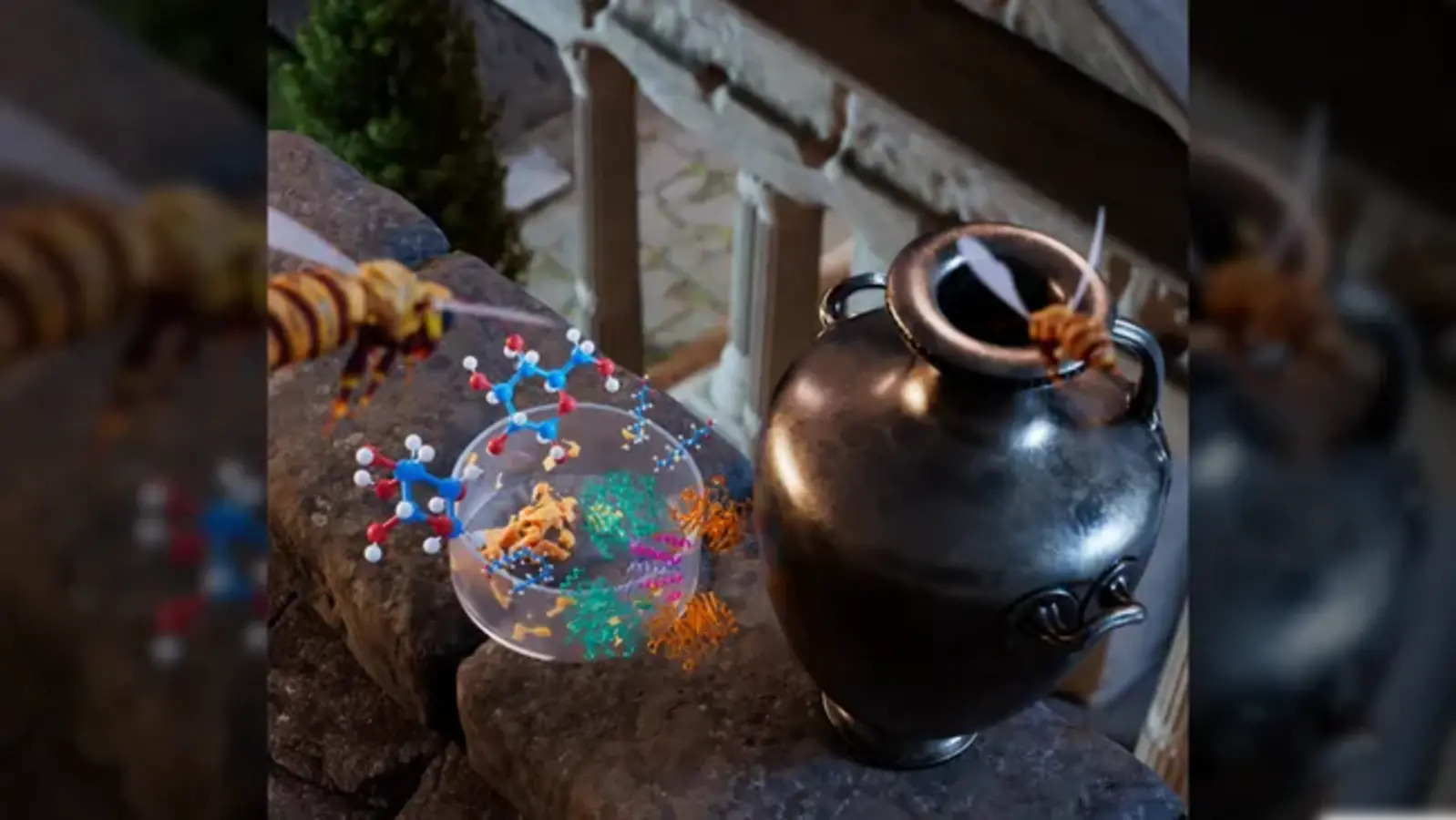
Modern Analysis Reveals Substance in 2,600-Year-Old Bronze Vessels Used in Rituals at the Subterranean Sanctuary of Paestum
For decades, archaeologists have pondered a mystery from the past. What are the globules of sticky substance found at the bottom of ancient bronze jars in southern Italy? After 70 years of doubt and frustrating attempts, a new chemical analysis has provided the definitive answer: it is honey.
The jars were discovered in 1954 in the city of Paestum, in a subterranean sanctuary known as a heroon. Dated to the 6th century BC, these ancient containers raised suspicion from the beginning.
Experts imagined that they might contain remnants of honey, a substance with great symbolic value for the peoples of ancient Greece and Rome. But initial tests failed to find concrete evidence of sugars.
-
They were brilliant! Scientists discover that our ancestors in China were already making super advanced tools 160,000 years ago, changing everything we knew.

-
Scientists unveil 3 million years of climate secrets hidden in the ice of Antarctica.

-
Ancient farmers created “aggressive plants” that changed nature forever.

-
Astronomers find a “backward” solar system that ignores all the rules of space and leaves scientists scratching their heads!


Now, a team led by chemist Luciana da Costa Carvalho from the University of Oxford has achieved what no one had accomplished.
Using modern chemical analysis techniques, the researchers confirmed the origin of the residue.
The details of the study were published on July 30 in the Journal of the American Chemical Society. The discovery was possible thanks to mass spectrometry, an advanced method that identifies molecules and compounds.
With this, the team was able to find, for the first time, intact hexose sugars — the main component of fresh honey. According to the study, this type of sugar represents about 79% of modern honey, with fructose being the most abundant.
Additionally, the researchers detected the presence of royal jelly, a substance produced by worker bees.
Peptides — protein fragments — characteristic of the European honeybee, Apis mellifera, were also identified. This evidence provided the first direct molecular confirmation of the presence of honey in the jars.
Although the amount of sugar is much lower than that in current honey, the data was considered sufficient to settle the debate. “I think the residue tastes like washed honeycomb, but a little more acidic,” Carvalho said in an email interview with Live Science. She did not taste the substance.
Another detail caught the scientists’ attention: the presence of copper ions in the mixture. Copper is a biocidal agent, meaning it combats microorganisms.
This may have helped preserve the sugars for thousands of years on the surface of the residue.
According to the researchers, analyzing the sticky substance in the bronze jars could shed light on ancient rituals and religious practices.
The discovery site was a subterranean sanctuary, featuring a large wooden table and iron bars wrapped in wool. It is believed that the offerings were dedicated to Is of Helice, a mythical figure thought to be the founder of the ancient city of Sybaris.
Sybaris was destroyed in the 6th century BC, and its inhabitants founded the city of Poseidonia. When the Romans took control of the region, they renamed the site as Paestum.
For Carvalho, the discovery shows how ancient museum collections can still offer surprises. “There is merit in reanalyzing museum collections because analytical techniques continue to develop,” she stated in the study announcement video.
With information from Live Science.









-

-

-

-

9 pessoas reagiram a isso.