





 Portuguese
  English
  Spanish
  5 min of reading
  0 comments


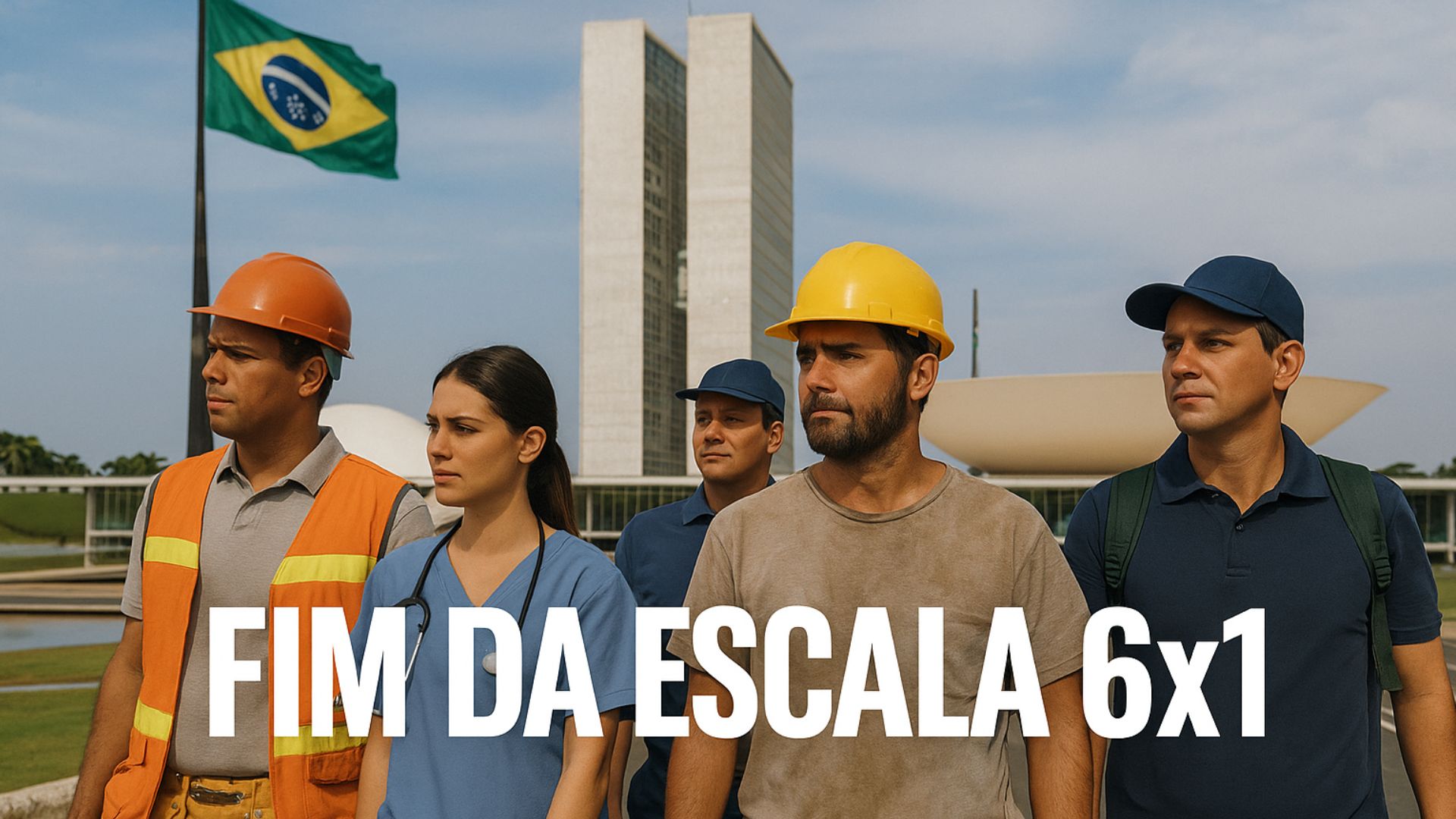
Government Wants to Take Advantage of High Popularity After Income Tax Exemption to Unlock Labor and Social Agendas, Including Ending the 6×1 Schedule, Four-Day Workweek, and National Zero Fare Plan for Public Transport.
Driven by the recent approval in the Chamber of Deputies of the income tax exemption for salaries up to R$ 5 thousand — a measure that now heads to the Senate — President Luiz Inácio Lula da Silva‘s government is coordinating new steps on two fronts appealing to workers: ending the 6×1 schedule and advancing the discussion on the four-day workweek, as well as structuring a zero fare plan for public transport with federal participation in funding.
The political coordination wants to take advantage of the popularity window to unlock the agenda in Congress.
According to involved parliamentarians, the Planalto team has scheduled talks with allied leaders to explore paths and adjust a viable text.
-
Inflation in March reaches 0.88% according to IBGE and pressures the Brazilian economy, impacting family budgets and requiring more strategic decisions to maintain financial control.

-
In Paraná, distributor Pacto connects 100% of the load in Coronel Vivida to batteries: a BES of 10 MW and 20 MWh costs just over R$ 30 million and lowers the local tariff now.

-
With a dependence of up to 80% on gas imported from the United States, Mexico is responding with a robust energy strategy, betting on shale gas, creating a scientific committee, and preparing to expand natural gas production to reduce vulnerability and strengthen its energy security in the coming years.

-
The United States proposes to Brazil a critical minerals agreement with a minimum price to combat Chinese dumping and priority for investment, but the Planalto is blocking the signing out of fear of upsetting China and due to electoral calculations in a year of competition.

Deputy Erika Hilton (PSOL-SP), author of the proposal to reduce the workweek, reported aligning with Minister of Institutional Relations, Gleisi Hoffmann, for a meeting with representatives of leftist parties — PT, PSOL, PCdoB, and PSB — as well as allied parties like MDB and PSD.
The idea, she stated, is to “understand how they are positioning themselves and what text they want to build to try to create a consensus among the leaderships.”
In Hilton’s view, the topic “gained traction and cannot let this ball bounce.”
Four-Day Workweek and Ending the 6×1 Schedule
Filed in February, the PEC 8/2025 amends item XIII of article 7 of the Constitution to set the workweek at four days, with up to eight hours per day and 36 hours per week, eliminating the 6×1 model.
The text provides for compensation of hours and reduction of workload through collective agreement or convention.
The proposal has already secured more than 200 signatures to initiate processing and awaits a ruling from the Chamber President, Hugo Motta (Republicans-PB) to proceed to the CCJ.
While not formally entering the process, the topic has begun to be debated in a special subcommittee linked to the Labor Commission.
The Planalto cites Lula’s public commitment made in the speech for Labor Day to “deepen the debate on reducing the workweek” by listening to “all sectors of society” to “allow a balance between professional life and the well-being of workers”.
The government’s view is that the agenda, sensitive to labor unions, needs to be combined with legal security and sectoral impact analysis to overcome resistance.
Industry and Commerce Resistance
Entities in the productive sector are opposing the change.
The CNI argues that reducing to 36 hours per week would lead to increased costs, risks to competitiveness, and more severe impacts on micro and small businesses.
Representatives from commerce also point to potential price pressures and job cuts if the weekly load is reduced without gradual adjustments.
For these entities, any changes should be prioritized in collective bargaining.
Still, supporters of the PEC argue that modernizing the workweek — without a salary reduction — could reduce illness, increase productivity, and better distribute time among work, study, and family, bringing Brazil closer to international experiences of reduced weeks.
The dispute will continue in the CCJ and, if accepted, in a special committee before reaching the plenary.
Zero Fare and Federal Subsidy Model
In parallel, Planalto aims to develop a national framework for zero fare on buses and trains supported by federal subsidy combined with states and municipalities.
At Lula’s request, the Ministry of Finance is preparing a feasibility study on free transport every day, including funding sources and forms of gradual implementation.
Government and congressional interlocutors acknowledge that this framework is not simple: the model must consider distinct fare realities, service quality, and cost-sharing.
The PT intends to nationalize the debate and transform it into public policy.
The national communication secretary of the party, Éden Valadares, stated that the discussion, which currently takes place from city to city, needs to be brought to the federal level.
In his words, fare increases always reignite the topic in capitals; therefore, the party advocates for scaled modeling until a comprehensive policy is established.
“We can’t just push a button or flip a switch and suddenly all buses and subways in Brazil are free. We will study, model, start with one type of setup in a few cities, and scale it up until it becomes a national policy,” he stated.
Local Experiences and Articulation in Congress
Municipalities and states governed by parties in the base are already operating free transport.
Maricá (RJ) has offered free municipal buses since 2014, with a dedicated public fleet.
Teresina (PI) adopted zero fare for the metro/light rail starting in January 2025, a policy announced by the state government and maintained throughout the year.
These examples have been used as showcases to discuss subsidy sources, institutional design, and performance indicators.
In the legislature, the topic also advances through fronts and projects.
Deputy Jilmar Tatto (PT-SP), coordinator of the Zero Fare Parliamentary Front, participates in public hearings across the country and maintains dialogue with the National Front of Mayors (FNP).
According to the parliamentarian, municipalities report difficulties in reducing fares due to lack of regular subsidies.
In his view, the federal government’s contribution to a portion of the funding could provoke state and municipal countermeasures, creating a co-financing mechanism.
Strategy and Political Challenges
The government’s strategy combines legislative articulation and public signaling.
On labor issues, the goal is to unlock the admissibility of the PEC in the CCJ and organize hearings with the productive sector, workers, and experts, aiming to adjust the text without losing the core of 36 hours per week and four-day week.
In transport, the Finance Ministry is working on scenarios for federal subsidies and in gradual models, which could start with partial cuts (bands, times, or specific days) and evolve according to budget availability and the adherence of federative entities.
At Planalto, aides assess that the approval in the Chamber of the income tax exemption range up to R$ 5 thousand — with compensations at higher rates — created an atmosphere of political goodwill among the base and among central segments, something rare in matters of high social and fiscal impact.
However, both the 4×3 workweek and the zero fare face obstacles due to cost calculations and sectoral resistance, which requires fine negotiation and funding predictability.
Amid this landscape, the question that resonates among the government, Congress, businesses, and workers is simple and direct: Is Brazil willing to reorganize work time and the funding model for public transport to make a qualitative leap in urban living — and if so, where to start?









-

-

2 pessoas reagiram a isso.