





 Portuguese
  English
  Spanish
  5 min of reading
  0 comments


The Uturuncu Volcano in Bolivia Has Not Erupted in 250 Thousand Years, But It Continues Swelling About 1 Cm Per Year and Reveals a Gigantic Magma System Under the Andes.
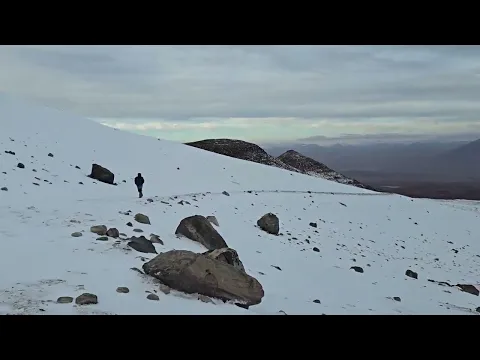
In the southwest of Bolivia, in the heart of the Andean Altiplano, stands a volcano that challenges traditional geological logic. The Uturuncu, a stratovolcano over 6,000 meters high, has not erupted for approximately 250 thousand years. Nevertheless, it continues to show clear signs of underground activity. Since the 1990s, scientists have observed something unusual: the ground around the volcano is slowly rising. Satellite measurements reveal that the area expands by about 1 centimeter per year, forming a gigantic deformation in the terrain that stretches for dozens of kilometers.
Moreover, the volcano produces frequent microseisms, indicating that geological processes are still ongoing beneath the mountain. This unusual behavior has led researchers to classify the Uturuncu as a “zombie volcano” — a volcano that should be dead but continues showing signs of internal activity.
Where the Uturuncu Volcano Is and Why It Draws Attention
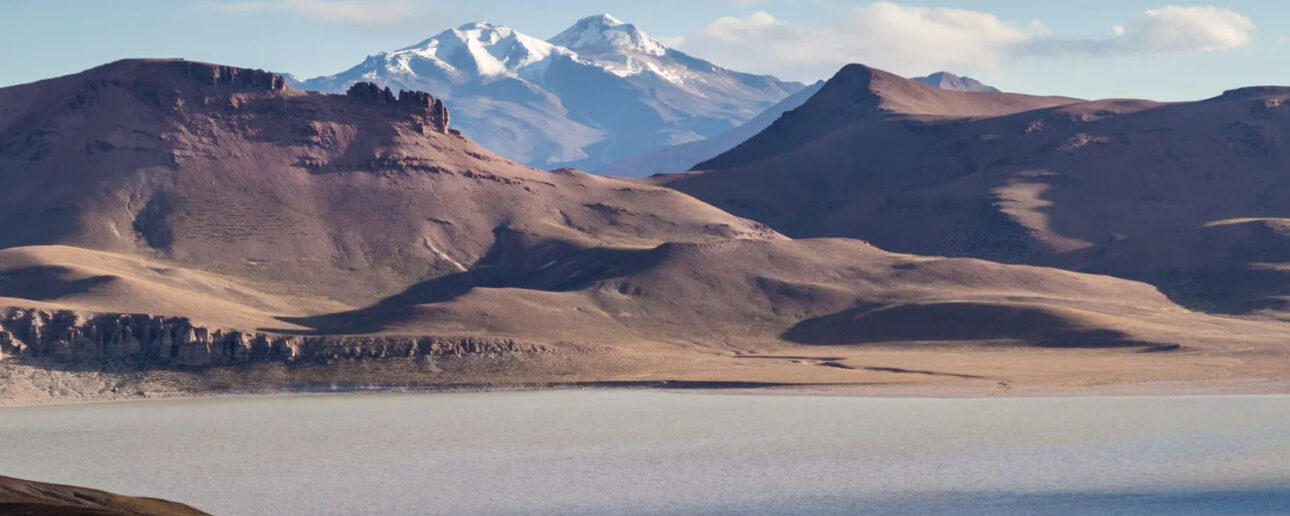
The Uturuncu is located in southern Bolivia, in the Altiplano region, near the Salar de Uyuni, one of the most complex volcanic areas of the Andes Mountains. The mountain is about 6,008 meters high, placing it among the tallest volcanoes in South America. Despite its great height, it has no recorded eruptions in human history.
-
Giant Roman treasure found at the bottom of Lake Neuchâtel in Switzerland reveals an advanced trade system, circulation of goods, and armed escort in the Roman Empire about two thousand years ago.

-
He buried 1,200 old tires in the walls to build his own self-sufficient house in the mountains with glass bottles, rainwater, and an integrated greenhouse.
-
The aircraft carrier HMS Prince of Wales is heading to the Arctic with F-35 fighters, helicopters, and warships in an operation that repositions the United Kingdom at the forefront of NATO in 2026.

-
He found the largest gold shipwreck in the United States with tons of the precious metal at a depth of 2,400 meters in the Atlantic and recovered a treasure that no one thought possible to reach, but 500 gold coins disappeared without explanation.

What makes the Uturuncu special is not its recent eruptive activity but rather the anomalous behavior of its interior.
Research conducted by universities and international scientific institutions shows that the volcano is located over a gigantic magma system called the Altiplano-Puna Magma Body, a massive reserve of partially molten magma beneath the Earth’s crust. This underground reservoir may extend for hundreds of kilometers beneath the central Andes.
The Ground Inflation Detected by Satellite
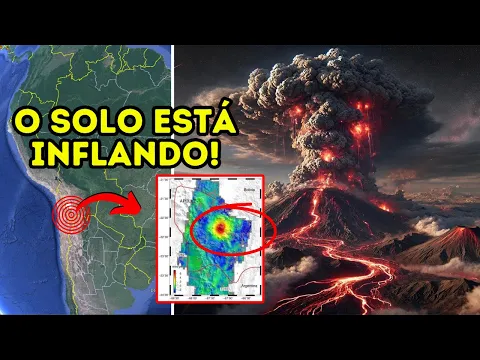
One of the most impressive phenomena observed at the Uturuncu is the deformation of the ground around the volcano. Using satellite radar technology called InSAR, scientists have been able to detect small variations in the Earth’s surface with millimeter precision.
The data shows that:
- the ground near the volcano is rising about 1 cm per year
- the deformation covers an area of approximately 70 km in diameter
- regions around the center of the volcano show slight subsidence

This pattern creates a geological deformation known as the “sombrero effect”. In this model, the center of the area slowly rises while the edges sink slightly, forming a structure similar to the shape of a Mexican hat.
The phenomenon suggests that something is pushing up the Earth’s crust from below, likely related to gases or magma at depth.
Microseisms Reveal Underground Activity
In addition to ground inflation, another important sign of Uturuncu’s activity is the occurrence of frequent microseisms. Seismic monitoring networks installed in the region detect thousands of small tremors over the years.
The seismic shocks are generally too weak to be felt on the surface, but they provide important clues about what is happening deep within the volcano. The microtremors indicate that:
- warm fluids are circulating in the crust
- gases are migrating through underground fractures
- internal pressures are slowly redistributing
These processes are common in active volcanic systems, but the case of Uturuncu is peculiar because it hasn’t erupted in hundreds of thousands of years.
The Gigantic Magma Reservoir Under the Andes
The behavior of Uturuncu is linked to the enormous magma system known as the Altiplano-Puna Magma Body. This underground reservoir is located between 10 and 20 kilometers deep and is considered one of the largest known magma systems in the continental crust.
Seismic tomography studies show that this region contains large volumes of partially melted material. Although the magma is not rising directly to cause an eruption, it influences the geological behavior of the area.
The system is responsible for phenomena such as:
- ground deformation
- hydrothermal activity
- seismic tremors
- release of volcanic gases
Research published in scientific journals suggests that the movement of gases and warm fluids within this reservoir may explain the inflation observed at the volcano.
Why the Uturuncu Has Not Erupted Yet
The question that intrigues geologists is simple: if there is magma and underground activity, why hasn’t the volcano erupted? One of the most accepted hypotheses is that the magma system is too deep to generate eruptions at the surface.
Another possibility is that pressure is being slowly released through fractures and fluid circulation, preventing the accumulation necessary for an explosive eruption. In many active volcanoes, an eruption occurs when the pressure of the magma exceeds the strength of the rocks that trap it.
In the case of Uturuncu, it seems that this balance has not yet been broken. This leads the volcano to remain in an intermediate state between inactive and active.
What Scientists Are Investigating
The Uturuncu has become a true natural laboratory for geologists and volcanologists. Researchers are using different methods to understand the internal workings of the volcano, including:
- seismic monitoring
- satellite measurements
- analysis of volcanic gases
- geological modeling of the magma system
This research helps to understand how large magma reservoirs evolve over thousands of years. Additionally, studying the Uturuncu can help scientists better understand the mechanisms that precede eruptions in other volcanoes around the planet.
One of the Most Mysterious Volcanoes in the Andes
Despite its tranquil appearance and the absence of recent eruptions, the Uturuncu remains one of the most intriguing volcanoes in South America. The combination of constant ground inflation, seismic activity, and the presence of a huge magma reservoir makes the site one of the most studied volcanic systems in the Andean region.
While many active volcanoes show clear signs before erupting, the Uturuncu remains in an enigmatic state. It continues to slowly expand, recording tremors and releasing signals of underground activity, even after hundreds of thousands of years without a single eruption.
Therefore, for many scientists, the Uturuncu represents a rare case in geology: a seemingly dormant volcano that continues showing signs of life deep within the Earth’s crust.









Seja o primeiro a reagir!