





 Portuguese
  English
  Spanish
  6 min of reading
  0 comments


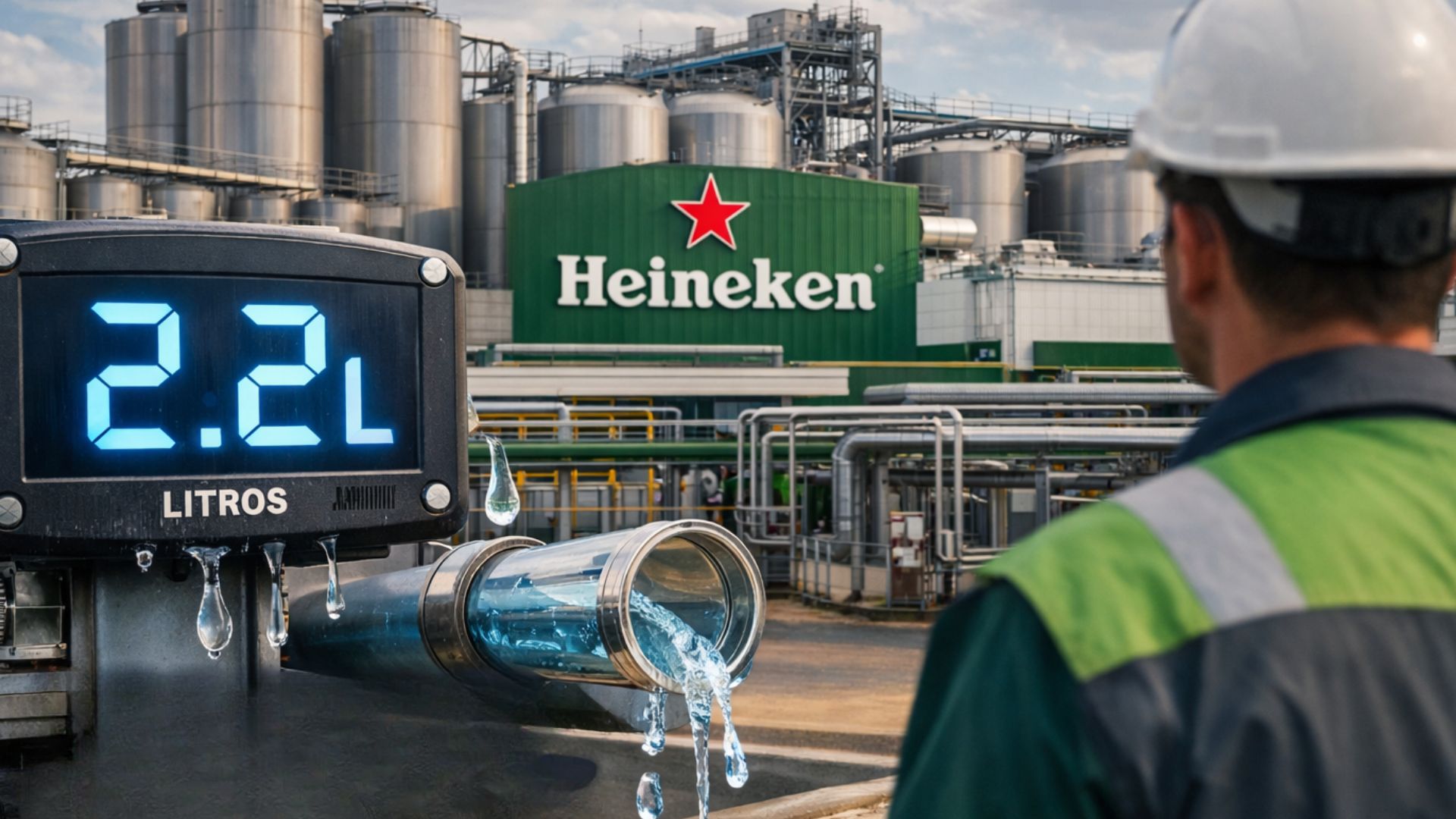
Historical reduction in water use drives industrial efficiency and repositions Heineken’s strategy in Brazil, with real-time technology, stricter global goals, and an impact that exceeds factories and reaches the entire beer production chain.
Water has become central to Heineken’s operations in Brazil, and the Alexânia unit in Goiás has become the main example of this change by reducing water consumption to about 2.2 liters per liter of beer produced.
Since 2018, the brewery has cut around 23% of this indicator and has integrated into the group of the most efficient units of the company in the world, according to company executives in an interview with EXAME.
According to a report from Exame magazine, the leap is noteworthy because the distance from the past is significant. About two decades ago, the plant operated with consumption close to 10 liters of water for each liter of beer.
-
This climbing plant covers the walls of the house, blocks up to 80% of solar radiation, and reduces the internal temperature by up to 5 degrees in the summer without spending a dime on the electricity bill, and it also produces bunches of grapes in the backyard.

-
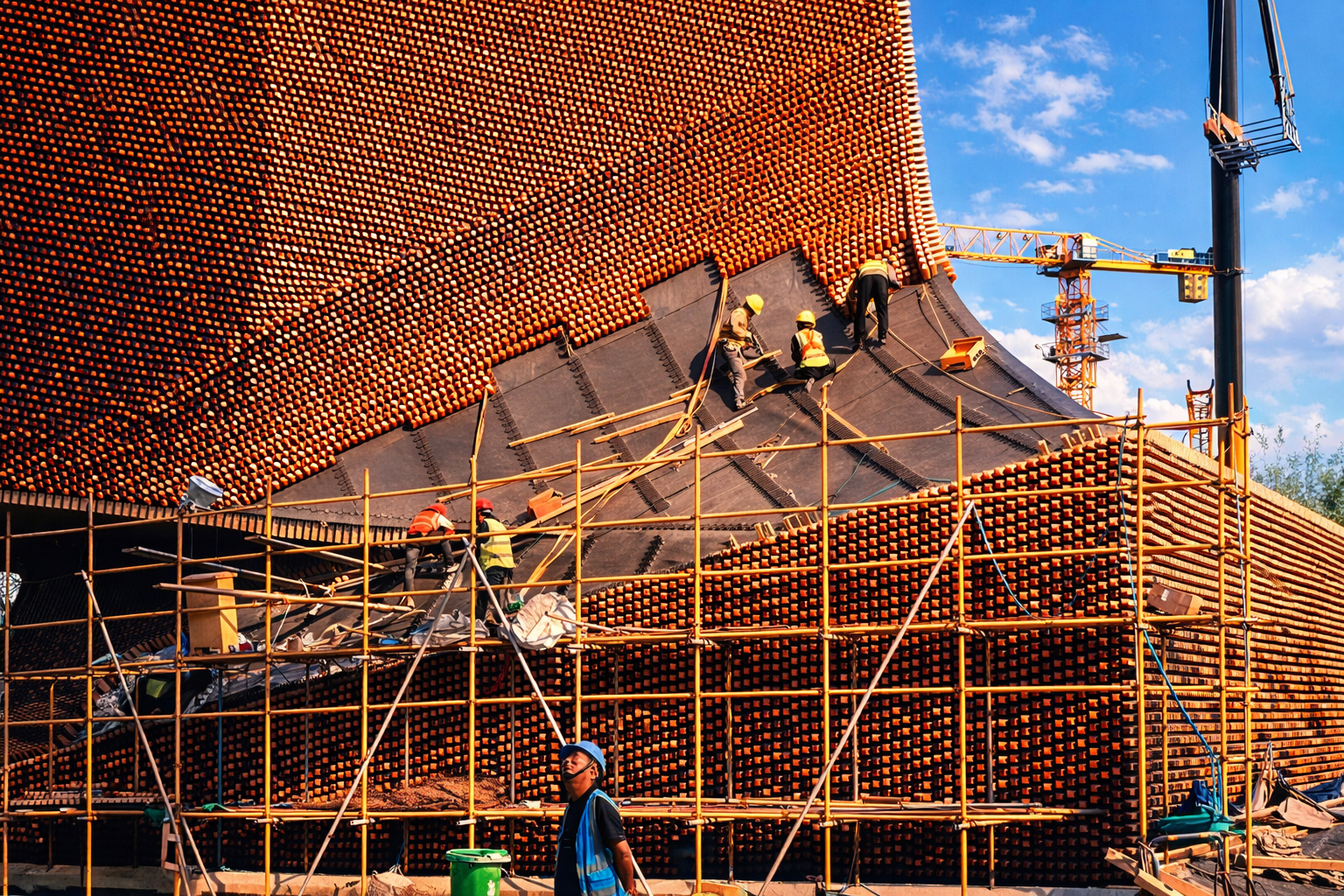
The first city in the world to reach 1 million inhabitants houses a museum with 139,000 ceramic bricks and advanced construction engineering with a steel structure inspired by a Chinese symbol that refers to the walls of the Ming dynasty.
-
A German man installs a nearly 10-meter “wind tree” with 36 microturbines in his garden, combining wind energy with solar panels, and aims to power his home, office, and electric car without paying anything on his electricity bill.

-
Brazilian fish that lives out of water and hides inside dry logs intrigues scientists and reveals one of the rarest adaptations of mangroves.

Today, the performance results from a combination of continuous monitoring, process review, reuse in industrial stages, and a management logic that has transformed water use into a central indicator of operations.
“One way to calculate our efficiency is how much water we use for each liter of beer produced,” said Lígia Camargo, Sustainability Director of the HEINEKEN Group in Brazil, to EXAME.
In practice, this parameter has begun to guide industrial decisions and measure the company’s capacity to produce more with less pressure on a resource considered critical to the business.
Alexânia Brewery Becomes Global Reference in Water Efficiency

The relevance of the Goiás brewery has grown within a network that includes more than 160 breweries of Heineken worldwide.
The advancement has placed Alexânia among the operations with the best water performance in the company, resulting from a transformation made without a single rupture or isolated solution, but with successive adjustments in technology, production routines, and quick responses to deviations.
In Brazil, the industrial presence of the group has also changed in recent months.
The company currently reports having 15 breweries in the country, a number higher than the 14 previously mentioned in materials and reports published before the entry of the new unit in Passos, Minas Gerais.
According to Cícero Rodrigues, director of the Alexânia brewery, the efficiency gain is not limited to the installation of equipment.
“In recent years, we have structured a consistent journey to reduce consumption in Alexânia. Today we monitor every drop in real-time and can act quickly to avoid waste,” he told EXAME.
This fine control involves sensors distributed throughout the operation and systems capable of identifying variations almost at the moment they occur.
When a fluctuation deviates from the expected pattern, the team can act before the deviation turns into accumulated loss, a model that reduces rework, interruptions, and additional consumption in cleaning procedures.
Industrial Efficiency Reduces Water Waste in Production Lines
The industrial logic behind this reduction is straightforward.
When the line operates with stability, there are fewer unplanned pauses, fewer restarts, and less need for extra hygienizations, steps that increase water use and raise production costs.
Therefore, water performance has come to be treated as an immediate reflection of the factory’s efficiency.
“The better the line’s performance, the less water we consume,” summarized Rodrigues.
This statement helps to understand why the discussion has moved beyond the environmental area and now involves indicators of productivity, maintenance, operational continuity, and discipline in executing manufacturing procedures.
At the same time, the company acknowledges that there is a technical limit to continue reducing this consumption at an accelerated pace.
In a brewery, a significant part of the water is linked to processes that require sanitary rigor and permanent control to preserve product quality, which restricts linear cuts or simplifications that compromise manufacturing safety.
Rodrigues told EXAME that this technological barrier exists precisely because the process cannot forgo essential steps.
Still, the operation advances with reuse in industrial subprocesses and with analyses of parameters such as pH and turbidity, which help determine when reuse can occur safely and without affecting the beverage’s standard.
Agricultural Chain Concentrates Most of the Water Consumption of Beer
Even with the Alexânia case gaining prominence, Heineken maintains that most of the water issue is not within the breweries.
According to the company, about 90% of the water footprint of beer is associated with agriculture, especially the cultivation of raw materials such as barley and hops, which shifts the discussion to the value chain.
“We need to look at water from field to glass, in an integrated way,” said Lígia Camargo to EXAME.
In this view, management stops focusing only on what comes out of the factory’s pipes and begins to include watersheds, agricultural production, soil infiltration, and the cumulative effects of extreme weather events on the future availability of the resource.
This perspective has also altered the company’s response to droughts, floods, and wildfires.
The sustainability director emphasized that the water crisis is not limited to the absence of rain.
Excess water, when it occurs in a disordered manner, also compromises the system by increasing erosion, reducing infiltration, and harming the recharge of aquifers.
Wildfires are included in this account because they degrade soil cover and affect the capacity to retain water in landscapes.
For the company, these indirect impacts can reach industrial units located tens of kilometers from the most critical point, reinforcing the need to view operations on a territorial scale, not just within the factory perimeter.
Internal Culture Transforms Water Economy into Performance Indicator
In the executives’ assessment, technology only produces lasting results when accompanied by behavioral change.
Therefore, the goal of rational water use has come to be treated as a business KPI and disseminated throughout the structure, involving different areas and functions within the brewery.
“Engagement needs to be throughout the chain: from the gardener to the brewmaster,” Rodrigues told EXAME.
When loss is no longer seen as an operational detail and begins to weigh on the unit’s indicators, the response tends to be quicker, and waste loses space in the routine.
This type of mobilization helps explain why the Alexânia case has become a reference for other operations of the company.
The model combines real-time supervision, process standards, consumption traceability, and a shared sense of responsibility, without relying on a single measure that, alone, would solve the problem.
Global Goals Pressure Reduction of Water Consumption Until 2030
Heineken’s water strategy includes global goals for this decade.
The company reports that it has strengthened its goal for 2030 and is now seeking to reduce the average water use to 2.6 hl/hl globally and to 2.4 hl/hl in breweries located in water-stressed areas, which maintains additional pressure on units situated in more sensitive regions.
In Itu, in the interior of São Paulo, where the company has one of its largest operations, the action front includes environmental restoration, recovery of degraded areas, construction of micro-basins, and partnerships with organizations such as SOS Mata Atlântica.
The proposal is to increase infiltration, favor water recharge, and reduce the vulnerability of the watersheds that support production.
By associating industrial performance, territorial management, and the agricultural chain, Heineken attempts to respond to an equation that has ceased to be merely environmental and has also become economic.
In the beer industry, water is no longer seen just as a basic input, but as a variable that conditions expansion, operational stability, and the ability to maintain production in more severe climatic scenarios.







Seja o primeiro a reagir!