





 Portuguese
  English
  Spanish
  3 min of reading
  0 comments


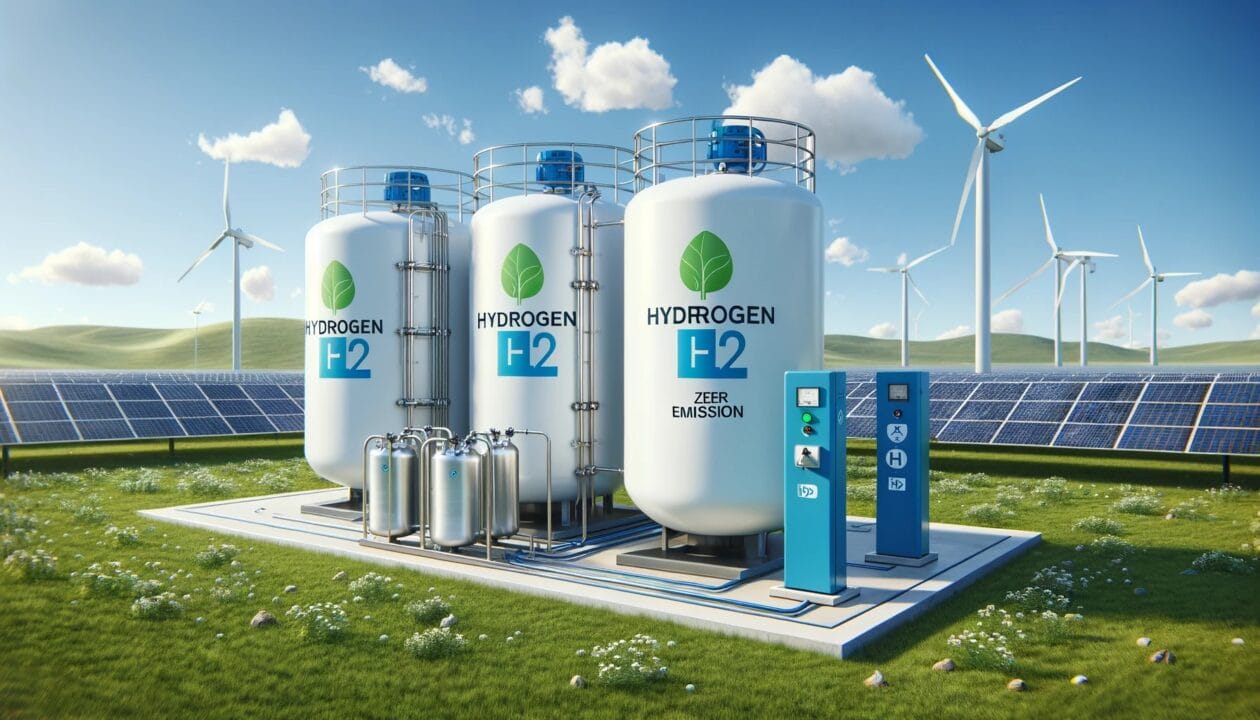
Brazilian Green Hydrogen May Be the Cheapest in the World, Costing US$ 1.45 Per Kg. Brazil Makes a Great Leap Towards Sustainability and Energy Transition, Highlights BloombergNEF.
By 2030, Brazil could produce the cheapest green hydrogen in the world, below the value of US$ 1.45 per kg. The information comes from a study by the energy finance research firm BloombergNEF (BNEF), released during the company’s Annual Forum in São Paulo.
The study considers the cheapest methods of green hydrogen production according to the climatic conditions of each country. For Brazilian green hydrogen, the use of onshore wind energy and alkaline electrolysis would be the most beneficial.
Brazilian Green Hydrogen Should Equal 3.8 GW by 2030
Other countries that reported low values include China, also with wind energy, and Chile, using solar sources. According to BNEF’s head of research, James Ellis, green hydrogen is a potential for Latin America and Brazil. The region is expected to produce about 6.8 GW by 2030, with 3.8 GW coming from Brazil. Brazil has already decarbonized over 80% of its energy production, not by accident, but through smart investments and policies.
-
A Canadian retiree creates a hydroelectric system on a real river, generating energy continuously throughout the day and demonstrating how the power of water can supply a house with stability even in a simple structure.

-
Petrobras reaffirms its commitment to the market and ensures that it will carry out the energy transition safely to maintain national sovereignty.

-
Researchers discover a possible hydrogen deposit of up to 46 million tons beneath an ancient coal basin, and the volume could exceed half of the entire global production.

-
China bets on the Fishery-PV model and transforms fish farms into giant solar plants, covering ponds with panels that generate energy while utilizing the same space for large-scale aquaculture production.

Producing green hydrogen at low prices is key to unlocking Brazil’s potential. The search for green hydrogen has more than tripled investments in the sector in 2023, totaling US$ 10.4 billion.
More than US$ 8 billion of this total has been directed to Brazilian green hydrogen produced through electrolysis, a process that generates energy by breaking down water molecules. The country was the sixth largest in terms of investments for energy transition in 2023, with nearly US$ 35 billion invested.
Brazil Should Achieve 96% Renewable Matrix by 2050
Despite the billions invested, green hydrogen, however, was not among the areas that received the most funding in Brazil. The leaders were renewable energies, followed by electric grids and transport electrification. The projection is that by 2050, with the economic transition, energy production in Brazil will exceed 900 TWh, with 96% of it being from renewable sources. In 2023, the energy capacity was 677 TWh.
According to Ellis, the country should continue doing what it is already doing to enhance its competitive advantage as a producer of renewable energies. He stated that Brazil has already developed its energy decarbonization, which many countries are still struggling to achieve. Brazil has become a leader in the global renewable energy markets.
The event also pointed out projections for the energy transition scenario over the coming decades in the global context. By 2050, the most used fuel by end consumers is expected to stop being coal, with the transition making way for green hydrogen as the main energy source.
Brazil Ahead in Renewable Energies
The BloombergNEF specialist also pointed to a Brazilian potential in green steel production, which is more beneficial to the environment than iron. The Brazilian share of steel is only 2%, while iron is 17%. With green hydrogen, steel mills would have a cheaper production option with zero emissions.
In agriculture, the production of green fertilizers is a way to boost the economy and reduce import rates, especially regarding nitrogen: currently, only 24% of the nitrogen used is produced locally.
Biofuels are the promise for the transition in the transportation sector. Combined with the use of electric cars, which saw a surge in sales in 2023, from 19 thousand to 52 thousand sales, the long-term CO2 emissions from vehicles are lower in Brazil than in other countries. It is also worth noting that there are possibilities for Brazilian green hydrogen to be used to power vehicles.









Seja o primeiro a reagir!