





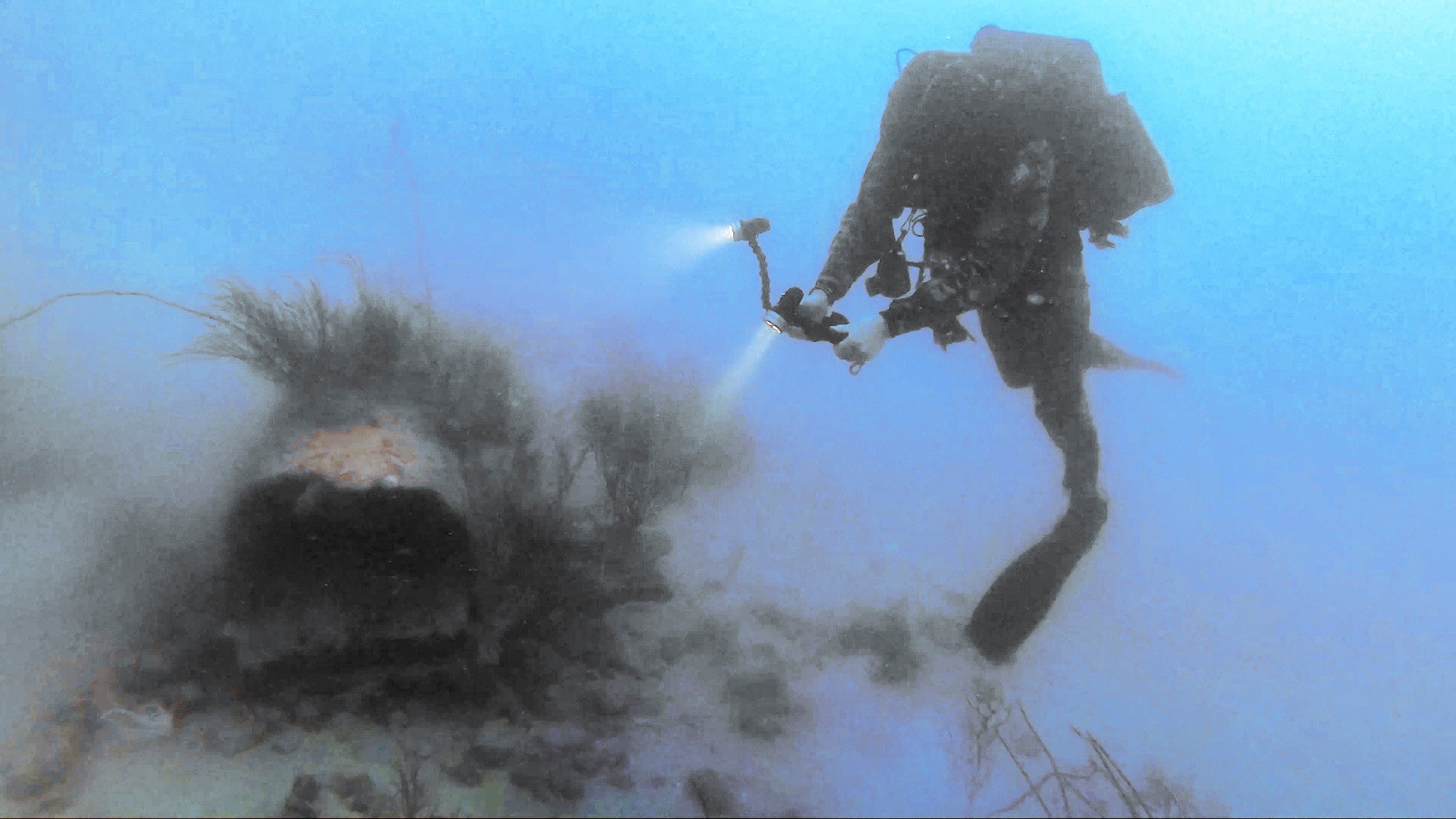

The wreck of HMCS Spitfire, the first warship built in Australia, has been found off far north Queensland, 128 years to the day after it sank.
Marine archaeologists located the remains on 21 August 2026, the anniversary of the sinking on 21 August 1898. Australian authorities announced the discovery on Thursday, November 19.
“It is remarkable luck that Spitfire was discovered on the 128th anniversary of its sinking,” said Celeste Jordan, principal heritage officer at Queensland’s Department of the Environment, Tourism, Science and Innovation.
Found by a navy mine-hunter
A Royal Australian Navy mine-hunter found the wreck after a search that used a dive team and remotely operated vehicles, according to a joint statement from several agencies quoted by The Independent.
-
Hai Long chief Tim Kittelhake marked the moment all 73 turbines of Asia’s largest single offshore wind project, 45 to 70 km off Taiwan, went live on the grid with more than 1 GW for over a million homes

-
Archaeologist Artur Obłuski and a Sudanese-Polish team reached the original floor of the Great Church of Jesus in Old Dongola, a medieval cathedral 47 metres wide and about 21 metres tall that he says was bigger than the White House
-
Gelephu governor Lotay Tshering received a Guinness certificate after about 40,000 volunteers raised 108 Buddhist stupas, each about 15 metres tall, in nine hours along a river in southern Bhutan
-
Former paratrooper Karl Bushby hugged his mother outside her Hull home on November 2 after walking about 31,000 miles across four continents for 28 years, a journey from Chile that he once expected to finish in 12


The team exposed about 16 metres of the wreck. Most of the hull remains buried in sand on the seabed, and there are no plans to raise it.
The Defence Department said the announcement came three months after the find because of reporting processes between agencies, required under laws that protect historic shipwrecks.

Built against a Russian threat
Spitfire was launched in Sydney in 1855, during the Crimean War. Britain was fighting Russia, and the colonial government of New South Wales feared the Russian Pacific Fleet would strike.
Gold had recently been found in New South Wales and Victoria, which made the colonies a lucrative target, explained James Hunter, an archaeologist at the Australian National Maritime Museum.
The colonies relied on the Royal Navy for protection, but British warships were rare in that distant corner of the empire. The Guardian reports the gunboat was meant to guard against Russian ships based at Vladivostok.
Delivered in two months
Sydney shipbuilder John Cuthbert designed and built the vessel, and his wife, Susan Cuthbert, launched it from Darling Harbour. He delivered it only two months after winning the contract.
Hunter said that speed suggests the hull was already under construction for another purpose when the colonial government placed its order.
The two-masted schooner measured about 19 metres. It was built from native timbers, including an ironbark keel, and sheathed in copper below the waterline, according to the museum archaeologist.
A 1981 article in the Naval Historical Review, cited by The Guardian, called it “a sturdy little vessel”.
One cannon against iron ships
Spitfire was designed to carry a single cannon firing balls of about 14.5 kg, the 32-pounder size. The Guardian notes that evidence suggests the gun may never have been fitted.
Russia’s Pacific Fleet at the time was mostly iron-hulled and steam-powered, made up of what Hunter called “armed to the teeth warships”.
“Would that have bounced off the side of one of those larger, Russian iron-hulled warships? Probably,” Hunter said, describing the gunboat’s lone cannon.
The Crimean War ended in 1856, and Spitfire never fired a shot in battle.

From warship to fishing boat
In 1857, Spitfire became a pilot vessel at Moreton Bay, in an area that would soon become the colony of Queensland.
The Queensland government sold it into private hands in 1885. The Guardian says the price was £300 and that it was converted into a sea cucumber fishing vessel.
On 21 August 1898, more than four decades after its launch, Spitfire sprang a leak and foundered off Piper Island, near Queensland’s Cape York Peninsula.
“Her Majesty’s Colonial Schooner”
The letters HMCS stood for Her Majesty’s Colonial Schooner. The vessel served a colony, not a nation, because Australia did not become a federation until 1901.
Vice Admiral Matthew Buckley, chief of the Royal Australian Navy, said the gunboat marks the beginning of the service’s story.
“Spitfire occupies a unique place in Australia’s naval history as the first warship built in Australia for Australian service,” he said.
A site kept secret
Authorities have not revealed the exact location of the wreck, because it lies at a depth that scuba divers can reach.
The ship is protected by both federal and state law. Jordan said rediscovering lost shipwrecks helps ensure “the stories of our past are preserved, celebrated and protected for future generations”.
What the sand may still hide
With only 16 metres exposed and the rest under sand, the hull that Cuthbert built in 1855 remains largely unseen, and it will stay on the seabed where it settled in 1898.
If the sand ever shifts and uncovers the rest of the hull, could the wreck answer whether Australia’s first warship ever carried the cannon it was built for?


