





 Português
  Inglês
  Espanhol
  6 min de leitura
  0 comentários


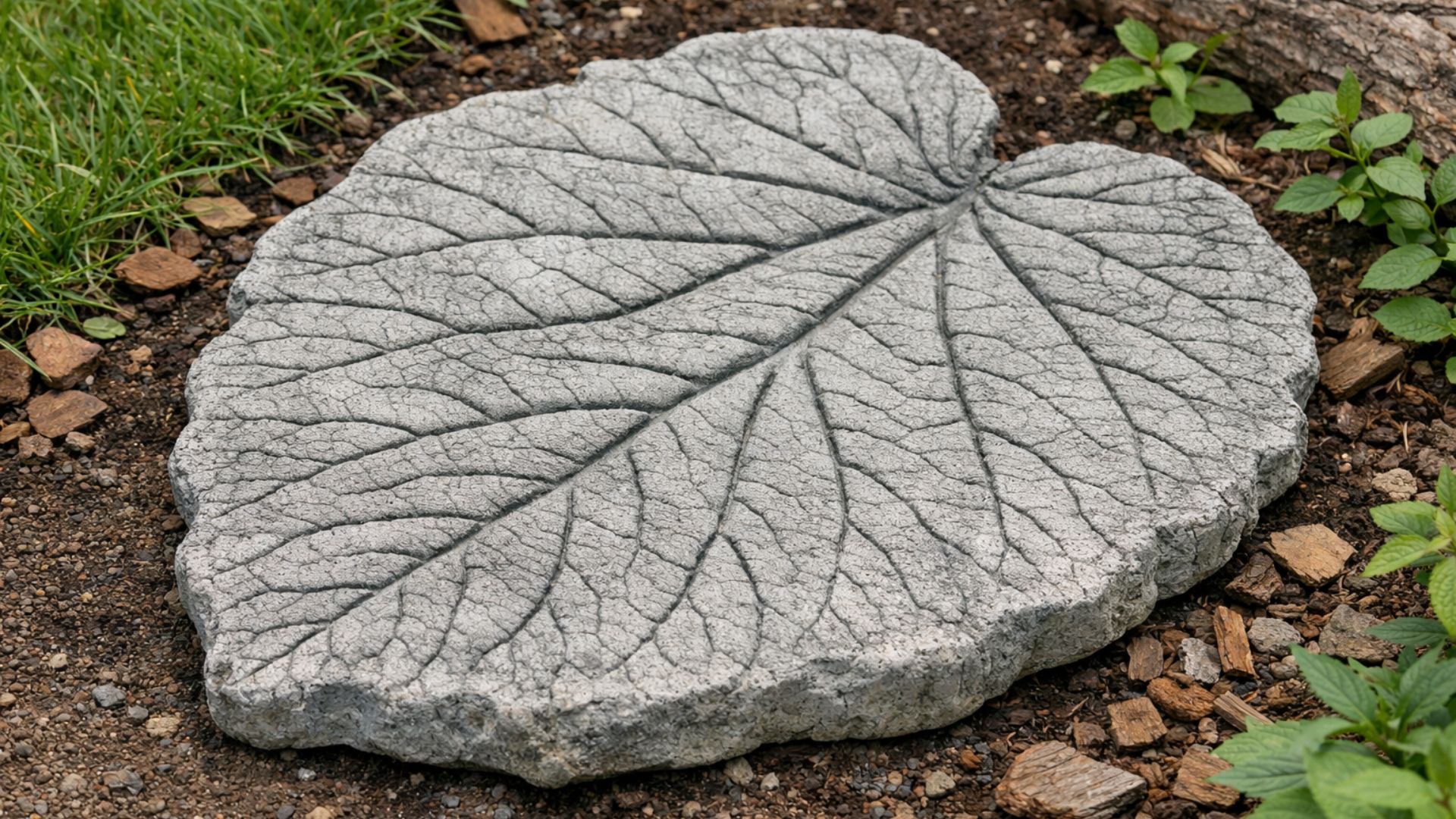
Technique With Large Leaves Becomes Natural Mold to Impress Veins in Concrete and Create Handmade Pieces for the Garden.
A homemade technique that has been repeated in gardening projects and “do it yourself” content uses large leaves as molds to impress veins, ribs, and contours with a high level of detail into concrete.
The proposal combines simplicity and visual impact: by taking advantage of the natural relief of the plant, the artisan can produce pieces that resemble sculpted stones, but with a handcrafted finish and low cost.
The result often appears in different shapes, depending on the needs of each backyard.
-
With an unusual prize, Japan transforms office chairs into a resistance race on the streets, ISU-1 Grand Prix grows, fills stages, and pays 90 kilograms of rice.

-
House in England with a 7.6-meter shark embedded in the roof attracts attention worldwide and becomes a curious attraction in Oxford.

-
Masterpiece in Spain, under construction since 1882, receives 4.8 million visits in a year and impresses with its gigantism and architecture.

-
Attracting around 250,000 people a year, a lighthouse 200 meters from the sea, on a 60-meter high cliff, on the North Sea coast in Denmark, becomes one of the most impressive examples of how nature can threaten historical buildings.


In many cases, the piece becomes a “garden stone” for paths and walkways over lawns; in others, it serves as a base for pots, rustic trays, support for arrangements, or decorative elements in outdoor areas.
What unites these variations is the same principle: allowing the leaf to do the work of texturizing the concrete, eliminating industrial molds and reducing steps.
Giant Leaf as Natural Mold and Ultra-Realistic Texture in Concrete
The success of the technique has a straightforward explanation: some large leaves carry a marked design, with deep veins and an irregular surface, capable of transferring texture sharply when receiving a layer of concrete at the appropriate thickness.

Instead of relying on rigid molds, the process uses an organic and accessible element, usually found in the garden itself, from prunings or already fallen leaves.
Popular gardening tutorials cite large-leaved plants precisely because they better withstand the weight of the mass and offer evident relief.
Species such as hosta, “elephant ear,” sunflower, and rhubarb are often mentioned for having large enough sizes to become functional pieces and for leaving well-defined marks on the final surface.
Choosing the Right Leaf and Preparing the Release Agent
The initial step begins with selecting a firm leaf, free from tears and with prominent veins.
Very thin leaves can break during removal, especially when the concrete is already hard and separation requires care.
Because of this, those who apply the technique often prioritize thicker leaves, with consistent structure, capable of resisting contact and maintaining the design until drying is complete.
In assembling the mold, the more “detailed” side of the leaf, where the relief appears clearly, usually faces upward, in direct contact with the mass.
To reduce the chance of the concrete sticking, many guides recommend applying a thin layer of release agent, such as vegetable oil or cooking spray, evenly distributed.
This film eases removal and helps preserve the pattern of veins and ribs, reducing losses during the unwrapping of the leaf.
Another recurring point in step-by-step guides is to prepare the base where the leaf will be supported.
A stable surface that follows the natural curvature tends to avoid deformations during application.
If the leaf bends too much or yields, the final contour may become irregular, which alters the function of the piece when the intention is to use it as stepping stones.
Concrete Mixture, Layer Application, and Compaction
In the concrete mixture, the most repeated recommendation is to seek a moldable consistency that allows the material to be “set” onto the relief without flowing to the point of erasing details.
Some beginner-oriented projects suggest quick-drying concrete to facilitate handling and shorten the interval until demolding, although this does not replace the curing time necessary to achieve adequate strength.
The application tends to work better when the concrete is applied in portions, rather than in a single block.
By spreading it gradually, the artisan can press, adjust thickness, and ensure that the mass truly touches the veins.
This compaction gesture, done with gloves or simple tools, aims for a practical goal: expel air bubbles that, if trapped, can create craters, holes, and marks that undermine the reading of the texture.
The thickness also varies depending on the intended use.
For a “garden stone” meant to withstand footsteps, many models aim for a thicker center capable of bearing load and slightly thinner edges to enhance the organic outline.
When the piece becomes a tray, pot base, or decorative support, the finish can prioritize lightness and a flatter surface, adjusted while the concrete is still malleable.
Drying, Curing, and Removing the Leaf Without Erasing the Veins
Once molded, the piece needs to rest to gain rigidity without deforming.
Tutorials for this type of project generally emphasize the importance of respecting the time indicated by the concrete manufacturer, avoiding moving the mold before the hardening point.
If early displacement occurs, cracks can form at the edges, and the design may lose definition.
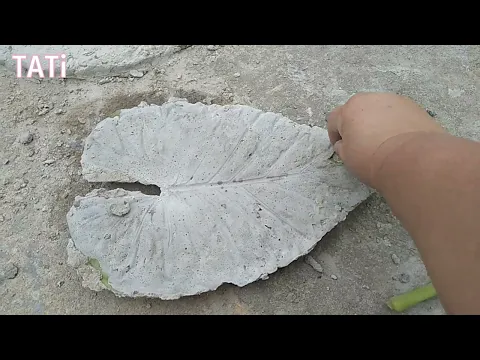
When the mass is firm, the removal of the leaf often begins at the edges.
The procedure requires delicacy, as the newly formed texture can still be sensitive, especially at fine points.
If any plant material remains attached, cleaning is usually done with a brush and water, without excessive force, to avoid erasing the relief that has just “emerged” on the surface.
Among the images that go viral, the part that attracts the most attention is the “reveal,” the moment when the leaf is lifted and the vein appears ready in the concrete.
The transformation is easy to understand in video, delivering immediate impact and producing a photogenic result, which helps explain why the technique remains present in gardening programs and portals.
Garden Stone, Base for Pots, and Other Applications in Landscaping
Even without paint, the aesthetics often work because they combine raw material with a well-marked organic design.

In gardens, the most common application remains as stepping stones or path slabs, as the irregular shape integrates with the landscape and combines with gravel, grass, tree bark, and ground-covering plants.
When organizing circulation, these pieces also help protect flower beds and reduce trampling in more sensitive areas.
In patios and backyards, their use as pot bases appears as a practical solution: by elevating the container, the piece reduces direct contact with soil moisture, which can aid in maintaining the space and cleaning the surroundings.
Smaller and lighter versions also appear as rustic trays, support for candles in outdoor environments, or decorative objects on tables and sideboards, especially when the texture of the leaf is well pronounced.
Besides the visual appeal, the technique is often associated with reusing for two objective reasons: the mold can come from fallen leaves, prunings, or common plants, reducing the need to buy molds; and the concrete, being durable, tends to result in items with a long lifespan in the external environment.
Still, handling requires care, as the material can be alkaline and irritating.
Therefore, “do it yourself” guides often recommend gloves, masks for dust preparation, and safety glasses during mixing and potential sanding, measures related to process safety.
What Affects the Result and Why Each Piece Comes Out Different
The choice of leaf is the factor that most alters the final appearance.
Leaves with deep veins tend to produce a more dramatic texture; less marked surfaces create a softer effect.
As the relief comes from nature, each mold delivers small variations, which reinforces the handcrafted aspect and reduces the feel of an “industrial” product.
For those seeking more uniformity, repeating with similar leaves and controlling the thickness of the concrete helps to approximate the results, even though the natural differences continue to appear.
Another detail that often separates a well-finished piece from another with flaws lies in the compaction and the care with air bubbles.
When the mass uniformly touches the relief, the concrete “inherits” veins and small irregularities clearly, creating an appearance that blends nature with raw material.
Conversely, when the pressure is uneven or the mixture is too liquid, the design loses its strength and the finish may be marked by holes and burrs.
With so many possibilities for shape and use, the technique remains simple at its core: a large leaf, a well-applied mixture, and the correct drying time.
Among the plants in your backyard or street, which one would have the most surprising relief to become a “stone” of concrete?








-

-

-

-

-

-

116 pessoas reagiram a isso.