





 Portuguese
  English
  Spanish
  3 min of reading
  4 comments


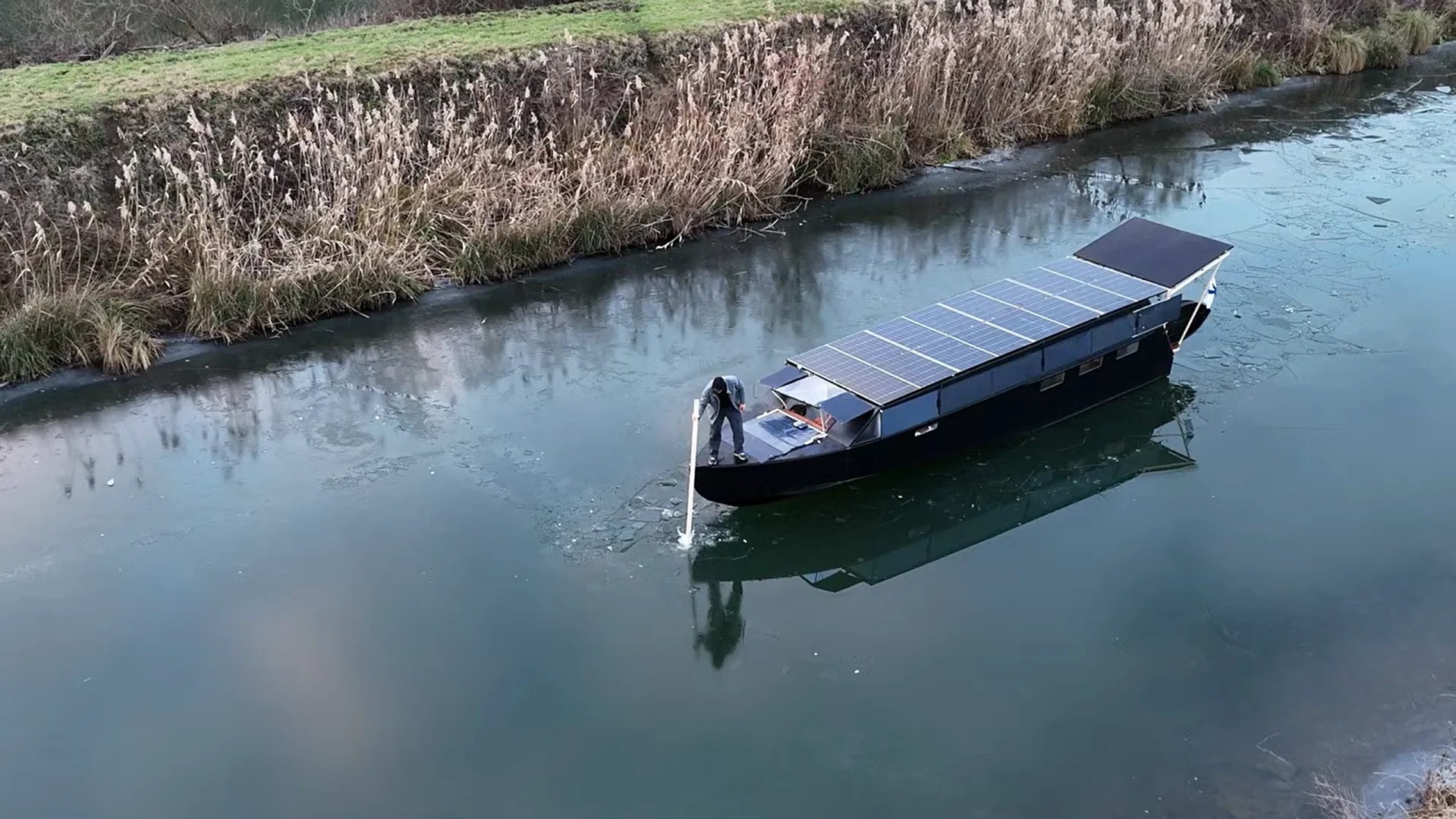


After Devoting 200 Days to the Handcrafted Construction of Helios 11, an Explorer Yacht Powered Exclusively by Solar Energy, the YouTuber Completed the Inaugural Journey Between Finland and the Canals of France, Facing Frozen Areas, Testing Energy Autonomy, the Stability of the Vessel, and Validating a Concept Designed to Operate Indefinitely Without Refueling or Marina Support
A YouTuber Completed in 200 Days the Construction of Helios 11, an Explorer Yacht Powered by Solar Energy, and Made Its Inaugural Journey After Launching It in Finland and Navigating Through the Frozen Canals of France, Testing in Practice the Viability of a Boat Designed to Operate Indefinitely Without Refueling.
Launch of Helios 11 and First Tests in Extreme Conditions
The Helios 11 is a prototype of an explorer yacht powered by solar energy, developed with the aim of functioning without the need for marinas or stops for refueling along the way.
After completing the construction, the yacht was launched in Finland and taken to the canals of France, where the winter imposed unexpected difficulties right at the beginning of the inaugural journey.
-
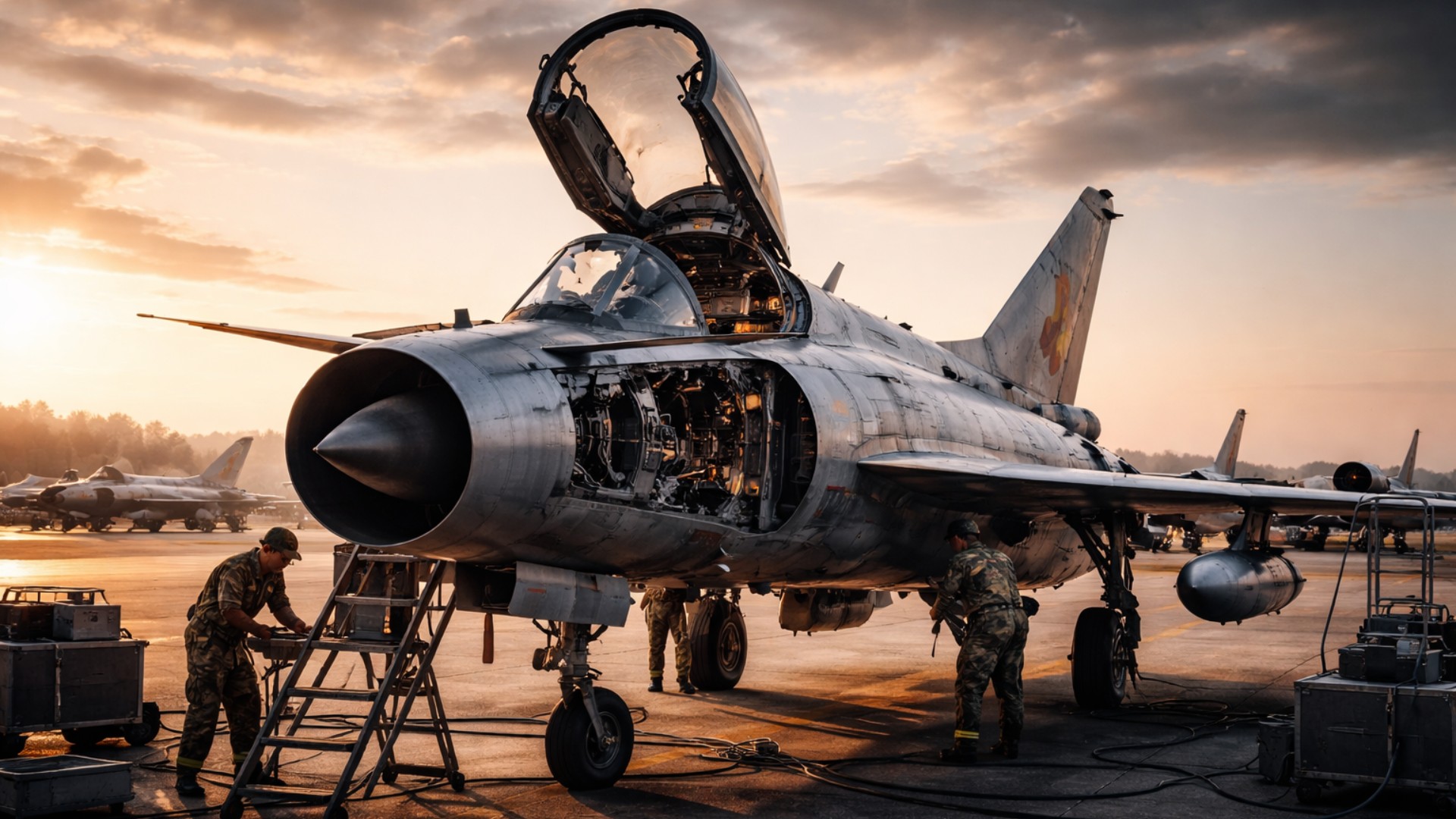
China retires the J-7 fighter after years of military protection and can now transform military items into drones, following more than 60 years of operation of the J-7, derived from the MiG-21, with thousands of units produced and strategic use in the PLAAF and PLANAF.
-
Volunteers are sought to live in the mountains for a month: a study pays people to stay at 2,500 meters, with 24-hour monitoring of sleep, metabolism, and blood pressure.

-
Goodbye to kitchen cabinets: innovation retires the traditional furniture of Brazilian kitchens by introducing modern pantries with modules of up to 2.40 m, 40% more organization, ergonomic access, adjustable shelves, and smart lighting in 2026.

-
After the union of Brazil and China, BRICS plays a leading role in the merger between two powers: Egypt and India move forward with agreements exceeding US$ 4 billion, expanding industrial capacity in strategic sectors and accelerating the establishment of factories and global production chains.


Some stretches of the canals were frozen, which temporarily left the vessel stuck, forcing the builder to halt movement until environmental conditions improved.

Forced Pause Turns Into Validation Opportunity for the Concept
Instead of treating the halt as a setback, the builder decided to use the waiting period as an additional testing phase for his solar yacht project.
The goal of Helios 11 remained unchanged during this period: to create a vessel powered exclusively by solar energy, capable of traveling indefinitely while also providing a stable and comfortable living space on board.
According to information released by True North Yachts, the project’s intention is to combine energy autonomy with continuous habitability, even in challenging environments.
Development of the Halo 13 Concept During the Immobilization
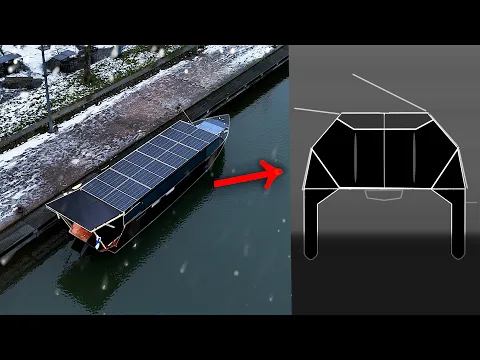
While the Helios 11 remained trapped in the ice, the builder began testing a new experimental platform, described as a concept for an ultra-narrow catamaran called Halo 13.
For this purpose, a 1:13 scale model was built, consisting of two very thin hulls, to which sufficient weight was added to simulate a realistic center of gravity.
Tests in water showed that the model remained stable against lateral, frontal, and diagonal waves, staying calm even under different angles of impact.
Results of Stability and Capsize Resistance Tests
During the trials, the aspect that drew the most attention was the low probability of capsize observed in the Halo 13 model.
Despite having a relatively narrow beam compared to the overall length, the scale vessel demonstrated high resistance to overturning, maintaining stability in various simulated conditions.
According to the builder, only a breaking wave in an extreme manner and at a very specific angle would pose a real threat to the project’s balance, a result considered surprising.

Next Steps and Continuity of the Solar Prototype Journey
After the initial tests, the announced plan involves refining the shape of the new catamaran, conducting additional assessments, and building a scale model of Helios 11.
The direct comparison between the two projects, Helios 11 and Halo 13, will allow for an evaluation of differences in stability, performance, and feasibility for future nautical applications.
Meanwhile, the expectation is that the thawing of the waters will allow for the resumption of Helios 11’s inaugural journey, continuing the tests in continuous navigation.
How Solar-Powered Yachts Work
Solar-powered yachts use high-efficiency solar panels installed on the vessel’s structure to capture sunlight and convert it into electrical energy.
This electricity is stored in advanced battery systems, allowing the accumulation of excess generated during the day for later use.
The stored energy powers electric propulsion motors and onboard systems, such as lighting, navigation, air conditioning, and appliances, ensuring silent operation and zero direct emissions.
Even in the absence of sunlight, during the night or on cloudy days, the yacht can continue operating with the previously stored energy, maintaining its continuous functioning.






Não pode fazer isto. Os barões do petróleo não permitirão. Ele poderá sumir do mapa… vai vendo…
Mente podre a sua
Iniciativa fantástica de um barco que não polui, é praticamente auto sustentável e que pode ter versões menores e maiores, para alavancar projetos náuticos de pescadores que vivem da pesca artesanal e inclusive para amadores e aventureiros que teriam com certeza uma nave com baixos custos de manutenção e deslocamento.
Não polui durante o uso, mas os descartes dos painéis solares e da bateria são um problema sério