





 Portuguese
  English
  Spanish
  5 min of reading
  1 comment


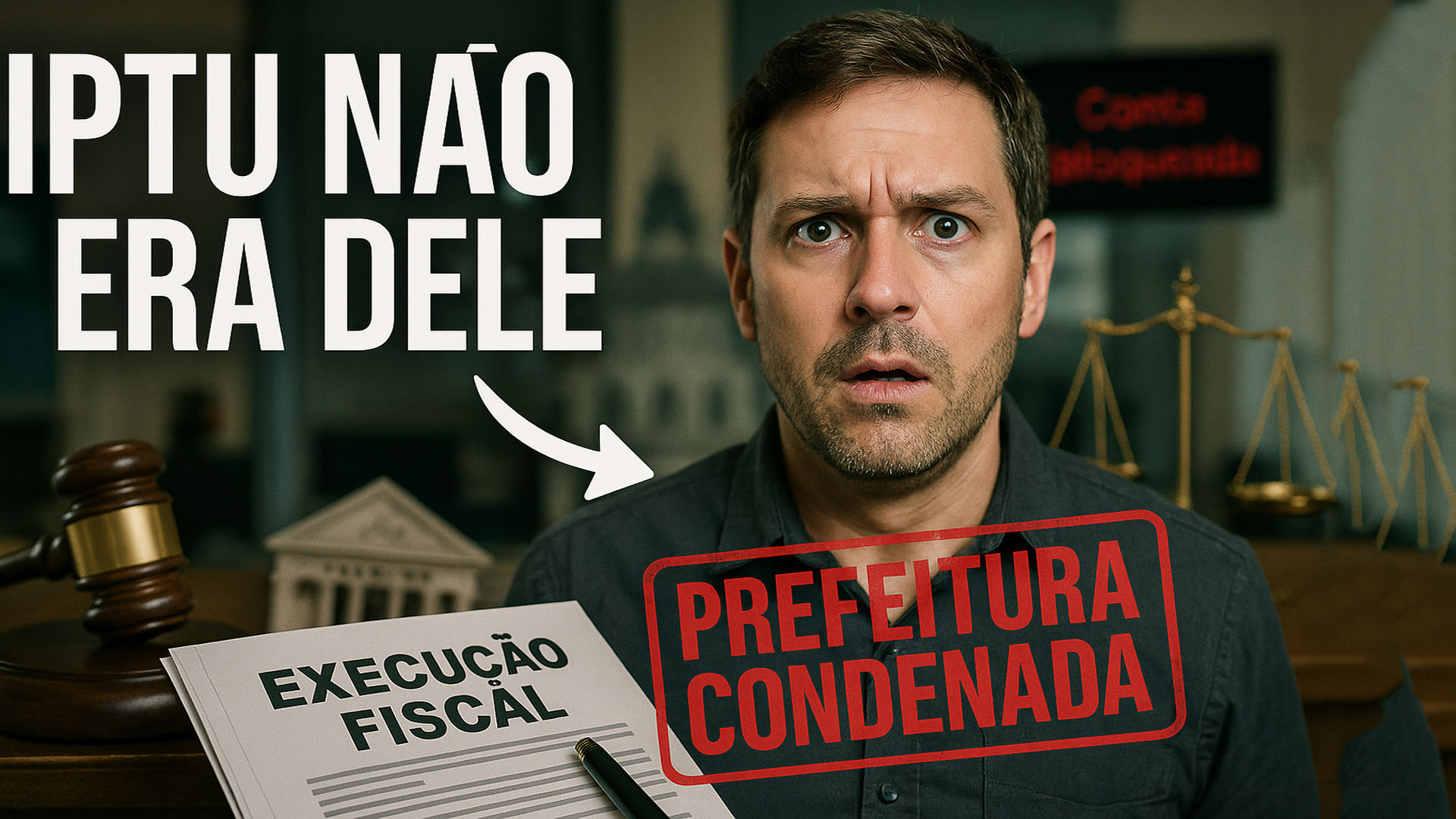


Citizen Was Without Access to Bank Resources for More Than 100 Days Due to Unlawful Collection of Debts of Properties That Did Not Belong to Him in the Neighborhood of Cidade Nova.
The Justice determined that the City Hall of Natal should compensate a citizen R$ 3,000 for moral damages after keeping his bank account blocked unlawfully for more than 100 days. The case involves an incorrect charge of property tax (IPTU) and trash fee for properties that did not belong to the man, as stated in a recent court ruling.
The ruling was signed by Judge João Eduardo Ribeiro, of the 4th Public Treasury Court of the District of Natal. The magistrate recognized that the judicial blocking caused harm to the dignity and financial stability of the plaintiff, who had essential resources for his livelihood unjustly withheld.
According to information from the case, the citizen was surprised by the blocking of R$ 5,552.44 in his bank account, resulting from a tax collection initiated by the municipality. The debts referred to property tax (IPTU) and trash collection fees for properties located in the neighborhood of Cidade Nova, in the North Zone of Natal. However, the man proved that he was neither the owner nor had any connection to the disputed properties.
-
A bill could eliminate councilors in small towns in Brazil and replace fixed salaries with session allowances in municipalities with up to 30,000 inhabitants.
-
As the use of slimming pens grows in Brazil, a silent question arises among taxpayers in the 2026 income tax: why can’t these expenses be deducted and what specific detail could completely transform this rule into an isolated case?

-
He missed work to take care of his sick child, was fired for just cause, and ended up turning the tables in court with a decision that surprises companies.

-
STJ confirms that child support must be proportional to the father’s actual income and not to the mother’s standard of living — the decision reinforces balance in family obligations and prevents abuses in requests for increases.

Error in Tax Collection Leads to Prolonged Blocking
The blocking of the bank account occurred by court order, in response to a request for tax collection presented by the City Hall of Natal. For more than three months, the citizen was unable to move his financial resources, facing difficulties in meeting basic expenses and financial commitments.
According to the legal action, the plaintiff remained with his name listed in the active debt register for more than three years before being able to prove that he had no connection with the debts being charged. Only after presenting documentation that proved his illegitimacy in the charge did the municipality remove his name from the debtor registry.
The case highlights flaws in the municipal tax collection system, which can lead to serious disruptions for citizens who are wrongfully charged. The unlawful tax collection not only impacts the individual’s assets but also jeopardizes their financial reputation and resource management capabilities.
Municipality Claimed No Moral Damage
In its defense, the City Hall of Natal argued that the registration in the active debt register does not, in itself, create a right to compensation for moral damages. The municipality further argued that the troubles experienced by the plaintiff would constitute only common annoyances, without sufficient severity to justify financial compensation.
The municipal defense also emphasized that the citizen’s name was removed from the active debt register as soon as his illegitimacy in the charge was proven. For the city hall, this correction would be sufficient to resolve the issue, and there was no need for additional compensation.
However, Judge João Eduardo Ribeiro rejected the arguments presented by the defense. The magistrate grounded his decision on the objective responsibility of the public authority, as outlined in Article 37 of the Federal Constitution and Article 43 of the Civil Code, which follow the Theory of Administrative Risk.
Judicial Decision Recognizes Moral Damage and Responsibility of the City Hall
When analyzing the case, the judge found that the municipality committed an unlawful act by wrongfully registering the plaintiff in the active debt register and filing a tax collection action, resulting in the blocking of essential resources for subsistence. The decision highlighted that this type of situation cannot be considered mere inconvenience, especially when it persists for an extended period.
“It cannot be considered, in these circumstances, that there was merely an annoyance. The undue state act generated harm to the peace, financial stability, and dignity of the plaintiff, who had his resources unjustly withheld”, stated the magistrate in the ruling, according to information from the Portal Diário do RN.
The judicial decision sets an important precedent for similar cases in Rio Grande do Norte. The understanding applied by the judge is aligned with the jurisprudence of the Appeals Chambers of the Court of Justice of RN, which recognize the undue blocking of bank funds as a generator of moral damages subject to compensation.
How to Protect Yourself from Undue IPTU Charges
Cases like this demonstrate the importance of taxpayers regularly monitoring the fiscal situation of their properties and checking for any debts under their names. IPTU is a municipal tax levied on urban properties, and registration errors can lead to charges against individuals who are not owners.
To avoid similar problems, experts recommend that citizens periodically consult their debt statements with the Municipal Finance Department. In Natal, this consultation can be done in person or through the city hall’s digital channels, including virtual assistance.
When there is a change of ownership of properties, it is essential to carry out the registration with the General Registry of Properties (RGI) and notify the city hall of the change. This procedure prevents former owners from continuing to be charged for taxes on properties that no longer belong to them.
In case of undue charges or blocking of a bank account due to erroneous tax collection, the taxpayer should immediately seek a lawyer to take legal action. Documentation proving the lack of relationship with the charged property is essential to quickly reverse the situation.
Have you ever experienced an unjust municipal tax charge or unjustified bank account blocking? Cases like this are more common than one might think and affect thousands of Brazilians every year. Leave your comment and tell us if you think the amount of compensation was fair?










Indenização de apenas 3 mil reais, sendo que a lei diz que quem errou deveria pagar o dobro do valor do erro? Eita injustiça.