





 Português
  Inglês
  Espanhol
  7 min de leitura
  0 comentários


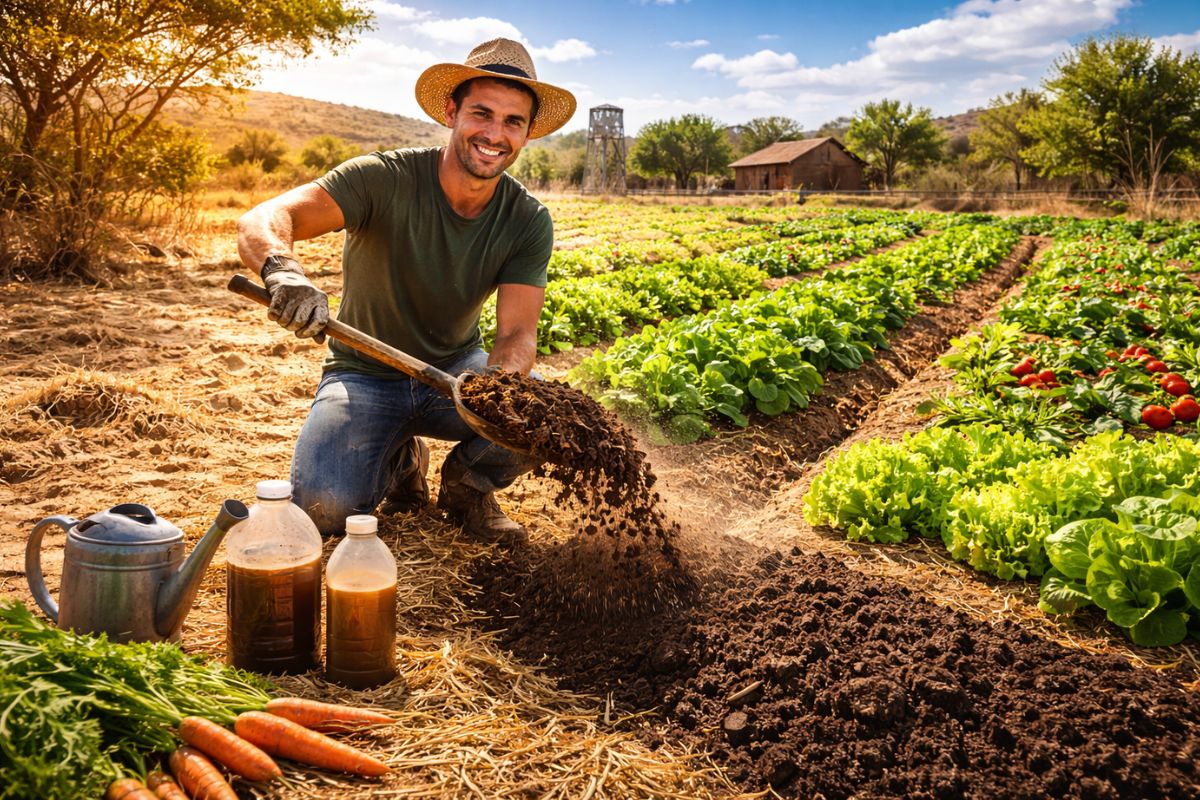
The Search For Fertile Land In The Hinterland Led A Producer To Test Mulch, Well-Rotting Manure, Ground Charcoal, Rice Water, And Simple Biofertilizers, Creating An Inexpensive Method That Helps Gardens Thrive Even Under Intense Sun.
Obtaining fertile land in the hinterland seems, for many, a goal too distant. The most common image is that of light, hot, dry soil incapable of sustaining vigorous gardens for long. It was precisely in this scenario that the transformation reported by a resident began, who decided to stop fighting against nature and started observing how the soil reacted when it received protection, organic matter, and proper management.
The result of this change was profound. Where there was once sand that dried in minutes, a darker, wetter, and lively bed emerged. The big turnaround did not come from expensive formulas or miraculous solutions, but from simple, accessible practices patiently repeated, such as mulch, well-rotted manure, and homemade biofertilizers.
The Mistake That Prevents The Soil From Becoming Fertile Land
One of the main lessons from this experience was understanding that the sand of the hinterland does not need to be treated as an enemy. The problem, according to the report, is that this soil is often too exposed, without protection or food.
-
Scientists transform sawdust into fire-resistant panels, stabilize the compound with an enzyme extracted from watermelon seeds, and turn waste into promising material for construction.
-
Forget concrete: architects are replacing tons of concrete with giant blocks of expanded polystyrene to build the roofs of houses and reduce structural weight by up to 50%, cut costs, improve thermal insulation, and speed up construction.

-
The Brazilian state enters the center of the global race for critical minerals by starting the construction of the largest underground nickel mine in Latin America, a mineral essential for electric car batteries that the entire world is competing for at this moment.

-
New CCR concrete paving technology promises roads up to 3x more durable, less maintenance, and cost reduction in Brazil.

When it is completely bare, it receives direct sunlight all day long, loses moisture very quickly, and cannot maintain an active biological life.
In this scenario, a common habit ends up worsening everything: keeping the yard always clean, swept, and with the bare soil exposed.
Although this seems a sign of organization, in practice, it removes the layer of protection that would help the ground retain coolness and moisture. Exposed soil heats up too much, loses water quickly, and becomes increasingly less favorable for cultivation.
It was from this perception that the strategy change began. Instead of insisting only on watering and purchased fertilizers, the focus shifted to rebuilding the bed’s base.
Mulch Was The First Step To Create Fertile Land
The technique that most altered the temperature and behavior of the soil was mulch. The producer began to gather everything available in dry organic matter from the yard and its surroundings, such as carnauba straw, pruning residues, dry cashew leaves, and the cut weeds themselves.
This material began to be spread over the surface in a thick layer, about four or five fingers high. The effect was immediate on the microclimate of the bed. Underneath the straw, the soil became cooler and less exposed to extreme heat.
The mulch acted as a shield against the sun and slowed the rate of water loss, something essential for those who plant in a dry climate.
Furthermore, the technique helped transform the logic of management. Instead of eliminating all organic matter from the land, the producer began to reuse it as a valuable resource to protect and recover the soil.
Well-Rotted Manure Gave Structure For Fertile Soil To Form
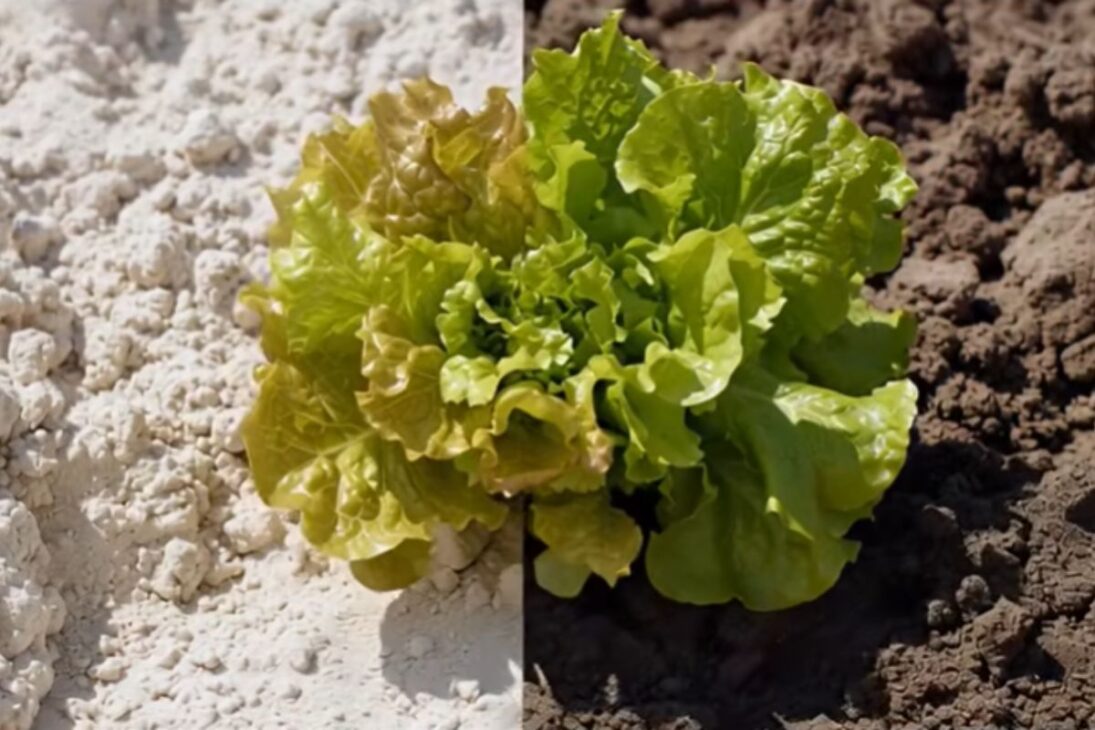
Simply protecting the ground was not enough. The sand still needed structure to retain nutrients and moisture. That’s when the base fertilization with well-rotted manure mixed with wood ash came in.
This point was seen as crucial. The manure could not be fresh because that would increase the risk of burning roots and also bring weed seeds to the bed. The well-rotted manure served as stabilized organic matter capable of enriching the top layer of the soil and improving its texture.
Mixed with ash and protected by mulch, this material created what the producer describes as a sponge effect.
The sand, previously unable to hold water, began to retain moisture for longer. It was this combination of surface protection and incorporated organic matter that began to transform dry sand into fertile land.
As a result, the need for watering decreased significantly. What used to require many buckets a day now needed much less water, showing that the problem was not just lack of watering, but the soil’s inability to utilize that water.
Earthworms And Life In The Bed Show When Fertile Land Truly Appears
One of the clearest signs that the method was working was the return of life to the soil. Over time, earthworms began to appear in a place that once only had hot, dry sand. This was interpreted as proof that the environment had leveled up.
When soil begins to harbor living organisms, it stops being merely physical support and starts functioning as an active biological system.
This change is important because it improves the decomposition of organic matter, the circulation of nutrients, and the overall structure of the bed. In other words, fertile land is not just dark soil. It is living soil.
This new scenario directly reflected on the plants. Tomato and pepper seedlings that previously wilted early on began to show firmer, greener, and shinier leaves. Cultivation shifted from a frustrating test to a more predictable and productive process.
Homemade Biofertilizers Reinforce Fertile Land Without Breaking The Bank
After stabilizing the base with straw and well-rotted manure, the producer realized he could further strengthen the system with liquid feeding. That’s how homemade biofertilizer came in, described as a type of tea made with water and organic compost produced from kitchen scraps of fruits and vegetables.
The mixture sits for a few days and is then used for watering. According to the report, the effect appears quickly, especially in plants that had yellowing leaves or slow growth.
This biofertilizer acts as a vigor boost and helps enhance the activity of the microorganisms already living in the fertile soil formed under the straw cover.
The logic of this management is simple: instead of feeding just the plant, the process strengthens the entire biological network of the soil. This makes the garden more balanced and less dependent on costly or frequent interventions.
Quick Solutions Help Maintain Fertile Land Even In Extreme Heat


In addition to the main method’s base, the report shows that small everyday solutions help prevent the soil from losing quality again when the heat becomes too intense. One of these solutions is the use of ground charcoal, utilizing the pieces left at the bottom of the sack or the wood used in the stove.
Mixed with the soil, this charcoal acts as a shelter for microorganisms and as a material that helps retain water and nutrients.
In beds that dry out too quickly, it improves texture and helps stabilize the root environment. It is a simple way to give more permanence to fertile soil without relying on industrial inputs.
Another practice used as reinforcement is the water from the first wash of rice. Instead of wasting this liquid, the producer applies it to the plants as a quick solution for weakened seedlings.
The same goes for urgently replacing mulch, done even with chopped cardboard or uncolored newspaper when the straw runs out or is blown away by the wind.
Coffee Grounds And Reading Soil Signals Complete The Method
Another homemade resource incorporated into the management was coffee grounds. But the use has an important condition: it is not placed fresh and wet directly at the base of the plant. First, it needs to dry well in the sun. Only then can it be mixed with dry soil and carefully spread.
This way, the grounds help provide nitrogen and can also assist in controlling some ants. The producer also highlights that, more important than any isolated input, was learning to read the signals of the bed.
Leaves curling upward in the middle of the day, for example, came to be understood as a warning that the soil was losing water too quickly.
In these cases, the response was not simply to add more water. The priority was to reinforce the layer of protection over the soil. This attentive gaze was an essential part of building fertile land, as it allowed correcting the problem at its source, rather than just reacting to the symptom.
Fertile Land In The Hinterland Stops Being A Dream When The Soil Is Treated As A Living Organism
The main message from this experience is that the hinterland does not prevent production. What prevents it is insisting on managing poor soil as if it could respond well without protection, organic matter, and biological life. When the ground is treated as a living organism, the scenario changes.
The reported transformation shows that dry white sand can indeed gain structure, moisture, and fertility with simple and accessible techniques.
Mulch, well-rotted manure, biofertilizers, ground charcoal, coffee grounds, and the reuse of household waste form a coherent, inexpensive set adapted to the reality of intense heat.
Fertile land did not arise from a trick but from a process. And that is precisely what makes the method so relevant for anyone wanting to establish a garden in dry regions without relying on high costs or solutions that are far from local reality.
In your opinion, which of these techniques seems most promising for transforming dry sand into fertile land in the backyard?









-

Uma pessoa reagiu a isso.