





 Portuguese
  English
  Spanish
  4 min of reading
  1 comment


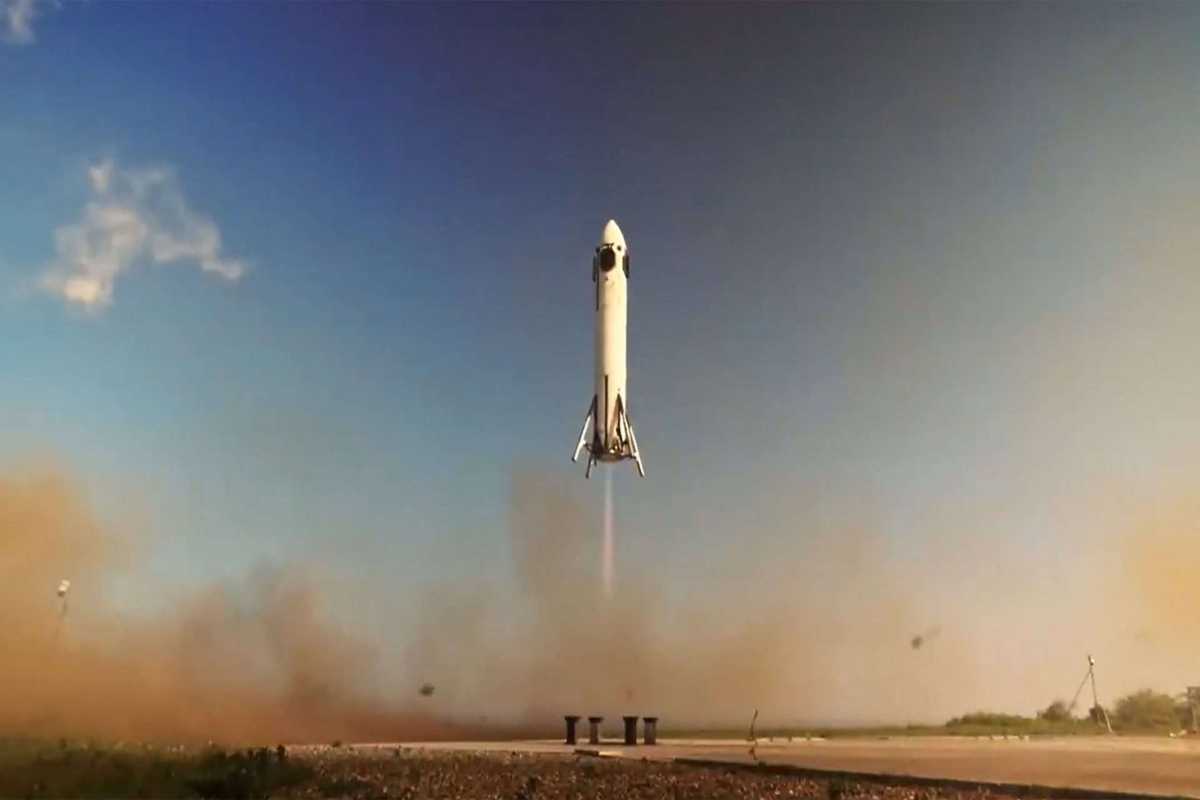


Japanese Automaker Initiative Strengthens Presence in the Space Sector with Safe and Innovative Operation
Honda Aerospace reached a significant milestone on June 14, 2025.
It successfully launched and, above all, landed a small experimental rocket.
The project was developed since 2019 by engineers from the automaker’s space division.
-
They were brilliant! Scientists discover that our ancestors in China were already making super advanced tools 160,000 years ago, changing everything we knew.

-
Scientists unveil 3 million years of climate secrets hidden in the ice of Antarctica.

-
Ancient farmers created “aggressive plants” that changed nature forever.

-
Astronomers find a “backward” solar system that ignores all the rules of space and leaves scientists scratching their heads!


The operation was conducted at the Hokkaido Space Research Center in Japan.
With this, the company expanded its involvement in aerospace technology.
It stood out among the few private groups that mastered the technique of controlled vertical landing.
Although the launched model is still classified as a prototype, the results exceeded expectations.
The rocket reached an altitude of 70 kilometers and returned to the ground with stability and precision.
As announced by Honda in an official statement, the success of the test reinforces a strategic objective.
The company aims to develop reusable vehicles by 2030.
This advancement will make space operations more sustainable and economically viable.
The operation was conducted under the supervision of orbital engineering specialists.
This shows the company’s consolidation in the emerging sector of space mobility.


Test Reinforces Innovation and Sustainability
In addition to confirming mastery over critical technologies, the test represents another step towards sustainability.
The rocket was designed to be partially reusable.
This reduces the volume of space debris and operational costs.
Honda explained that the hybrid propulsion system was developed in-house.
It performed above average during the mission.
This system ensured precise control throughout the descent.
On the other hand, the operation revealed significant technical challenges.
One of the main ones was thermal management during atmospheric reentry.
This challenge required real-time adjustments from the ground team.
The Japan Aerospace Exploration Agency (JAXA) classified the landing as “successful” nonetheless.
JAXA has been monitoring the automaker’s projects since its debut in the sector in 2021.
Cooperation between public and private entities is consolidating in Japan.
This enhances the country’s technological innovation capacity.
Japan Strengthens Presence in the Private Space Sector
Companies like SpaceX and Blue Origin have already achieved success in similar initiatives.
Honda’s entry shows that Japan wants to strengthen its presence in the private aerospace market.
The country has been betting on startups and industrial giants to diversify its operations beyond Earth’s orbit.
Since 2020, the Japanese government has encouraged investment in the space sector.
This encouragement resulted in collaborations like the one between Honda and local universities.
The national strategy aims to transform Japan into an Asian space innovation hub.
In this context, the success of the June mission positions Honda as a technological highlight of the country.
In an interview with NHK, chief engineer Hiroshi Takemoto commented on the results.
He highlighted that the collected data will be crucial for upcoming launches.
The team’s expectation is to conduct new flights still in 2025.
These tests are intended to reach orbital altitudes, according to the project leaders.
Honda Invests in Long-Term Orbital Engineering
Since 2019, Honda has been directing resources to expand its operations beyond the automotive sector.
The development of the experimental rocket is part of the company’s strategic plan.
The intention is to become a reference in aerospace propulsion engineering.
By 2030, the declared goal is to launch vehicles capable of transporting lightweight satellites.
These vehicles are expected to operate in low Earth orbit.
For this reason, experts consider tests like the one conducted in Hokkaido to be fundamental.
According to the newspaper The Japan Times, Honda invested more than 4 billion yen in the project.
Ground team technicians highlighted the priorities for upcoming tests.
The team will implement improvements to autonomous navigation systems and thermal insulation.
The engineering process, therefore, continues at an accelerated and constant pace.
Success Inspires the Sector and Opens New Possibilities
The success of the launch, which occurred on June 14, excited the Japanese aerospace sector, as it represents a relevant technological and strategic milestone.
Moreover, this advancement may open doors for new international partnerships, especially since the project drew attention from foreign agencies and investors.
Although the company’s current focus is still the Asian market, experts point to possible and advantageous global expansions.
Consequently, Honda may seek international certifications to operate outside of Japan and capture new emerging markets.
At the same time, the demand for small and efficient launches tends to further drive this desired technological expansion.
Meanwhile, JAXA reported that the next step will be to integrate smart sensors into the rocket’s structure, which will enhance its operational precision.
With this, such sensors will allow real-time communication and greater control over all stages of flight operations.
Additionally, the company is already planning nighttime tests in the second half of 2025, focusing on performance and stability.
These tests, in turn, will assess the rocket’s behavior in different and adverse atmospheric conditions.
Finally, the industry’s mobilization indicates that Japan is actively engaged in the competitive and promising market of space mobility.









GOSTARIA DE VIAJAR PARA ALFACENTATAURY AÍ SIM !