





 Portuguese
  English
  Spanish
 3 min of reading
  2 comments


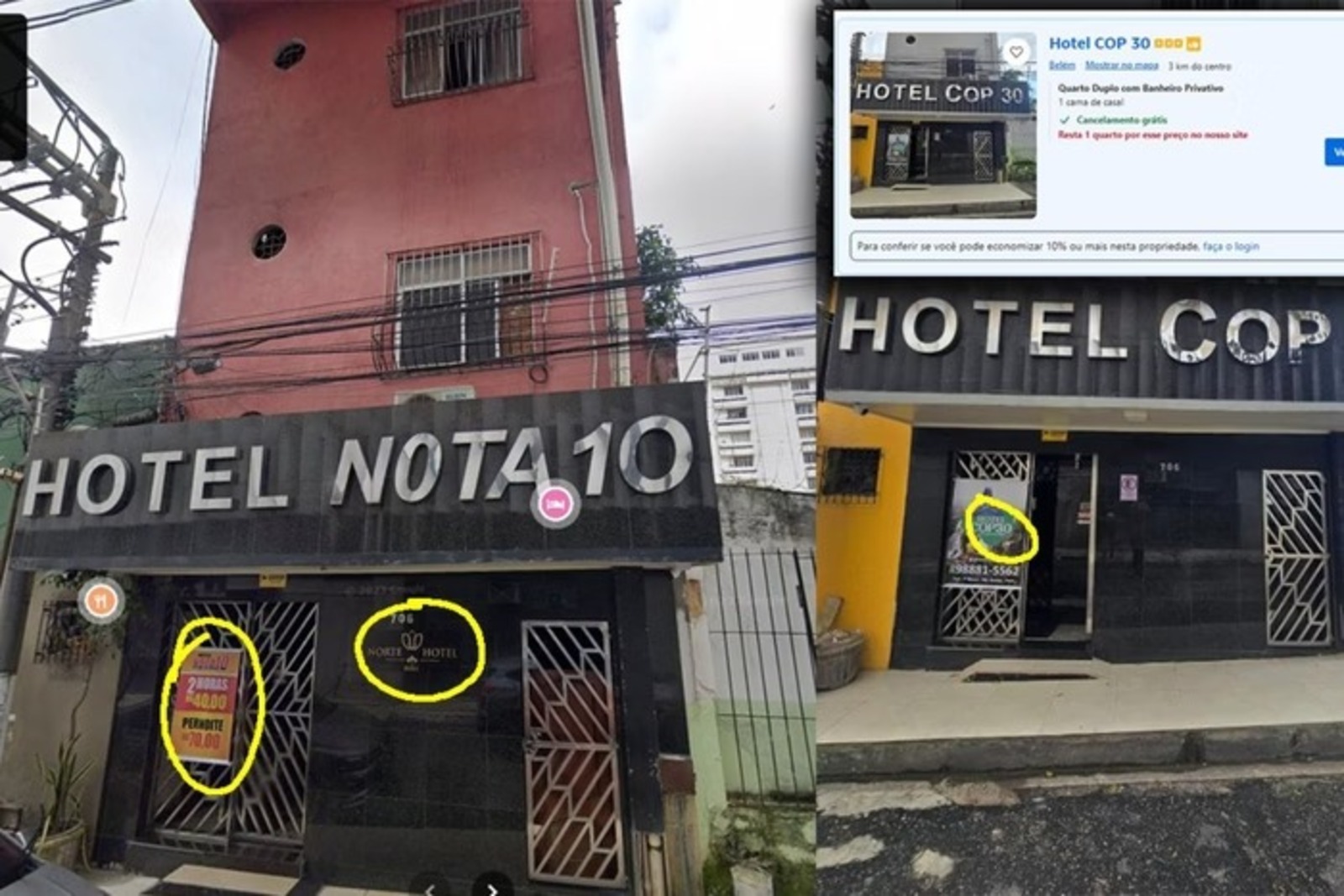


Price Increase in Accommodation for COP30 in Belem Causes Tension Among Government, Hotels, and Delegations, Threatening Wide Participation in the Event
Simple, yet cozy, the COP30 Hotel in Belem has not yet closed reservations for November. Its owners want to rent the entire building to a foreign delegation, but the prices have deterred interested parties. The conference is expected to attract 50,000 people over 12 days, putting pressure on the city’s already limited hotel network.
President Luiz Inácio Lula da Silva (PT) envisioned COP30 in Belem to highlight the Amazon. In 2023, he joked that delegates would negotiate “under the canopy of a tree.” However, reality presented a different scene: a shortage of accommodations and unrealistic rates.
Price Increase Due to COP30
To alleviate the pressure, the government scheduled a summit of heads of state between November 6 and 7, before the main event, which takes place from the 10th to the 21st. Even so, costs remain high.
-
Inflation in March reaches 0.88% according to IBGE and pressures the Brazilian economy, impacting family budgets and requiring more strategic decisions to maintain financial control.

-
In Paraná, distributor Pacto connects 100% of the load in Coronel Vivida to batteries: a BES of 10 MW and 20 MWh costs just over R$ 30 million and lowers the local tariff now.

-
With a dependence of up to 80% on gas imported from the United States, Mexico is responding with a robust energy strategy, betting on shale gas, creating a scientific committee, and preparing to expand natural gas production to reduce vulnerability and strengthen its energy security in the coming years.

-
The United States proposes to Brazil a critical minerals agreement with a minimum price to combat Chinese dumping and priority for investment, but the Planalto is blocking the signing out of fear of upsetting China and due to electoral calculations in a year of competition.

In August, a report by GLOBO revealed that the former Nota 10 Hotel began charging 80 times more. The daily rate jumped from R$ 70 to R$ 5,670.
Countries suggested moving the venue in July. The UN requested subsidies from Brazil, but the government refused.
So far, 68 of the 198 countries have secured their reservations. “This has never happened,” said Marcio Astrini from the Climate Observatory. According to him, normally all have confirmed accommodation months in advance.
Local Reality
The COP30 Hotel operates in a building that was once a motel. Renovated in 2024, it now offers 40 spots. The manager, Alcides Moura, admits that prices “have become disordered.”
The hotel even tried daily rates of R$ 6,300, but backed down. Today it charges a maximum of US$ 350 (R$ 1,910).
Belem, where 57% of the population lives in slums, experiences contrast. For many, COP30 has become a chance for profit.
Retiree Ronaldo França, 65, plans to rent out his weekend home for US$ 370 a night. “I’m not going to charge an outrageous amount, but some people are taking advantage,” he says.
Government Response
In August, Brazil created a working group to negotiate better conditions. Governor Helder Barbalho assures that “the supply of beds is guaranteed,” but acknowledges abuses.
For him, the Amazonian experience should outweigh luxury. Delegations, however, request individual rooms for all members.
The government invested R$ 4 billion in projects related to the COP. The highlight is the Parque da Cidade, a green convention center that will host the conference.
Even so, logistics is a concern. Authorities estimate that 60% of visitors will stay in private properties.
Debate on Price Abuses at COP30
Toni Santiago, from the hotel association of Pará, states that establishments are almost full. He rejects the idea of price controls proposed by the government: “This doesn’t exist at any major event in the world.” The discourse seeks to dispel the image of disorganization.
To bolster the network, two private ships will offer 6,000 beds, although 20 kilometers from the convention center.
Airbnb announced a 22% drop in average prices since February. Still, it is rare to find rates close to US$ 100, a level considered adequate by the UN for low-budget delegations.
Risk of Exclusion
The Climate Observatory warns that COP30 may be the least inclusive in history. High costs could limit civil society’s participation.
For Marcio Astrini, the debate over accommodation has overshadowed the essentials: “climate targets, fossil fuels, climate financing.”
Thus, while delegations, the government, and hotels negotiate, the challenge goes beyond the comfort of visitors.
The image of Brazil as host of one of the world’s major environmental meetings is also at stake.
With information from O Globo.







E o código de direito do consumidor não pode intervir sobre os abusos?. É difícil verificar os valores de antes e proibir os aumentos absurdos simplesmente por leis já existentes que coibem isso?. Lastimável isso, parecem mortos de fome quando vêem um prato de comida único na vida.
Belém, a cidade mais favelizada do Brasil, representando o Brasil, bem típico.