





 Portuguese
  English
  Spanish
  4 min of reading
  0 comments


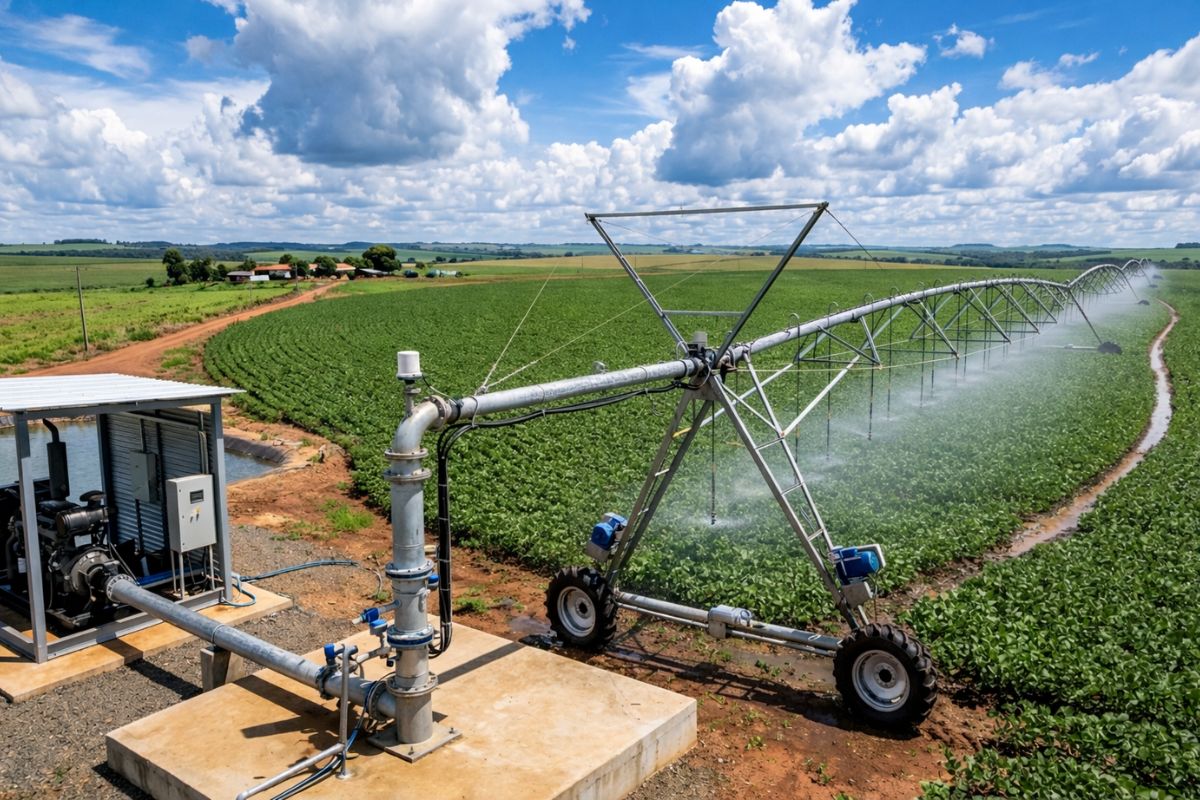
Understand how the center pivot pressurizes the line, defines speed on the panel, completes the turn in 16 to 24 hours, and keeps the water layer uniform with electronic control and flow adjustments
If you have seen a center pivot working from a distance, it seems simple: a huge “line” turning and spraying water. But inside, there is a complete chain that starts at the pump house, goes through the motor, pressure pump, buried piping, control panel, and ends there at the tip, with different nozzles in each sector to keep the irrigation uniform.
The system shown has a radius of 500 m, covers about 75 hectares, and takes an average of 16 to 24 hours to complete a circumference, depending on the percentage of speed set. It is practical engineering in the field, with sensors, frequency inverters, and a maintenance routine that is part of the operation.
Where it all begins: the pump house and the water reaching the system

The center pivot does not “start” in the field; it begins at the pump house. It is there that the pumping is initiated and where the water enters the system’s intake piping. In the described case, the farm is about 6 km from the São Francisco River, and the water arrives via canal and pumping stations until it reaches the structure that feeds the pivot.
-
NASA advances in oxygen production on the Moon using concentrated solar energy, eliminating logistical barriers and bringing the scenario of permanent human bases closer with less dependence on Earth shipments.

-
Why is the ship’s command bridge located at the back: engine and rudder at the stern, more space for cargo, safer maneuvers, more stable crew, and laws that sometimes require it to be in the center or bow?

-
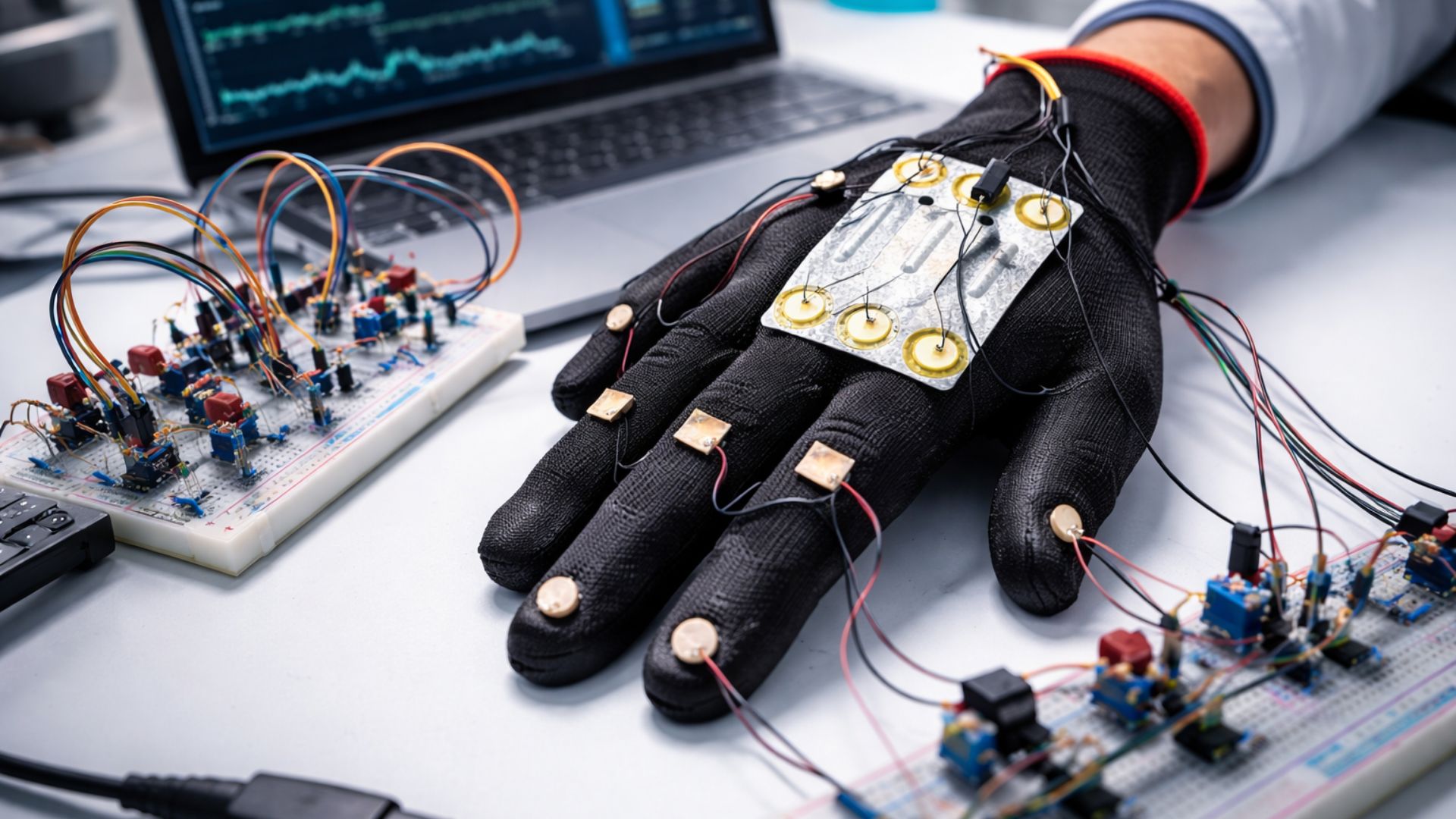
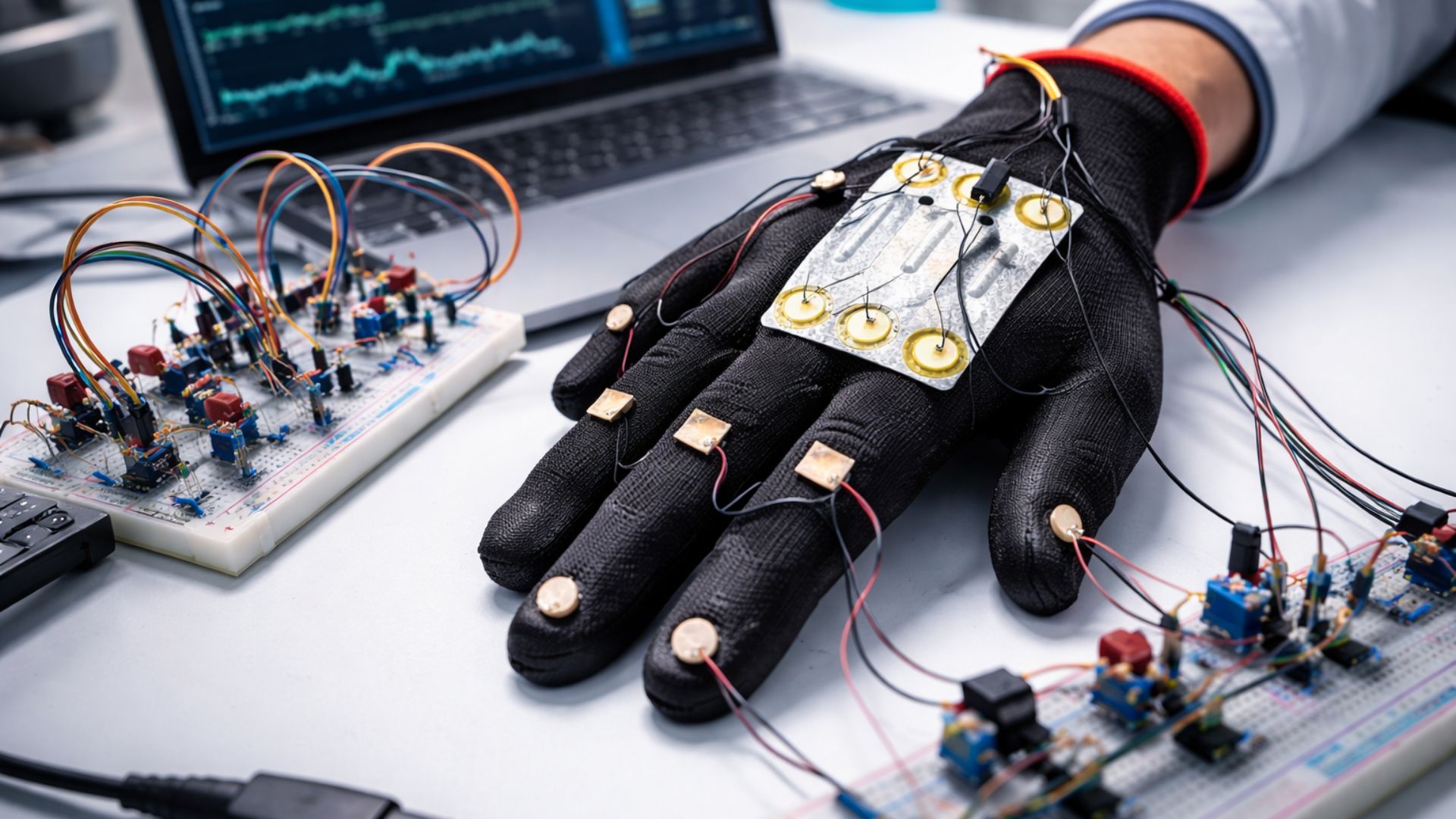
Advancement in health: UNB and FAPDF develop new technology that reduces Parkinson’s tremors and shows significant results by increasing movement stability and improving patients’ quality of life.
-
Advancement in health: UNB and FAPDF develop new technology that reduces Parkinson’s tremors and shows significant results by increasing movement stability and improving patients’ quality of life.
Inside the pump house, the motor and pump sets appear. There is a transfer pump and then the pressure pump that effectively sends the water to the buried pipeline, which rises to the axis of the center pivot.
150 hp motor and smooth start
The motor mentioned for the center pivot is electric, with 150 hp, driving the pressure pump. The start follows a procedure to avoid impact on the line: first, the outlet is closed to avoid a “jolt,” the motor starts, and then the flow is opened.
The water begins to fill the piping, the system pressurizes, and only then does the pivot start moving. The rotation is not immediate, because first the line needs to fill and stabilize the pressure.
Central panel: direction, speed, and return time

The base feeds the system with water, but the fine control of the center pivot is in the central panel. It is there that the direction of rotation, clockwise or counterclockwise, and the percentage of speed are defined.
The percentage changes the working time. At 100%, the system rotates faster. At lower percentages, it takes longer, which can be used when more water needs to be applied per pass. The reference of the report is clear: a complete turn takes an average of 16 to 24 hours, varying according to the adjustment.
Towers, frequency inverter, and synchronization of the set
Each tower motor works with a frequency inverter, allowing different towers to have different speeds.
This happens because the geometry of the center pivot requires synchronization: the outermost tower needs to move more, so it tends to have the highest speed, while towers closer to the center rotate more slowly.
Between the towers, there is a bar and a set of sensors that help maintain alignment. If a sensor fails, it may happen that one tower stops and another continues, creating a risk of misalignment and even tipping. Therefore, the system has mechanisms to brake and correct the movement according to the behavior of the towers.
Piping, nozzles, and the logic of uniform layer


The piping is not “the same” from start to finish. The diameter of the pipe near the axis of the center pivot is larger because the volume of water there is higher.
As the water advances, the pipe and the distribution set change, and the design depends on nozzles with different flow rates in each sector.
The goal is to keep the water layer uniform from the first tower to the last. To check this, measurement with rain gauges is used: a rain gauge is installed per sector, the pivot passes, and then the accumulated amount is measured. If there is a difference, adjustments, nozzle changes, and flow adjustments are made to repeat the test until it is correct.
What takes the most work: maintenance and replacement parts
In day-to-day operations, the center pivot requires constant maintenance. One point mentioned is direct: tires frequently puncture, to the point that the operation keeps a tire repair shop, compressors, and spare tires ready. When a tire punctures, it can lock, making movement difficult and requiring a stop and change to resume irrigation.
In addition, there are components that break and burn out, such as inverters and tower motors. Therefore, the routine includes spare inverters, spare motors, and ready-mounted wheels to speed up the solution when a failure occurs.
The axis of the pivot and the “trace” on the ground
Arriving at the center, you can see why the name is center pivot: the axis is the fixed point, and the structure rotates around it, with a radius of 500 m.
On the ground, the movement creates a trace that becomes a reference for passage and also changes how vehicles circulate between rows, as the operation occurs within the crop.
In practice, the system is a set of hydraulics, electrical, and mechanical working together, with fine adjustments to maintain pressure, flow, and movement at the right pace.
Quick question: did you have any idea that a center pivot depends as much on sensors, inverters, and nozzle calibration as it does on pumps and motors?








Seja o primeiro a reagir!