





 Portuguese
  English
  Spanish
  5 min of reading
  0 comments


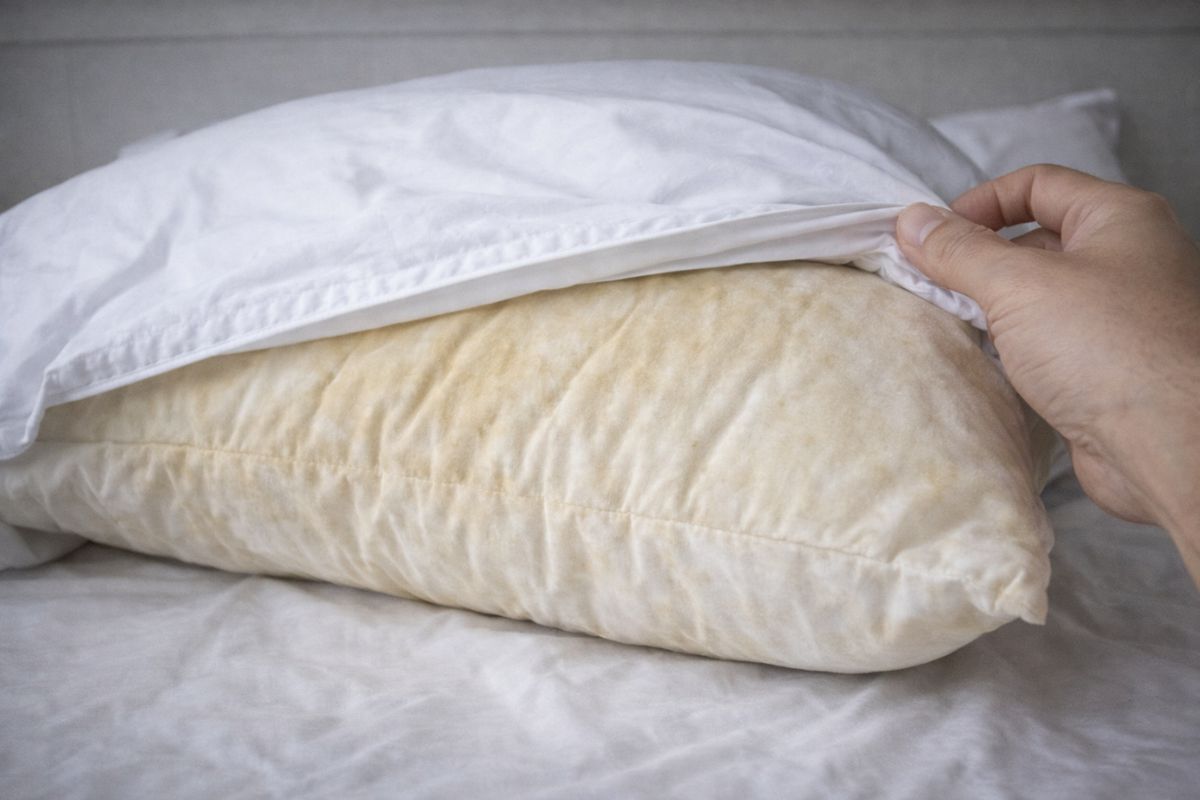
The yellowed pillow even with a clean pillowcase indicates the accumulation of sweat, body oil, and dust mites in the internal fibers, a silent process that the pillowcase cannot block and that can affect sleep quality and respiratory health over time.
You change the pillowcase regularly, take care of your bedding, and yet, when you lift the cover, there it is, the yellowed pillow with that tone that seems impossible to remove. The scene is strange because it gives the impression of neglect, but most of the time the problem does not start from a lack of hygiene. What appears on the pillow fabric is the result of a process built night after night with moisture, natural skin residues, and repeated contact of the body with the same material for hundreds of hours in a row.
The yellowing of the pillow is, in fact, a warning. It indicates that the pillowcase, no matter how good it is, does not function as a total barrier against what the body releases during sleep. Part of the sweat, natural oil, and microscopic skin particles pass through the pillowcase fabric and settle in the internal fibers of the pillow. Over time, this accumulation creates a favorable environment for dust mites and can weigh on the routine of those who suffer from respiratory allergies. The signal is there, visible, asking for attention.
Why the pillow turns yellow even with the pillowcase always clean
The explanation is simpler than it seems. The yellowing appears due to the combination of moisture and body residues that pass through the pillowcase over time. The pillow fabric absorbs small amounts of sweat, natural oil, and invisible skin particles until this sum begins to leave visible marks.
-
Thermal expansion and capacity auction boost suppliers of generators and turbines in Brazil with nearly 20 GW contracted.

-
In the Netherlands, a village with nearly 3,000 residents has no streets: in Giethoorn, each house is located on an islet surrounded by canals, has thatched roofs that last up to 40 years, transportation is done by silent electric boats, more than 180 wooden bridges connect the properties, and the mailman delivers mail by boat because there is no other way to reach the doors.

-
Many people avoid making eye contact due to insecurity, but those who maintain eye contact during a conversation possess four characteristics that psychology associates with confidence, empathy, firmness, and above-average concentration.

-
NASA has faced new accusations of alleged lunar deception after a viral video showcased a curious “green screen error” in the Artemis II mission.

These are called oxidation stains, common in light fabrics and often associated with the continuous use of the same pillow for months or years.
The pillowcase helps a lot, but it does not completely prevent the passage of these residues. Part of what leaves the body during sleep ends up reaching the pillow filling and remaining there for a long time.
In rooms with poor air circulation, the process accelerates because the fabric takes longer to dry and breathe between one night and another. The result is a pillow that looks clean on the outside but silently accumulates signs of the sleep routine on the inside.
Night sweat yellows the pillow even when it’s not hot
Many people associate sweat with high temperatures, but the body sweats during sleep regardless of the season.
Even on cold nights, the body continues to regulate temperature and release moisture, often so lightly that the person does not even realize they are sweating. The pillow, however, absorbs this repeated contact with the same efficiency, night after night.
When this moisture continuously enters and exits the fibers of the pillow, the mark slowly forms. The process is cumulative: one night does not make a difference, but hundreds of them create the yellowing that appears when the pillowcase is removed.
People who sleep on their sides, with their faces pressed against the pillow, tend to notice the problem more quickly because the contact area is larger and more concentrated.
The products you use before sleeping also stain the pillow
It’s not just sweat that contributes to the yellowing. The natural oil from the skin and scalp mixes with residues from creams, moisturizers, leave-ins, and other products used on the face or hair before sleeping.
Over time, this combination settles into the fibers of the pillow and accelerates the darkening of the fabric in a way that washing the pillowcase cannot reverse.
Sleeping with wet hair is one of the habits that most contributes to the problem. The moisture from the hair transfers directly to the pillow, creating a prolonged humid environment that favors both yellowing and the proliferation of microorganisms.
Night creams and facial oils complete the equation. The pillow absorbs everything on the surface of the skin and hair when you lie down, and the pillowcase does not filter these residues with the same efficiency that it filters visible dirt.
What the yellowed pillow reveals about dust mites and respiratory health
The problem goes beyond aesthetics. The accumulation of moisture and body oil in the fibers of the pillow creates an ideal environment for the proliferation of dust mites, microscopic organisms that feed on skin residues and are one of the main causes of allergic rhinitis, asthma, and respiratory irritations.
A pillow used for years without proper cleaning can harbor millions of these organisms.
For those who live with respiratory allergies, the yellowed pillow is more than just a visual sign. It is an indicator that the internal material may be compromised and functioning as a reservoir for allergens.
Changing the pillowcase addresses the superficial layer but does not eliminate what has already accumulated in the filling. The presence of a persistent smell, a sensation of excessive weight, or a different texture to the touch are additional signs that the pillow needs attention beyond washing.
When to clean the pillow and when it’s time to replace it
Not every yellowed pillow needs to be thrown away. Washing the pillow according to the label instructions can resolve cases where the yellowing is superficial and recent.
Using a pillow protector as an extra barrier beyond the pillowcase, airing out the room frequently, and avoiding sleeping with wet hair or excess product on the face are habits that prevent the problem and prolong the lifespan of the material.
However, when the pillow is very stained, has an odor that won’t go away, a deformed structure, or a permanent feeling of dampness, cleaning no longer helps. If the pillow has lost its shape, does not return to normal after being squeezed, or always feels heavy and stuffy, the best course of action is to replace it.
Experts recommend replacing the pillow every two years at most, even if it seems to be in good condition. The yellowing is just the most visible sign of wear that happens on the inside, where the eyes cannot reach.
Is your pillow yellowed even with the pillowcase always clean? Have you checked when was the last time you replaced it? Let us know in the comments. This is the kind of topic that surprises because everyone deals with the problem, but almost no one talks about it.









Seja o primeiro a reagir!