





Built with discarded boxes and waterproofed to enter the River Thames, the floating house received bunk beds, kitchen, lookout, engine, and anchor, but remained a temporary experience, not a permanent residence
A floating house made from recycled cardboard entered the River Thames and managed to navigate without falling apart in the water. The structure had sleeping spaces, a kitchen, an engine, and even an anchor.
Harry Dwyer and Charlie Waller, members of the Aircraft Workshop, participated in the construction named This Way Up, an expression meaning This Side Up. The work was completed in 10 days by a team formed to develop the project.
Information about the assembly was published by Harry Dwyer, the official page of one of the project’s creators. Trinity Buoy Wharf, an arts and culture center in the London docklands, recorded the launch on April 29, 2016.
-
Man known as the “King of the Pool” wins the lottery for the 8th time in seven months, turns R$ 590 into R$ 465,000 and participates in the only game that hit all 15 numbers in Lotofácil.

-
A Brazilian was fired from his job after 13 years, turned the setback into a bold plan, and now wants to visit the capitals of 196 countries in just three and a half years, starting with Southeast Asia.

-
In Vietnam, a train crosses mountains, 6 tunnels, and 36 bridges on a railway that is among the most beautiful and incredible in the world, appearing to be hand-drawn.

-
During the demolition of a chimney in England, workers removed from the bricks a 19th-century bottle containing human teeth, hooks, and a liquid that remains unidentified to this day.



Discarded cardboard became the structure of a floating house
The vessel was built in a workshop located at Trinity Buoy Wharf, in the London docklands. The main material came from discarded cardboard found on site.
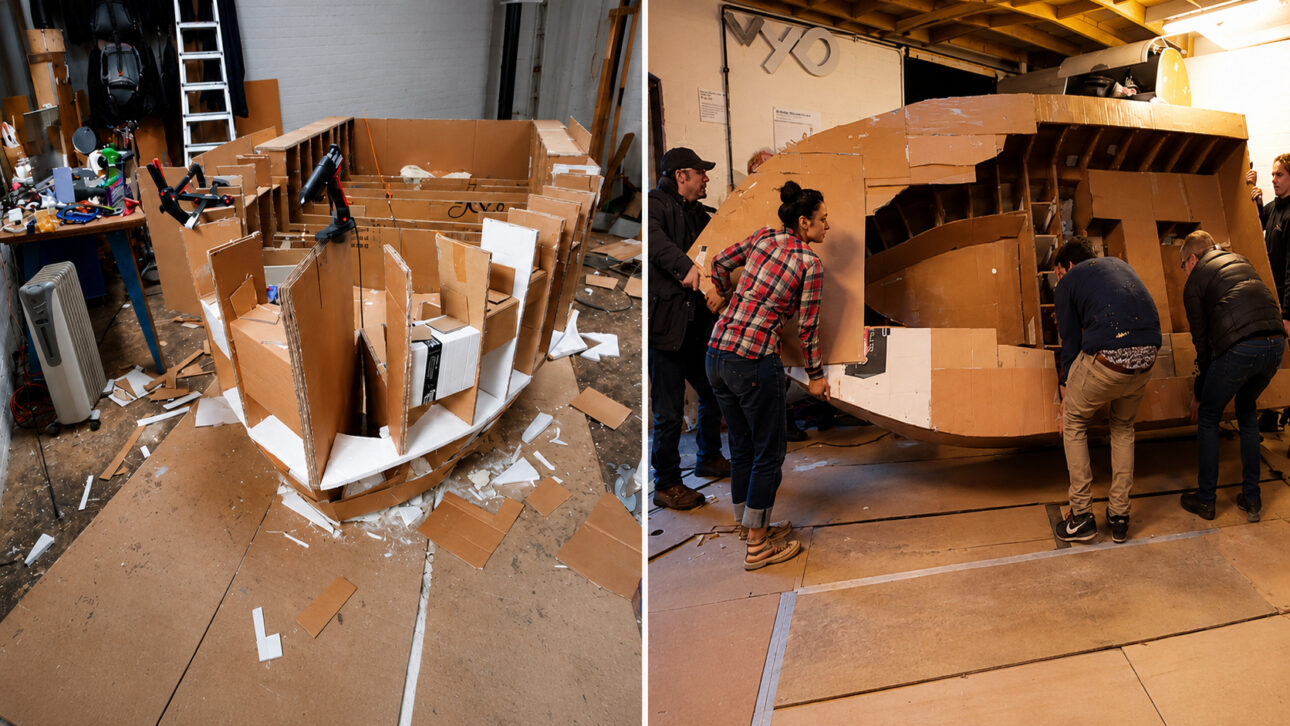
The boxes and packaging were used to form the structure of the boat and the small internal space. The goal was to transform a material associated with waste into a vessel capable of supporting its occupants during an experimental navigation.
Harry Dwyer, the official page of one of the project’s creators, states that the team took 10 days to complete the floating house. The record also identifies discarded cardboard as the basis of the construction.
How the cardboard was protected from water
The main challenge was the fragility of the material. Cardboard absorbs moisture and loses strength when wet, a condition that could quickly compromise the structure in the River Thames.
After assembly, the vessel received a waterproof finish. This protection formed a barrier between the cardboard and the water during the launch and movement along the river.
The waterproofing allowed the experiment to take place, but it did not turn the material into a permanent solution. The detailed composition of the finish and the duration of this water protection were not disclosed.
Bunks and kitchen occupied the interior of the vessel
The small floating house did not function merely as an empty platform. The interior was fitted with bunks and kitchen, creating an environment similar to that of a compact dwelling.
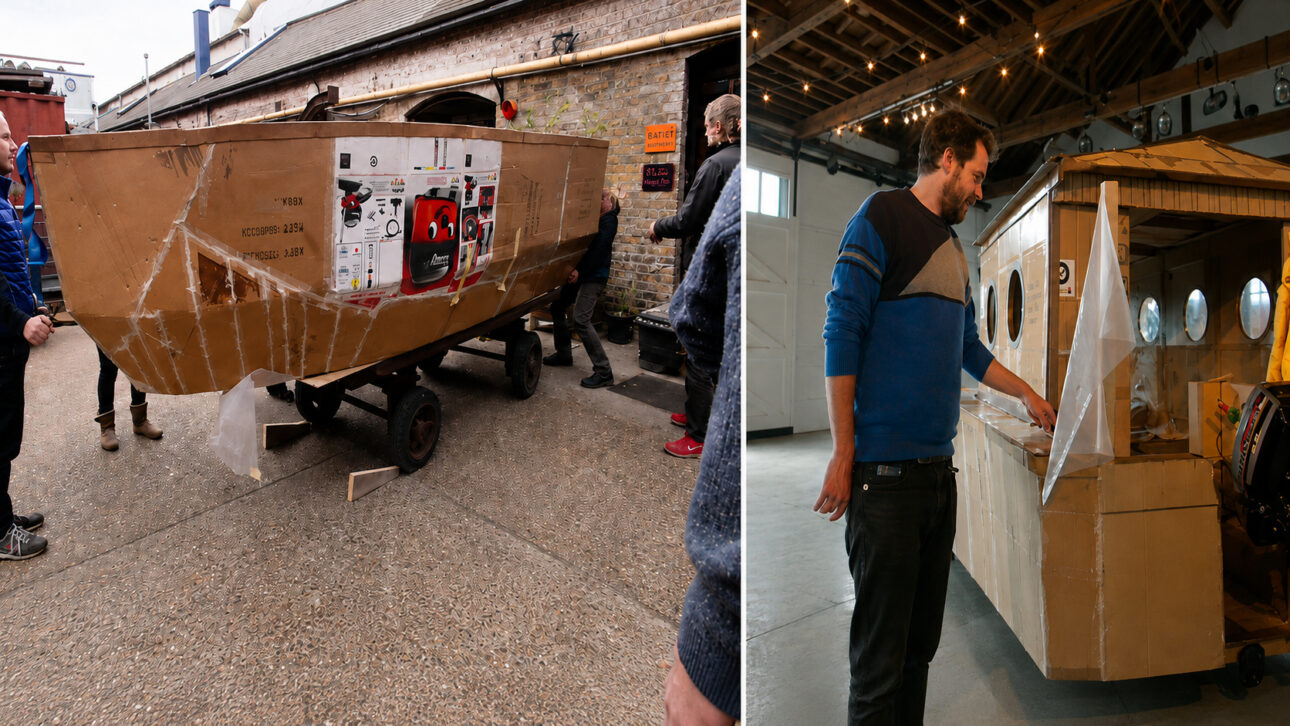
A porthole allowed observation of the outside. This type of window, common on boats, is small in shape and helps bring light to the interior without requiring a large opening in the wall.
The construction also gained a motor and anchor. The motor allowed the vessel to move, while the anchor helped keep it stationary when necessary.
Trinity Buoy Wharf, an arts and culture center in London’s docklands, recorded the presence of two sleeping places, motor, porthole, and anchor in the project.
Floating house was launched on the River Thames
The vessel departed from Trinity Buoy Wharf and entered the waters of the River Thames in London. Harry Dwyer and Charlie Waller accompanied the navigation carried out with the completed structure.
The launch took place before the scheduled presentation on April 30, 2016 at Grand Designs Live, a British event focused on construction and housing projects. The floating house would be displayed as an example of utilizing discarded materials.
The boat managed to float and navigate during the test. No information was disclosed about long trips, high speed, or continuous water stay.
Experience did not create a permanent dwelling
Although it had bunks, kitchen, motor, and anchor, the vessel should not be confused with a certified house for permanent occupancy. The project served as an experimental demonstration of reuse.
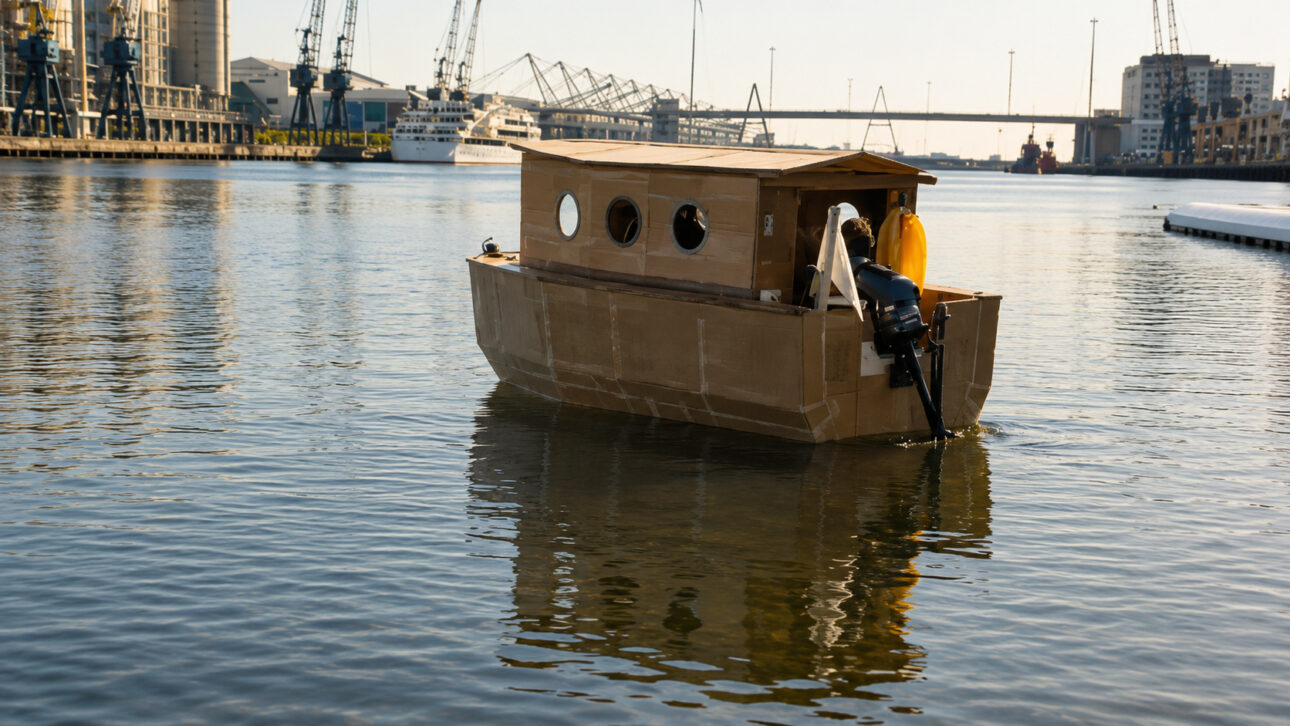
A permanent dwelling needs to withstand prolonged contact with water, weather changes, and constant wear. Navigation on the River Thames did not establish a durability period nor provided authorization for continuous residential use.
The test only proved that the protected structure could support people and navigate at that moment. The result does not serve as guidance to build cardboard boats without technical knowledge and adequate safety measures.
By transforming discarded boxes into a floating house, the builders gave recycled cardboard a function difficult to imagine. The material gained bunk beds, a kitchen, an engine, and an anchor before entering one of London’s most famous rivers.
The experience showed the creative potential of repurposing, but also made clear the difference between a temporary construction and a residence prepared for permanent use.
Would you trust a floating house made of cardboard to cross a river, or do you think the risk would be greater than the curiosity? Share the post and leave your opinion in the comments.


