





 Portuguese
  English
  Spanish
  5 min of reading
  0 comments


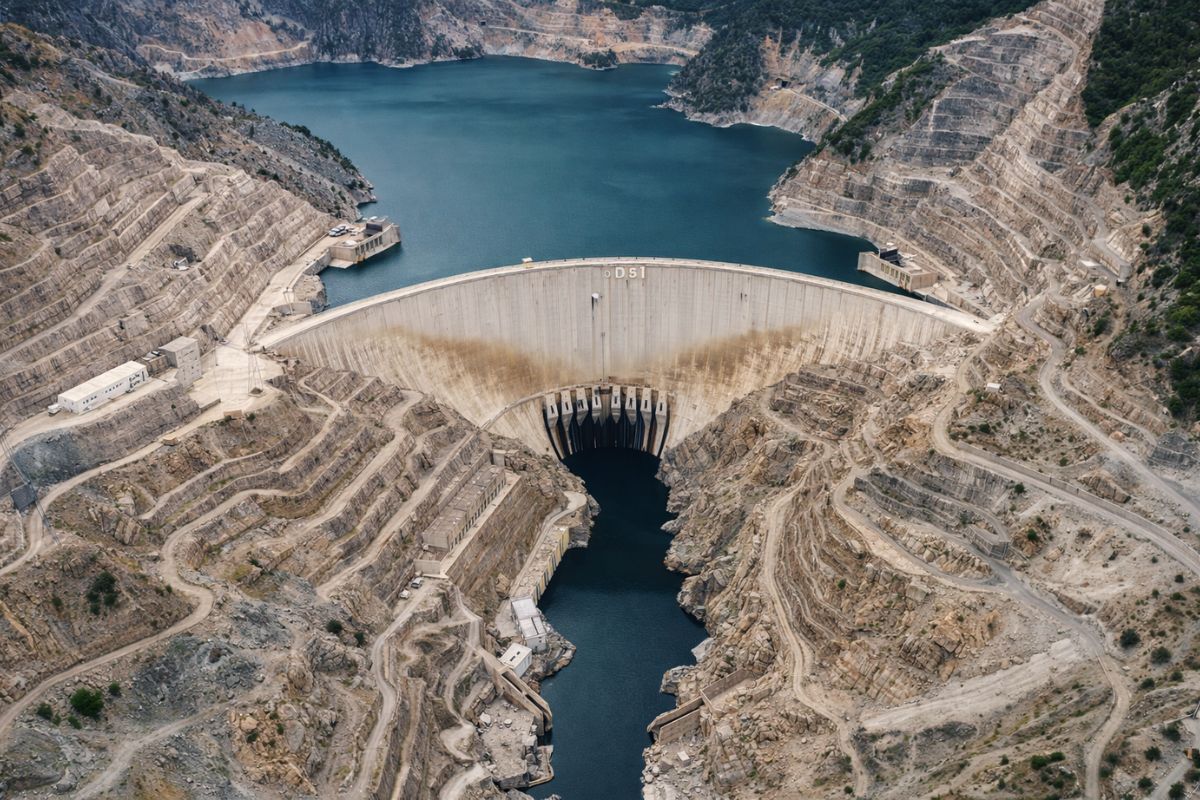
With a diversion tunnel and a spiral tunnel, the Yusufeli Dam on the Soru River raises an arch dam and places the power plant inside the rock to generate energy
There is a stretch of Turkey where two rock walls close over a river as if they were stone jaws. It was there, in a narrow and deep gorge, that the country bet on a mega project that starts with the basics of any construction in the bed of a river: open a tunnel and get the water out of the way.
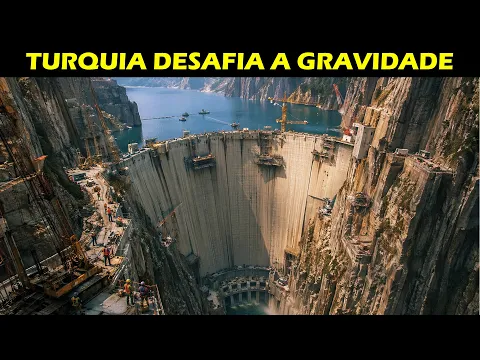
The result is the Yusufeli Dam, a concrete arch nearly 275 m high, built in an extreme setting, with logistics and engineering at their limits. The structure has a total installed capacity of 558 MW and was presented as enough energy to permanently supply 2.5 million people, in addition to reducing dependence on imported fossil fuels.
A narrow canyon and a decision that seemed impossible

The valley of the Soru River, also called Cora by the locals, imposes an aggressive geography: almost vertical slopes, little space for construction, and a river with constant force. In this type of terrain, building is negotiating with rock, water, and time, and any mistake is costly.
-
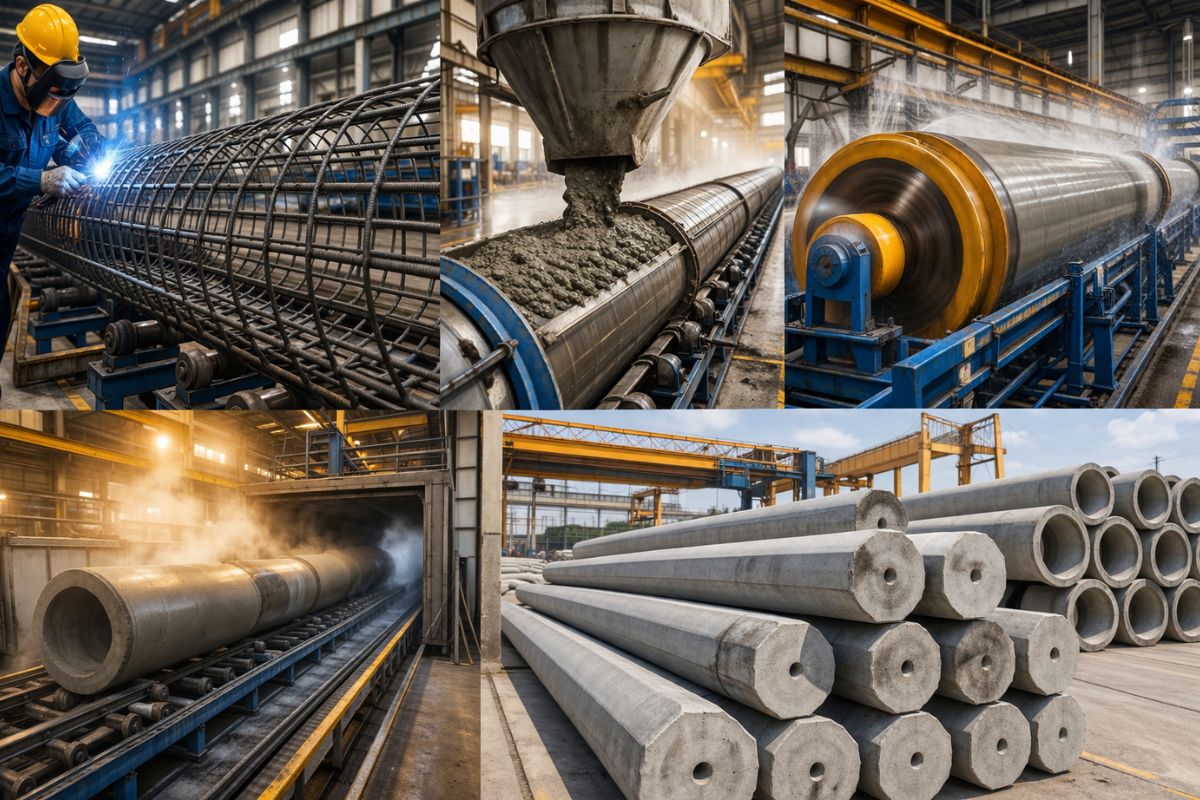
The factory shows how PHC piles and precast tubes are made; steel turns into a welded cage, high-strength concrete enters the mold, spins in centrifugation, cures in steam, and is ready in hours.
-
Small house with natural light becomes a trend in sustainable architecture and reveals how smart designs reduce energy consumption and enhance comfort in compact spaces.

-
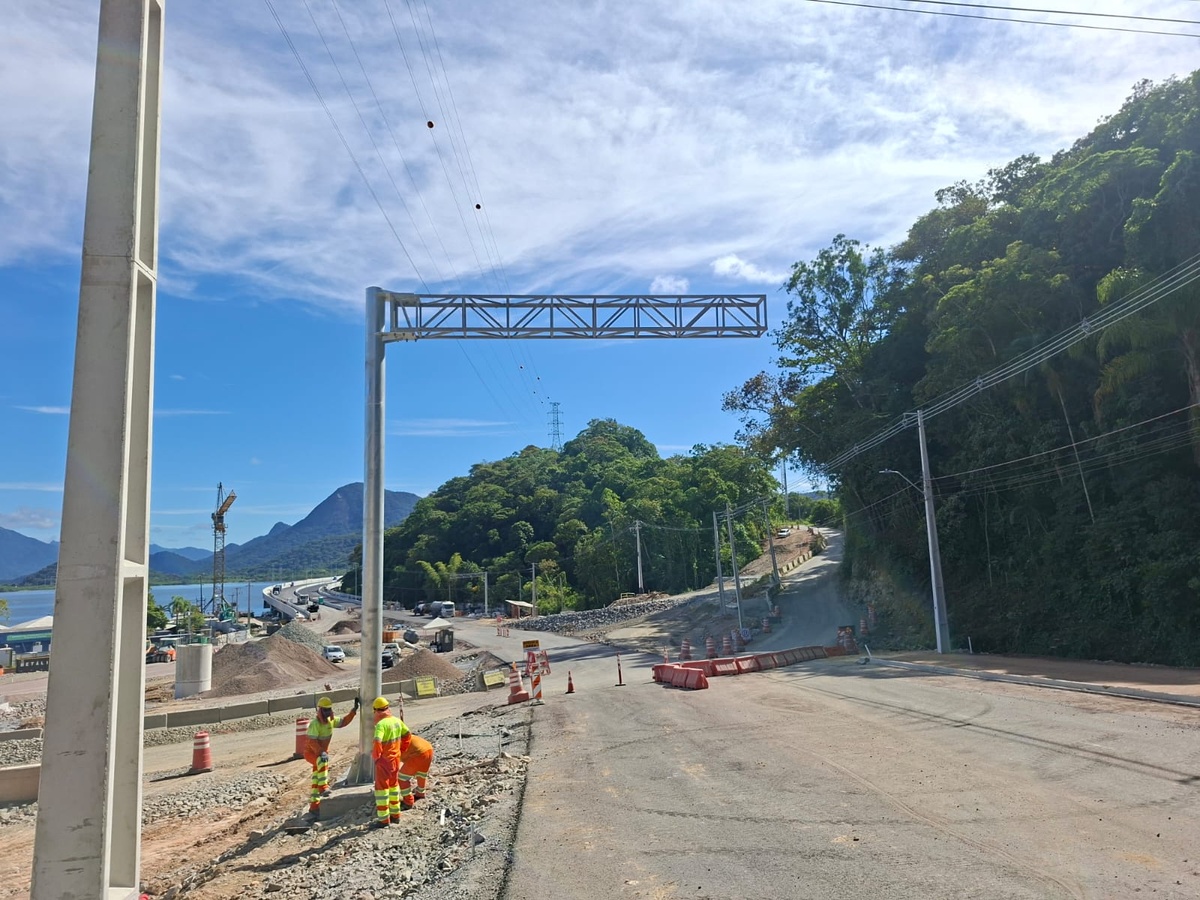
Guaratuba Bridge enters the final phase with high-standard road signage implemented by IASIN and inauguration scheduled for April 2026.
-
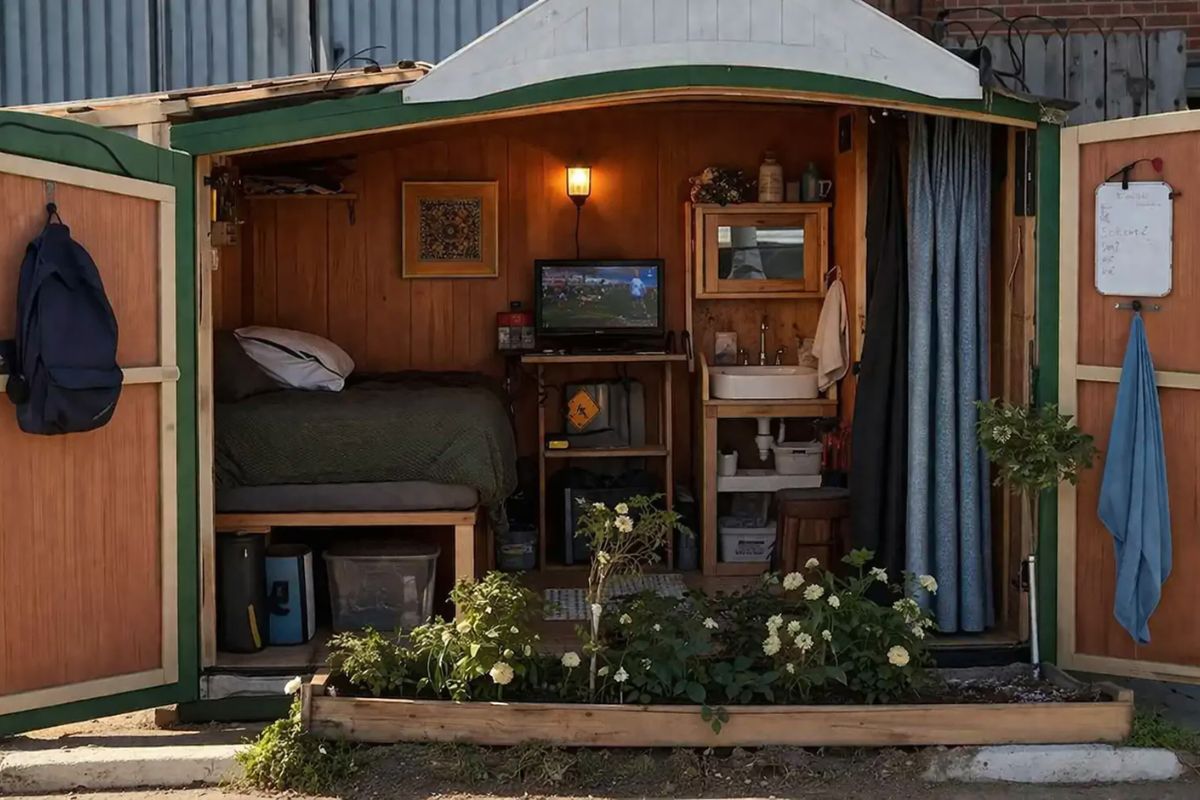
A homeless person in Los Angeles built their own wooden house with a garden at the entrance, a bed, a television, and a bathing area, and is now selling identical mini houses for $150 to other homeless individuals who prefer anything over returning to plastic tents.
The choice of location provoked criticism and distrust. Nevertheless, the decision was made to move forward with a project that would require specific solutions, especially to divert the river, create access, and maintain operational control over years of construction.
Why Turkey bet on this hydroelectric plant

The backdrop is the growing demand for electricity, driven by urbanization, factories, hospitals, and data centers operating simultaneously.
The dependence on imported fossil fuels was turning into an energy and geopolitical bill at the same time, and the hydroelectric potential of the river appeared as an internal and renewable alternative.
The challenge was to transform this potential into real infrastructure within a canyon that does not offer “extra space.” And then the tunnel stops being a detail and becomes the key to the project.
Arch dam: when the mountain becomes structure

Instead of a gravity dam, which requires enormous volumes of concrete to resist by mass, the chosen solution was a double-curvature arch dam. The logic is simple: the pressure of the water is transferred to the sides, and the mountains hold the structure.
In this V-shaped scenario, the rock walls act as support. The project also sought to improve performance in a context of geological complexity, with attention to stability, anchoring, and seismic behavior.
First step: get the river out of the way with a diversion tunnel

Before any concreting, the practical question arose: how to build with the river running in the middle? The answer was the diversion tunnel, a gallery drilled inside the mountain to capture the water, bypass the construction site, and return the flow further down.
In the case of Yusufeli, this tunnel was described as having a diameter of 11 m and approximately 1 km in length. The work only becomes possible when the riverbed is controllable, and even then, it is still necessary to deal with infiltrations and temporary containment to keep the work area dry and stable.
Access to the bottom of the valley: the spiral tunnel that became the artery of the construction site
With the river diverted, another problem arises: how to bring everything to the bottom of a deep canyon, without a road and with vertical walls? The solution was to drill a spiral tunnel for access.
The spiral tunnel was described as having a total length of 2,420 m, descending in continuous curves, with controlled technical inclination to allow truck circulation and intense operation during critical periods. This access became the vital artery of the project, through which cement, steel, fuel, and equipment passed.
Four million m³ of concrete and the challenge of heat

The dam was presented with 4 million m³ of concrete. In structures of this size, the invisible enemy is the heat released in the reaction of cement with water, capable of generating internal stresses and cracks if there is no strict control.
To face this, the report describes three fronts: cooling the concrete before pouring, cooling from within during curing, and monitoring everything in real-time.
Even logistics depend on the tunnel, because fresh concrete does not wait and needs to reach the application point within the correct window.
Anchoring, sensors, and seismic resistance

The project also describes anchors fixed deeply into the rock to “hold” the arch to the mass. Additionally, sensors were embedded in the concrete blocks to monitor temperature, movement, and deformation, with continuous data transmission to a control room.
This combination reinforces the idea that the dam is not just “a concrete wall”: it is a living structure, monitored, adjusted, and supported by the mountain, with engineering designed for extreme scenarios.
Power plant inside the rock: forced tunnels and discharge tunnel
As the canyon did not offer space for a conventional powerhouse, the plant was excavated inside the rock, with three turbines of 186 MW each, totaling 558 MW.
The water from the reservoir arrives through three armored forced tunnels, creating the necessary pressure to spin the turbines.
After generating energy, the water flows through a discharge tunnel and returns to the river below the dam. The tunnel system appears in all critical stages, from the initial diversion to access to the construction site and the operation of generation.
What Yusufeli delivers in the end
The Yusufeli is presented as the largest infrastructure project in the history of Turkey and as a strategic response to electricity demand and energy security.
The project combines records, engineering decisions, and a set of solutions that depend on a single central idea: control the environment with structure, rock, and tunnel.
Quick question: if you had to choose, what impresses you the most about such a project, the height of the dam or the complexity of the tunnel to divert the river and access the canyon?




Seja o primeiro a reagir!