





 Portuguese
  English
  Spanish
  3 min of reading
  0 comments


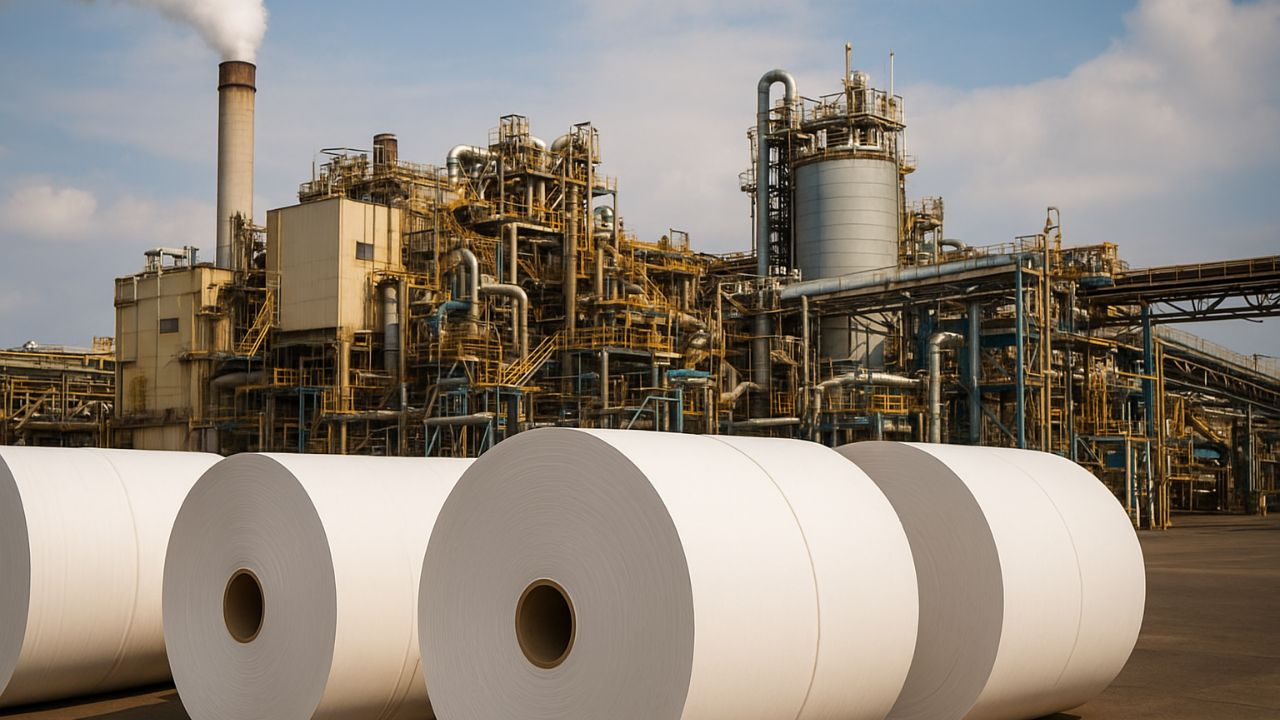
Cellulose Exports Help Brazil Stay Afloat, but Trump Tariffs Impact Wood and Furniture Industry.
The Brazilian tree industry, responsible for generating around R$ 200 billion annually and employing nearly 3 million people, is facing one of the biggest challenges of the last decade.
Since 2024, Trump’s tariffs have been pressuring the competitiveness of the sector, particularly affecting wood and furniture exporters.
However, Brazil has managed to preserve part of its international strength thanks to the performance of cellulose imports, a product that remains competitive even in the face of American tariffs.
-
Inflation in March reaches 0.88% according to IBGE and pressures the Brazilian economy, impacting family budgets and requiring more strategic decisions to maintain financial control.

-
In Paraná, distributor Pacto connects 100% of the load in Coronel Vivida to batteries: a BES of 10 MW and 20 MWh costs just over R$ 30 million and lowers the local tariff now.

-
With a dependence of up to 80% on gas imported from the United States, Mexico is responding with a robust energy strategy, betting on shale gas, creating a scientific committee, and preparing to expand natural gas production to reduce vulnerability and strengthen its energy security in the coming years.

-
The United States proposes to Brazil a critical minerals agreement with a minimum price to combat Chinese dumping and priority for investment, but the Planalto is blocking the signing out of fear of upsetting China and due to electoral calculations in a year of competition.
The trade dispute intensified after the United States government imposed extra taxes on various Brazilian products.
The justification from Republican Donald Trump was clear: to strengthen the American national industry while protecting the country’s economic security.
For Brazil, however, the measure has had direct consequences on exports and the employment of thousands of workers.
Cellulose Provides Breathing Space in Foreign Trade
Even amid international pressure, cellulose remains the strongest segment. Currently, about 3.5% of Brazilian exports to the U.S. correspond to cellulose, equivalent to US$ 94 million in 2024, according to data from the Ministry of Development, Industry, Commerce and Services (Mdic).
Thanks to the exemption from the 40% extra tax and the reversal of a 10% rate announced in April, 90% of the cellulose exported by Brazil is free from Trump’s tariffs. The relief was celebrated by the sector.
“We have very relevant clients in the United States. In a way, an important part of the sector can breathe,” said Paulo Hartung, president of the Brazilian Tree Industry (Ibá), in an interview with CNN Money.
Brazilian Wood and Furniture Suffer from Trump Tariffs
If cellulose still finds room to grow, the same cannot be said for other segments of the forestry-based industry.
Processed wood, for example, accounts for 1.2% of Brazilian exports to the U.S. (US$ 34.2 million in 2024) and is already feeling the effects of the extra taxes.
Companies went so far as to declare collective vacations even before the tariffs came into effect. In Paraná, wood represents 40% of the state’s exports to the United States, and the measure has already caused mass layoffs.
According to a survey by Abimci (Brazilian Association of Mechanically Processed Wood Industry), 10,000 workers have been impacted.
Of these, 4,000 have already lost their jobs, 5,500 are on collective vacations, and another 1,100 have had their contracts temporarily suspended (layoff).
New Tariffs Worsen Crisis in the Furniture Sector
The pressure intensified even more when Trump announced new tariffs of 10% on wood and 25% on cabinets and furniture.
The blow was felt particularly in Rio Grande do Sul, where the United States is the main destination for exports from the furniture sector.
According to Movergs (Association of Furniture Industries of the State of Rio Grande do Sul), the U.S. accounted for 16% of the state’s foreign sales in the first half of 2020, generating US$ 117.5 million.
For companies, the additional costs make exporting kitchen, bathroom, and upholstered furniture “practically unfeasible.”
“Taxation is a concern, especially for companies that have the United States as their main trading partner,” warned Ana Cristina Schneider, market and strategy consultant for Movergs.
Strategies and Negotiations to Overcome Barriers
In light of the situation, experts and organizations advocate that Brazil insist on negotiations and seek market alternatives. For Hartung, persistence is required:
“When you go to a door, knock, and it remains closed, instead of turning back, you need to knock again. At some point, it opens, and you can enter the room, sit at a table, and be able to talk.”
Schneider believes the solution lies in diversification and innovation: “Winning new partners is not an easy task, especially since each country has its particularities regarding consumption, bureaucracy, logistics, and trade agreements.”
According to her, Brazilian companies should consider strategies such as reviewing the product mix, investing in marketing, participating in international fairs, and even hiring specialized consultancies to reduce dependence on the North American market.






Seja o primeiro a reagir!