





 Portuguese
  English
  Spanish
  4 min of reading
  0 comments


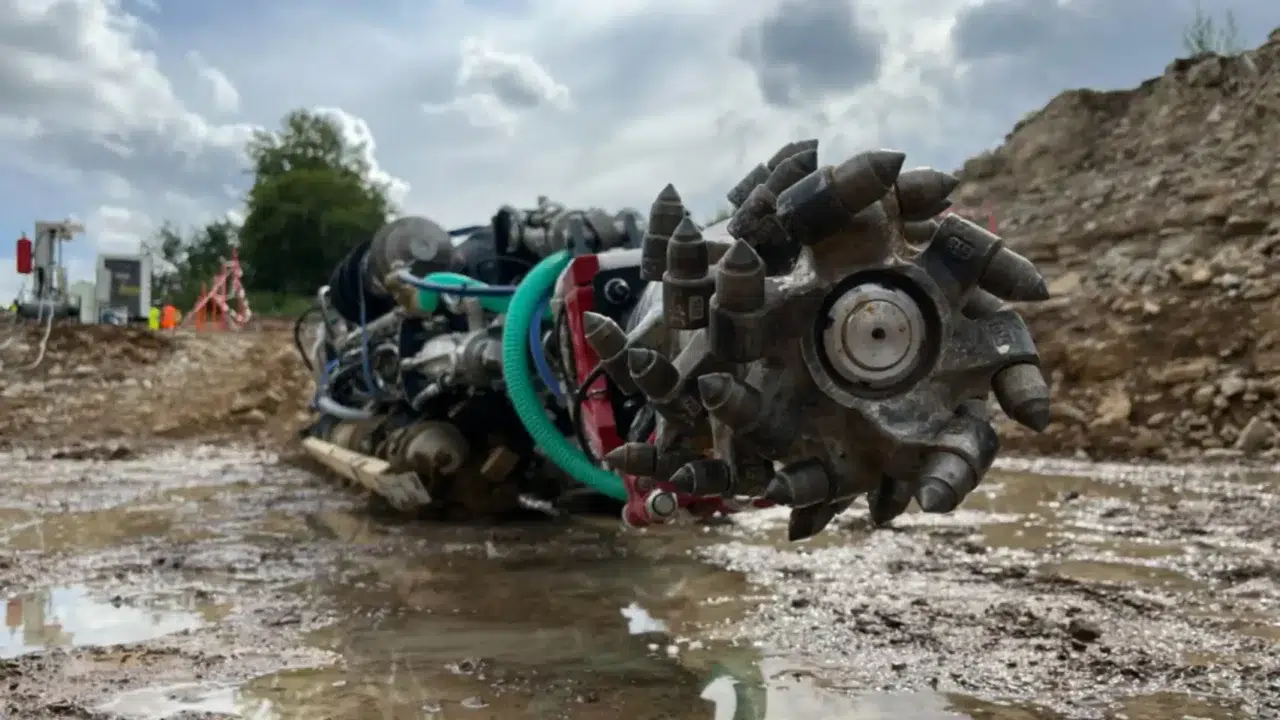
Transforming Mining with Technology: Modular and Reconfigurable Robots for Safe Underground Exploration. Learn About the Robominers Project!
Mining is one of the key sectors for industrial development and should become one of the cornerstones in the fight against climate change. The batteries of electric cars, solar panels, and many other technologies fundamental to energy transition depend on the extraction of raw materials whose demand could sextuple by 2040, according to the International Energy Agency.
However, some veins deep within the Earth are difficult to access, and their extraction often has negative consequences. Hence, new, safer methods are needed to extract resources without risks to humans and without harming the environment. Since 2019, members of the Robominers project have been working on this, an initiative aimed at developing bio-inspired, modular, and reconfigurable mining robots. Their mission? To reach small and hidden mineral deposits safely and with minimal impact on the surface.
The project involves the participation of the Higher Technical School of Industrial Engineers and the Center for Automation and Robotics (CAR) of the Polytechnic University of Madrid (UPM). Claudio Rossi is the lead researcher of the project and is responsible for coordinating the consortium formed by different institutions and organizations, with the participation of 14 partners from 11 European countries.
-
Rare earths are in everything, from cell phones to bullet trains, and what almost no one realizes is why they have become the target of such a delicate global war.
-
Brazil extracts 26.3 million tons of ore from what was previously treated as waste, transforming residues into wealth, producing over 3 million tons of sand, and demonstrating how national mining is relearning to generate value.

-
A $3.5 billion megaproject in Latin America pumps desalinated seawater at 1,050 liters per second over 194 km to keep a copper supermine in the Andes operational for another 20 years.
-
A hidden mine in the Andes valued at nearly R$ 1 trillion is starting to attract global attention, containing copper, gold, and silver, and raises an intriguing question: why do Argentina and Chile need to act together to exploit this gigantic wealth?
“The ultimate idea is to provide sustainable sources of raw materials used everywhere, including in cell phones, computers, and cars. For this, the most logical option is to send robots.” Their applications can also facilitate work in challenging environments and assist in the development of new industries, such as space mining.
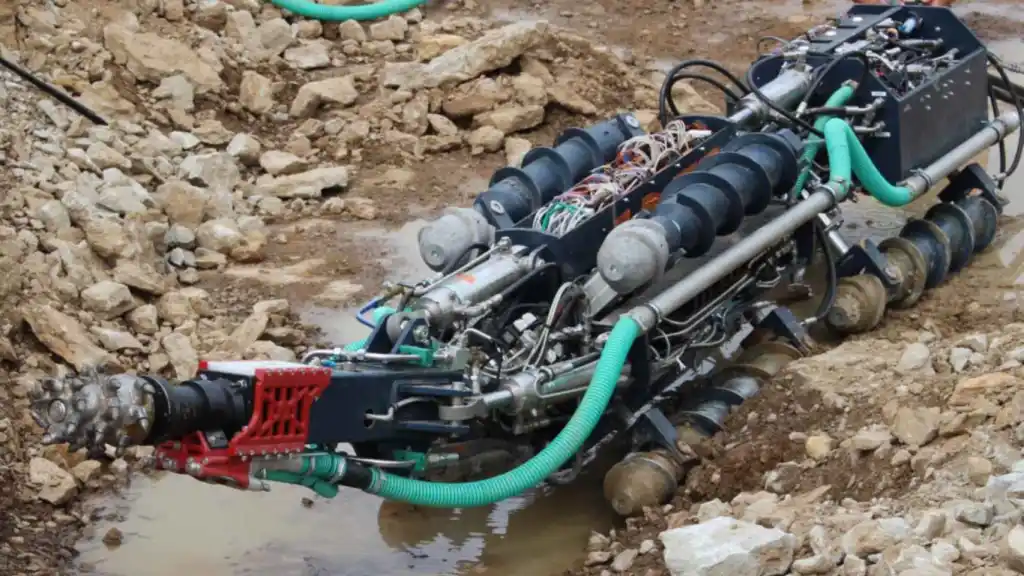
Mining Robots
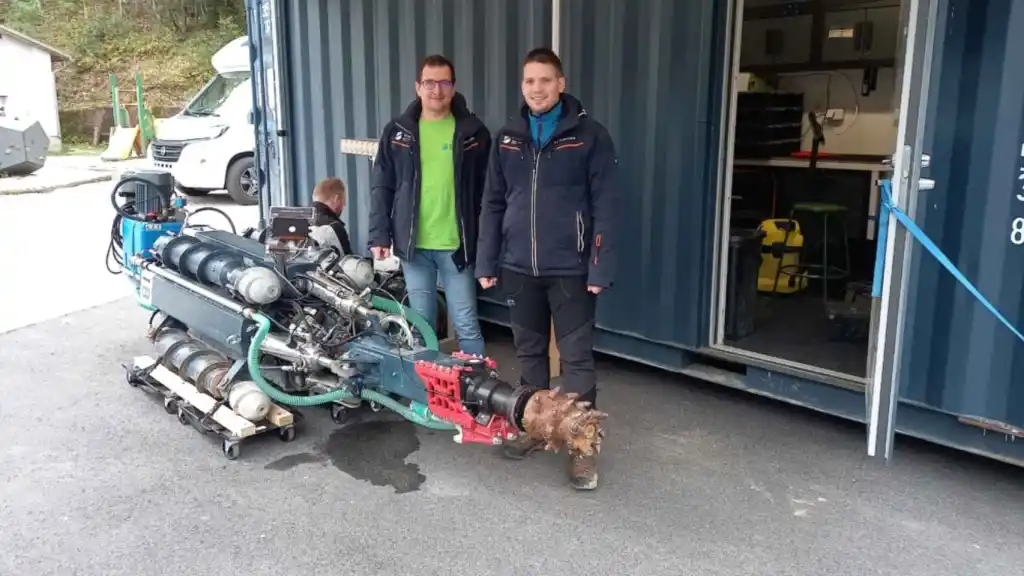
From the beginning to the end of the first research phase, which took place in November 2023, the goal of the Robominers project has been to create a robot prototype capable of autonomously exploring all types of underground and submerged mines. The first experiments have already been conducted in abandoned mines in Estonia and Slovenia, where some of its key functions have been tested.
To build these first 1:1 scale prototypes, operated remotely, the technicians and engineers of the initiative were inspired by the movements of animals like fish, insects, and worms, each with unique properties for moving in hard-to-reach environments, such as underground galleries.
The ultimate idea is that the robots can be transported by modules to the target area through a large-diameter well drilled from the surface to the mineral deposit. Once all the parts have been sent underground, the robot will self-assemble to form a fully functional device capable of detecting minerals through specialized sensors and artificial intelligence software for decision-making without human supervision.
Thanks to their tools, chosen according to the needs and type of rock present in each vein, these robots will be able to produce a mixture of water and minerals, which will be pumped and processed at the surface. If necessary, the robot’s parts can be reconfigured during operation and even self-repair in case of failure or malfunction.
3D Maps
The first prototypes can operate in environments one to three meters wide and are capable of performing precise excavations and reducing waste. The robot’s final design includes a kind of ‘whiskers’ similar to those of a mole, with which the machine is able to touch the walls and obstacles it encounters to build a 3D model of the extraction area. This is a key development for the autonomous navigation of these devices.
“It can tell us that there is a wall here, a rock here, a tunnel to the left…”, says Rossi. In fact, some of the elements already used on site are sensors capable of analyzing the composition of rocks and the quality of materials, vital information for deciding which direction to excavate.
In experiments conducted in 2023 in Estonia and Slovenia, the robots were subjected to rigorous conditions, including underwater drilling. “Most of the key components of the robot were tested at a water pressure of approximately 100 bar. This means that the machine would be able to operate up to 1,000 meters deep,” explains the professor and vice-director of CAR.
Now that the first part of the project is complete, there is still a long way to go for the Robominers to offer a viable alternative to make mining invisible and safer. According to Rossi, it will take “3 to 4 years to integrate artificial intelligence into the robot, about a decade for it to be fully functional, and perhaps 20 years for this prototype to be commercialized.”







Seja o primeiro a reagir!